

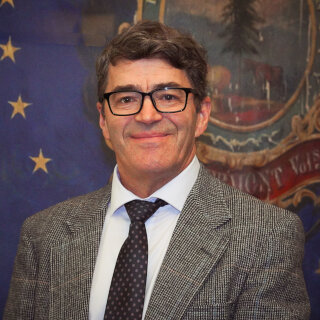
Maddy summaryThis House resolution honors Vermont television journalist Stewart Ledbetter for his 40 years of news reporting. The bill formally recognizes his career achievements, including his work as a news director, political campaign moderator, and recipient of multiple broadcast awards. It directs the House Clerk to send a copy of the resolution to Ledbetter and WPTZ, the television station where he worked.
Rep. Phil Pouech
Sponsored bills
Maddy summaryThis bill creates a new Climate Infrastructure and Resilience Fund to provide loans and financing for projects that help communities adapt to climate change and protect against flooding. The fund will be managed by a board including state officials and appointed representatives, with money drawn from state cash balances, donations, and future legislative appropriations. It also adjusts how the Clean Water Fund distributes money, prioritizing projects that improve water quality, build climate resilience, and support ecological health. Additionally, the bill authorizes new staff positions across several state agencies to administer these programs and requires clean water service providers to prioritize projects that create climate-resilient communities.
Maddy summaryThis bill requires the Vermont Agency of Transportation to narrow the driving lanes of state highways to 11 feet in rural village centers when requested by local selectboards. The primary goal is to create safer and more accessible pathways for pedestrians and bicyclists, encouraging active transportation and reducing vehicle emissions. Local communities can initiate this change by formally requesting the modification through their selectboard, and the agency must implement the lane narrowing within one year of receiving the request. The legislation focuses on specific rural village centers rather than applying statewide changes to all highways.
Maddy summaryThis bill creates the Climate Superfund Cost Recovery Program, which would require fossil fuel companies that operated in Vermont between 2000 and 2019 to pay for their share of climate change costs. The program targets entities involved in extracting coal, oil, or natural gas, charging them based on how much greenhouse gas their products contributed to global emissions. Money collected from these payments would go into a dedicated fund to finance climate resilience projects like flood protections, upgraded infrastructure, and health programs addressing climate-related health risks. The law defines specific types of infrastructure projects eligible for funding and establishes rules for determining which companies must pay and how much they owe.
Maddy summaryThis bill would allow certain undocumented students to pay in-state tuition rates and access state-funded financial aid at Vermont's public colleges if they meet standard residency requirements. It prohibits the Vermont State Colleges Corporation from excluding students based solely on immigration status and requires the Vermont Student Assistance Corporation to make state financial aid available to all residents regardless of immigration status. The law specifically includes protections for refugees, those granted parole to enter the U.S., and Afghan Allies Protection Act visa holders, while also clarifying residency rules for military families. The changes would take effect on July 1, 2025, and include provisions ensuring students can apply for and participate in financial aid programs to the full extent allowed by federal law.
Maddy summaryThis bill creates a two-year pilot program to fund a community-based organization that coordinates mental wellness and climate resilience efforts across Vermont. The program would receive $100,000 in fiscal year 2025 from the state's General Fund to support activities that address how extreme weather events and other social stresses impact mental health. The coordinating body must include representatives from diverse groups including schools, faith organizations, environmental groups, disaster response agencies, and people with lived experience of mental health challenges. The program uses a public health approach to prevent mental health problems before they emerge and to help entire communities build resilience against various adversities.
Maddy summaryThis bill would allow Vermont residents who are not U.S. citizens to qualify for scholarships and operate regulated child care facilities. It removes citizenship requirements for two specific programs: scholarships for current early childhood providers and scholarships for those seeking to become providers, as well as the ability to run a licensed child care center. The changes apply to both existing providers and those looking to enter the field, regardless of their immigration status.
Maddy summaryThis bill requires that juvenile delinquency cases involving youths aged 14 to 22 begin in the Family Division of the Superior Court rather than the Criminal Division, with certain exceptions for specific serious offenses. The law allows the Family Division to transfer cases to the Criminal Division after a hearing if the youth is older or if the offense is particularly severe, and it mandates that prosecutors file felony charges for minors in the Family Division first. The changes apply to both new cases and those involving violations of release conditions, ensuring that all juvenile proceedings initially originate in the Family Division unless specific criteria for transfer are met.
Maddy summaryThis bill, known as the Transportation Infrastructure and Resiliency Act of 2024, directs state funding and policy changes to improve roads, support electric vehicle adoption, and enhance transportation options across Vermont. It increases funding for road repair programs, provides grants for eBike and electric vehicle charging infrastructure, and establishes new rules allowing property owners to install charging stations. The legislation also expands funding for bicycle and pedestrian projects, creates a plan for carsharing expansion, and requires the state to develop new revenue sources for transportation and environmental initiatives. Additionally, it allows certain areas to set speed limits below 25 mph and mandates reporting on electric vehicle outreach efforts and charging station availability.
Maddy summaryThis bill directs Vermont's Department of Health to create free opioid overdose response training videos and distribute naloxone, a medication that reverses opioid overdoses, to businesses and organizations likely to encounter people experiencing overdoses. The legislation also requires the department to expand community prevention programs, improve access to treatment services, educate healthcare providers and recovery program participants on overdose prevention, and establish public kiosks where naloxone can be dispensed. These measures aim to increase public awareness and access to life-saving resources for individuals at risk of opioid-related overdoses across the state. The law is set to take effect on July 1, 2024.