

Maddy summaryThis bill would require online companies to design their services with children's best interests in mind if those services are likely to be accessed by minors under 18. It mandates that companies consider different developmental stages when creating features and prohibits the use of deceptive user interface designs known as dark patterns that could manipulate children's choices. The law applies to businesses operating in Vermont and defines specific rules for how personal data about children can be collected, processed, and shared, including restrictions on profiling and geolocation tracking. Companies must also provide clear default settings that protect children's privacy rather than requiring them to opt out of data collection.
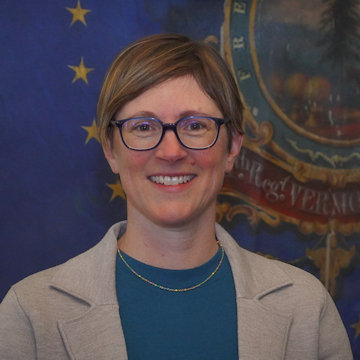
Rep. Angela Arsenault
Sponsored bills
Maddy summaryThis bill establishes a two-year Child and Youth Representation Policy Fellowship Program within Vermont's Office of Child, Youth, and Family Advocate to improve how children and youth participate in legal, healthcare, and human services systems. The program will analyze existing representation structures and funding while prioritizing racially and socially equitable approaches to youth engagement. A new full-time position called Child and Youth Representation Policy Lead will be created to oversee the initiative and coordinate with community stakeholders. The Office must submit progress reports to legislative committees by December 2024 and May 2025, with proposed legislation recommendations due by November 2025. Funding of $300,000 from the Tobacco Litigation Settlement will support the program and position in fiscal year 2025, with any remaining funds carried forward to 2026.
Maddy summaryThis bill would update Vermont law to protect parental rights when children access reproductive or gender-affirming health care services. It states that Vermont recognizes access to these health services as a legal right and would not enforce laws from other states that remove parental rights based on a parent allowing their child to receive such care. The legislation applies to any custody or parental rights cases currently pending in Vermont courts. It takes effect immediately upon passage.
Maddy summaryThis bill requires Vermont school districts that close an existing elementary or high school to designate three or fewer public schools to serve as the district's public schools for those students. The law mandates that when a school closure occurs, the district must ensure education continues by assigning students to designated public schools rather than automatically paying tuition to outside schools. Parents retain the right to request tuition for their children to attend other approved schools if they believe it better serves their child's needs, though the school board makes the final decision on such requests. The bill also allows certain districts in rural areas to designate public high schools in neighboring states like New York as their public schools under specific conditions.
Maddy summaryThis bill amends Vermont's housing laws to expand the legal definition of a mobile home park to include communities where residents own their individual lots rather than renting them. The change applies to any land containing more than two mobile homes that is either under single ownership or managed by a common interest community. The legislation explicitly excludes storage facilities, agricultural employer housing, and seasonal vacation sites from this new definition. If passed, the updated definition would take effect on July 1, 2024, and would affect how these communities are regulated under state housing statutes.
Maddy summaryThis bill authorizes Vermont municipalities to pass local ordinances banning firearms inside municipal buildings. It allows towns, cities, and villages to prohibit firearm possession in government facilities while exempting law enforcement and security personnel. The law does not restrict firearm discharge at existing sport shooting ranges or prohibit firearm possession in other parts of the municipality. The changes would take effect on July 1, 2024.
Maddy summaryThis bill prohibits individuals from knowingly bringing firearms to designated polling places and requires owners to report lost or stolen firearms to law enforcement within 72 hours. The first provision allows law enforcement officers and government employees performing official duties to carry firearms at polling places while imposing criminal penalties of up to one year in prison or a $1,000 fine for violations. The second provision establishes a civil penalty of up to $250 for failing to report lost or stolen firearms and assigns jurisdiction over these violations to the Judicial Bureau. These changes directly affect voters, firearm owners, law enforcement personnel, and government employees who interact with polling places or possess firearms.
Maddy summaryThis bill modifies Vermont criminal procedure rules to protect young child victims in cases involving serious bodily injury or sexual offenses by limiting depositions and allowing certain out-of-court statements to be used as evidence. For victims under 16, depositions are generally prohibited unless both sides agree or a judge approves them only after finding the testimony is essential, not available elsewhere, and the benefits outweigh harm to the child. The bill also permits hearsay statements from children 12 or younger in specific cases if the child can still testify in court and the statements show reliability, reducing the need for repeated questioning of vulnerable witnesses. These changes apply to criminal prosecutions, juvenile proceedings, and certain civil cases involving abuse or neglect.
Maddy summaryThis bill requires health insurance plans in Vermont to cover diagnostic tests used for screening purposes using the same terms as they cover screening tests for the same condition. It applies to all health insurance plans and ensures that cost-sharing requirements like copayments and deductibles are identical for diagnostic and screening tests. The legislation aims to eliminate disparities in coverage between diagnostic and screening tests for the same disease or illness.
Maddy summaryThis bill allows Vermont municipalities to receive reimbursement for state education property taxes they abated for property owners affected by severe storms and flooding between July and October 2023. It also permits municipalities to be reimbursed for reasonable interest expenses incurred when borrowing funds to make these tax payments, capped at eight percent. Additionally, the bill excludes federal disaster relief payments from household income when calculating the homestead property tax credit for the 2023 and 2024 tax years, helping homeowners maintain eligibility for tax credits despite receiving disaster assistance.