

Maddy summaryThis bill would allow certain undocumented students to pay in-state tuition rates and access state-funded financial aid at Vermont's public colleges if they meet standard residency requirements. It prohibits the Vermont State Colleges Corporation from excluding students based solely on immigration status and requires the Vermont Student Assistance Corporation to make state financial aid available to all residents regardless of immigration status. The law specifically includes protections for refugees, those granted parole to enter the U.S., and Afghan Allies Protection Act visa holders, while also clarifying residency rules for military families. The changes would take effect on July 1, 2025, and include provisions ensuring students can apply for and participate in financial aid programs to the full extent allowed by federal law.
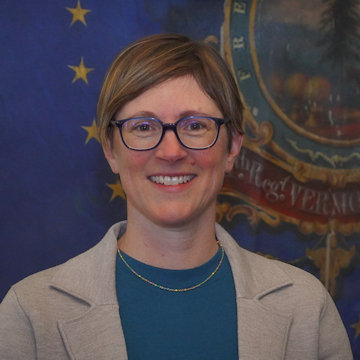
Rep. Angela Arsenault
Sponsored bills
Maddy summaryThis bill creates a two-year pilot program to fund a community-based organization that coordinates mental wellness and climate resilience efforts across Vermont. The program would receive $100,000 in fiscal year 2025 from the state's General Fund to support activities that address how extreme weather events and other social stresses impact mental health. The coordinating body must include representatives from diverse groups including schools, faith organizations, environmental groups, disaster response agencies, and people with lived experience of mental health challenges. The program uses a public health approach to prevent mental health problems before they emerge and to help entire communities build resilience against various adversities.
Maddy summaryThis bill proposes a new 11 percent excise tax on the retail sale of firearms, firearm precursor parts, and ammunition in Vermont, which would be paid by sellers at the time of each transaction. The tax applies to both licensed firearm dealers and ammunition vendors, with licensed dealers required to collect the tax during background checks and remit it quarterly to the state. All revenue generated from this tax would be deposited into the Domestic and Sexual Violence Special Fund, which supports grants for domestic and sexual violence prevention services. The legislation excludes transfers exempt from background checks, such as those to law enforcement agencies or immediate family members, and would take effect on July 1, 2025.
Maddy summaryThis bill establishes a new appointment system for Vermont's State Board of Education, which consists of ten members representing educators, parents, and students. Under the proposed changes, the Governor would appoint four members including two secondary students, the Senate Committee on Committees would appoint three members, and the Speaker of the House would appoint three members. The bill also sets six-year terms for non-student members with no eligibility for successive terms, requires biennial appointments in February, and includes provisions for filling vacancies and selecting a board chair. A transition period outlined in the bill ensures current board members can finish their terms while new appointments follow the new distribution rules starting July 1, 2024.
Maddy summaryThis bill requires approved independent schools in Vermont to annually confirm compliance with the state's Public Accommodations Act, which prohibits discrimination. Schools must submit two specific items to the State Board of Education each year: proof that their nondiscrimination statement is posted online and included in application materials, and a signed assurance from the school head that the school follows the law in all admissions and operations. The requirement applies to all approved independent schools regardless of whether they hold external accreditation. The new reporting obligation takes effect on July 1, 2024.
Maddy summaryThis bill expands eligibility for the Downtown Transportation and Related Capital Improvement Fund to include village centers and growth centers in addition to existing downtown development districts. It also allows the fund to cover engineering and design costs for transportation projects, which previously were not included. The changes apply to municipalities that meet specific criteria, such as having a designated village center that participated in the Better Connections Program or is located in Chittenden County with a completed community planning process. Under the new provisions, the Vermont Downtown Development Board can award grants, loans, or loan guarantees for capital transportation projects like roads, parking facilities, and utility line relocation, with grants covering up to 80 percent of project costs. The bill takes effect on July 1, 2024.
Maddy summaryThis bill requires postsecondary schools in Vermont to designate a Student Liaison Officer to assist students experiencing homelessness and those exiting the foster care system with navigating financial aid and available services. The legislation mandates that these institutions create policies to give priority access to class enrollment and on-campus housing for these student populations, while also allowing waivers for registration and laboratory fees. Schools must ensure homeless students can access housing during school breaks and that enrollment policies account for barriers like work obligations and transportation challenges. The law takes effect on July 1, 2024, and applies to all postsecondary institutions operating within Vermont.
Maddy summaryThis bill removes fees for vital records, nondriver identification cards, and driver's licenses for Vermont residents experiencing homelessness and for those under 22 who were previously in foster care. To qualify, individuals experiencing homelessness must submit an affidavit confirming their status, while foster care recipients need to prove their placement history through a child-placing agency. The changes apply to certified copies of birth certificates, nondriver ID cards, and operator's privilege cards, setting their cost to zero for eligible applicants. The law takes effect on July 1, 2024, and is intended to reduce financial barriers to obtaining essential identification documents for these specific populations.
Maddy summaryThis bill establishes a statewide rental housing registry in Vermont, requiring landlords of long-term and short-term rentals to register their properties with the Department of Housing and Community Development. Landlords must provide detailed information about each unit, including owner contact details, location, year built, and accessibility features, and pay an annual fee of $35 per unit unless they already register with a local health and safety program. The collected fees will fund registry administration and support hiring additional inspectors to conduct housing safety inspections. Local governments that already maintain rental registries can share their data with the state to avoid duplicate registration requirements.
Maddy summaryThis bill would expand Vermont's 3SquaresVT program by allowing eligible SNAP recipients to use their benefits at participating restaurants through the federal Restaurant Meals Program. It also requires the state to develop a plan for calculating minimum 3SquaresVT benefits at 30 percent of the federal moderate-cost food plan, which would increase the amount of assistance provided. The legislation creates a new staff position and allocates $85,000 to help restaurants apply for and participate in the program while establishing eligibility criteria that prioritize local food availability and diverse cultural options. The bill takes effect on July 1, 2024, with a transition plan due to state committees by January 1, 2025.