

Maddy summaryThis bill would allow certain undocumented students to pay in-state tuition rates and access state-funded financial aid at Vermont's public colleges if they meet standard residency requirements. It prohibits the Vermont State Colleges Corporation from excluding students based solely on immigration status and requires the Vermont Student Assistance Corporation to make state financial aid available to all residents regardless of immigration status. The law specifically includes protections for refugees, those granted parole to enter the U.S., and Afghan Allies Protection Act visa holders, while also clarifying residency rules for military families. The changes would take effect on July 1, 2025, and include provisions ensuring students can apply for and participate in financial aid programs to the full extent allowed by federal law.
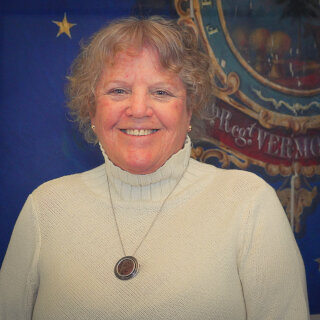
Rep. Sarita Austin
Sponsored bills
Maddy summaryThis bill expands eligibility for the Downtown Transportation and Related Capital Improvement Fund to include village centers and growth centers in addition to existing downtown development districts. It also allows the fund to cover engineering and design costs for transportation projects, which previously were not included. The changes apply to municipalities that meet specific criteria, such as having a designated village center that participated in the Better Connections Program or is located in Chittenden County with a completed community planning process. Under the new provisions, the Vermont Downtown Development Board can award grants, loans, or loan guarantees for capital transportation projects like roads, parking facilities, and utility line relocation, with grants covering up to 80 percent of project costs. The bill takes effect on July 1, 2024.
Maddy summaryThis bill establishes the Youth Participatory Action Research Project, a state-funded initiative that brings together diverse middle school students across Vermont to identify and address issues in the education system. The program uses a nonprofit facilitator to select students in grades eight through ten, who will first gather feedback from peers statewide, then design a week-long summer institute where they develop a blueprint for educational change using data-driven methods. A $100,000 appropriation from the General Fund supports the project, with the Agency of Education required to report outcomes to education committees by December 1, 2025. The initiative aims to create long-term partnerships between students and educators while ensuring representation from all regions of the state.
Maddy summaryThis bill requires Vermont school districts to include military-related postsecondary opportunities in career development and personalized learning plans for students in grades 7 through 12. It also mandates that the Vermont Student Assistance Corporation provide information about military-related postsecondary options and financial aid in all planning resources it produces. The changes aim to ensure students are aware of military education pathways as part of their broader career and postsecondary planning. The bill takes effect on July 1, 2024.
Maddy summaryThis bill allocates $200,000 from the state's General Fund to reimburse the Burlington Fire Department for emergency medical services provided to individuals experiencing drug overdoses. The money is distributed through the Department of Health as a grant to the City of Burlington, with the requirement that these funds supplement rather than replace existing city funding for the fire department. The legislation takes effect on July 1, 2024, and is intended to help cover the costs associated with responding to overdose incidents in Burlington.
Maddy summaryThis bill, known as the Transportation Infrastructure and Resiliency Act of 2024, directs state funding and policy changes to improve roads, support electric vehicle adoption, and enhance transportation options across Vermont. It increases funding for road repair programs, provides grants for eBike and electric vehicle charging infrastructure, and establishes new rules allowing property owners to install charging stations. The legislation also expands funding for bicycle and pedestrian projects, creates a plan for carsharing expansion, and requires the state to develop new revenue sources for transportation and environmental initiatives. Additionally, it allows certain areas to set speed limits below 25 mph and mandates reporting on electric vehicle outreach efforts and charging station availability.
Maddy summaryThis bill aims to improve literacy instruction in Vermont schools by establishing science-based reading methods and expanding professional development for educators. It directly affects students in general education and those with disabilities, as well as teachers and administrators who deliver reading instruction. Key provisions include converting a limited-service literacy position to a permanent full-time role, extending the Advisory Council on Literacy through 2030, and creating a new position to research and recommend curriculum resources. The legislation also appropriates funding to support ongoing professional development focused on evidence-based reading practices and assessment methods.
Maddy summaryThis bill would require online companies to design their services with children's best interests in mind if those services are likely to be accessed by minors under 18. It mandates that companies consider different developmental stages when creating features and prohibits the use of deceptive user interface designs known as dark patterns that could manipulate children's choices. The law applies to businesses operating in Vermont and defines specific rules for how personal data about children can be collected, processed, and shared, including restrictions on profiling and geolocation tracking. Companies must also provide clear default settings that protect children's privacy rather than requiring them to opt out of data collection.
Maddy summaryThis House concurrent resolution honors Vermont National Guard Deputy Adjutant General Kenneth Gragg for his distinguished career in public service. The document recognizes his 46 years of military and civilian service, including his leadership in financial management, construction projects, and pandemic response efforts. It directs the Secretary of State to send a copy of the resolution to Gragg as a formal acknowledgment of his contributions. This is a ceremonial measure with no new laws or policy changes, serving only to publicly recognize his achievements.
Maddy summaryThis bill creates a new Community Resilience and Disaster Mitigation Grant Program and Fund to help Vermont municipalities prepare for and reduce the impact of natural disasters. The program would provide grants to cities, towns, and other local governments for projects like slope stabilization, watershed restoration, and drought mitigation, with priority given to communities facing higher vulnerability. Funding comes from a $15 million appropriation in fiscal year 2024 and an annual assessment on insurance companies writing policies in Vermont, capped at $4.3 million. The Department of Public Safety would administer both the grant program and the fund, which must keep records and submit annual reports on how money is spent.