

Maddy summaryThis legislative bill is a ceremonial resolution that formally recognizes the 100th anniversary of the Vermont State Parks system. It commemorates the historical significance of the parks, which began in 1924 with a donation of land that became Mt. Philo State Park, and acknowledges the contributions of Civilian Conservation Corps workers and private foundations to their development. The resolution does not create new laws or change policies but serves to honor the parks' legacy and their role in Vermont's outdoor economy. It directs the Secretary of State to send copies of the resolution to relevant state agencies and the Vermont Parks Forever foundation.
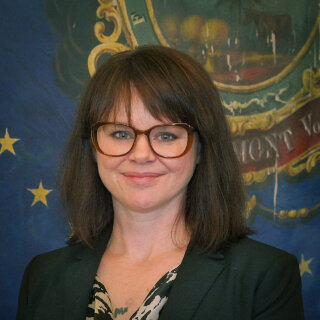
Rep. Kate Logan
Sponsored bills
Maddy summaryThis bill would ban advertisements for Vermont's state-run gambling operations, including the state lottery and sports wagering. It directly affects the Department of Liquor and Lottery, sports wagering operators, and any entities that currently advertise these services. The law would require the department to remove existing gambling advertisements and prevent new ones from appearing in the future. This change would modify the current advertising plan agreement between the state and its gambling partners. The bill aims to reduce the visibility of state gambling promotions without altering the operations themselves.
Maddy summaryThis House resolution honors Vermont television journalist Stewart Ledbetter for his 40 years of news reporting. The bill formally recognizes his career achievements, including his work as a news director, political campaign moderator, and recipient of multiple broadcast awards. It directs the House Clerk to send a copy of the resolution to Ledbetter and WPTZ, the television station where he worked.
Maddy summaryThis bill creates a two-part pilot program to improve health outcomes for people involved with the justice system in Vermont. The first part provides $50,000 to train all correctional facility staff, contractors, and grant recipients in health equity practices, starting at the Chittenden Regional Correctional Facility. The second part allocates $1 million to fund community-based mental health and substance use disorder services for detained or incarcerated individuals, including telehealth visits, on-site case management, and support for reentry into the community. The pilot will run for three years with a required report submitted by October 1, 2025, to evaluate progress and recommend potential expansion.
Maddy summaryThis bill creates an earned allowance program for incarcerated individuals in Vermont's correctional facilities, allowing them to earn money through compliant behavior and participation in programs to cover educational costs, medication, housing, and work-related expenses. The program uses a contingency management approach that rewards positive behavior rather than punishing rule violations, with allowances calculated based on successful drug screenings and months without disciplinary infractions. It also expands workforce development opportunities by enabling partnerships with nonprofit and for-profit businesses to provide vocational training in Vermont's most needed industries such as healthcare, construction, and agriculture. The Department of Corrections must establish rules for the program by September 2025, with implementation beginning January 1, 2026.
Maddy summaryThis bill would give Vermont's Attorney General new authority to regulate social media platforms in the state, specifically to protect the health and safety of users under 18. It establishes a new legal framework called the Vermont Social Media Safety Act and creates a funding structure to support enforcement efforts. The legislation is based on findings that social media design features can contribute to youth mental health issues and addiction, and it applies consumer protection principles to social media companies. The bill does not specify particular platform requirements but instead empowers regulators to oversee how these platforms operate and impact child users.
Maddy summaryThis bill creates the Vermont Olympics Task Force to study the feasibility of hosting the Olympic Games in Vermont. The task force would be composed of state officials, elected representatives, tourism industry experts, and an Olympic athlete, with members receiving per diem compensation for up to 20 meetings. Its duties include reviewing Olympic hosting requirements, developing a proposal that aligns with Vermont's regional development plans and climate resilience goals, and presenting findings to the International Olympic Committee. The task force must submit progress reports by December 2024 and March 2025, with a final report due by December 2025. The legislation takes effect on July 1, 2024, and focuses on creating a sustainable, equitable proposal rather than committing to hosting the Games.
Maddy summaryThis bill directs Vermont state agencies to create a pilot program for a 16-bed secure recovery residence designed for justice-involved individuals with co-occurring mental health and substance use disorders. It requires the Agency of Human Services to partner with stakeholders who have lived experience in the criminal justice system to design this facility and integrate community-based services. By January 15, 2025, the agencies must submit a comprehensive report assessing current and future needs for secure residential recovery facilities across Vermont, including cost-benefit analyses comparing these facilities to traditional correctional centers. Additionally, the Coordinated Justice Reform Advisory Council is tasked with examining how to replace existing correctional facilities with a continuum of short-term and long-term residential options that use evidence-based rehabilitation approaches. The legislation takes effect on July 1, 2024, and aims to improve recovery outcomes while reducing recidivism through specialized care in secure settings.
Maddy summaryThis bill allocates $2.8 million in state funding to expand supportive and transitional housing for justice-involved individuals in Vermont, with a focus on those who are homeless or at risk of homelessness. The funds are distributed to three agencies to provide housing grants, prioritize women and transgender individuals, and support community-based services using the Housing First model. Additionally, the bill requires state agencies to submit a report by January 2025 recommending strategies to integrate housing into new developments and expand peer-based services. The legislation aims to address recidivism by reinvesting incarceration funds into community care and assessing future housing needs.
Maddy summaryThis bill authorizes Vermont municipalities to remove sediment, rocks, and debris from waterways without needing a state permit, provided the work meets specific federal exemption criteria. The law defines "maintenance" as repairing structures like dams and dikes, and allows municipalities to proceed without state approval when the work is exempt from federal Corps of Engineers permitting, qualifies for self-verification, or occurs in non-navigable waters. The legislation also clarifies definitions for terms like "instream material" and "watercourse" to establish clear boundaries for when permits are required versus when they are not. Additionally, the bill specifically authorizes the City of Barre to remove material from the Stevens Branch of the Winooski River for maintenance purposes without a permit.