

Maddy summaryH.885 prohibits Vermont municipalities and counties from regulating the use of public land for "life-sustaining activities" (such as resting, sleeping, storing belongings, or protecting oneself from elements), directly affecting individuals experiencing homelessness. Exceptions apply only where a municipality has designated specific downtowns/growth centers for such use or has sufficient alternative shelter space available. The bill defines "life-sustaining activities" broadly to cover basic survival needs and adds "housing status" to anti-discrimination protections in several statutes. It overrides conflicting local ordinances and empowers the Attorney General to enforce compliance. The legislation responds to Vermont’s severe homelessness crisis, citing a 300% increase since 2020 and 4,588 people experiencing homelessness as of June 2025.
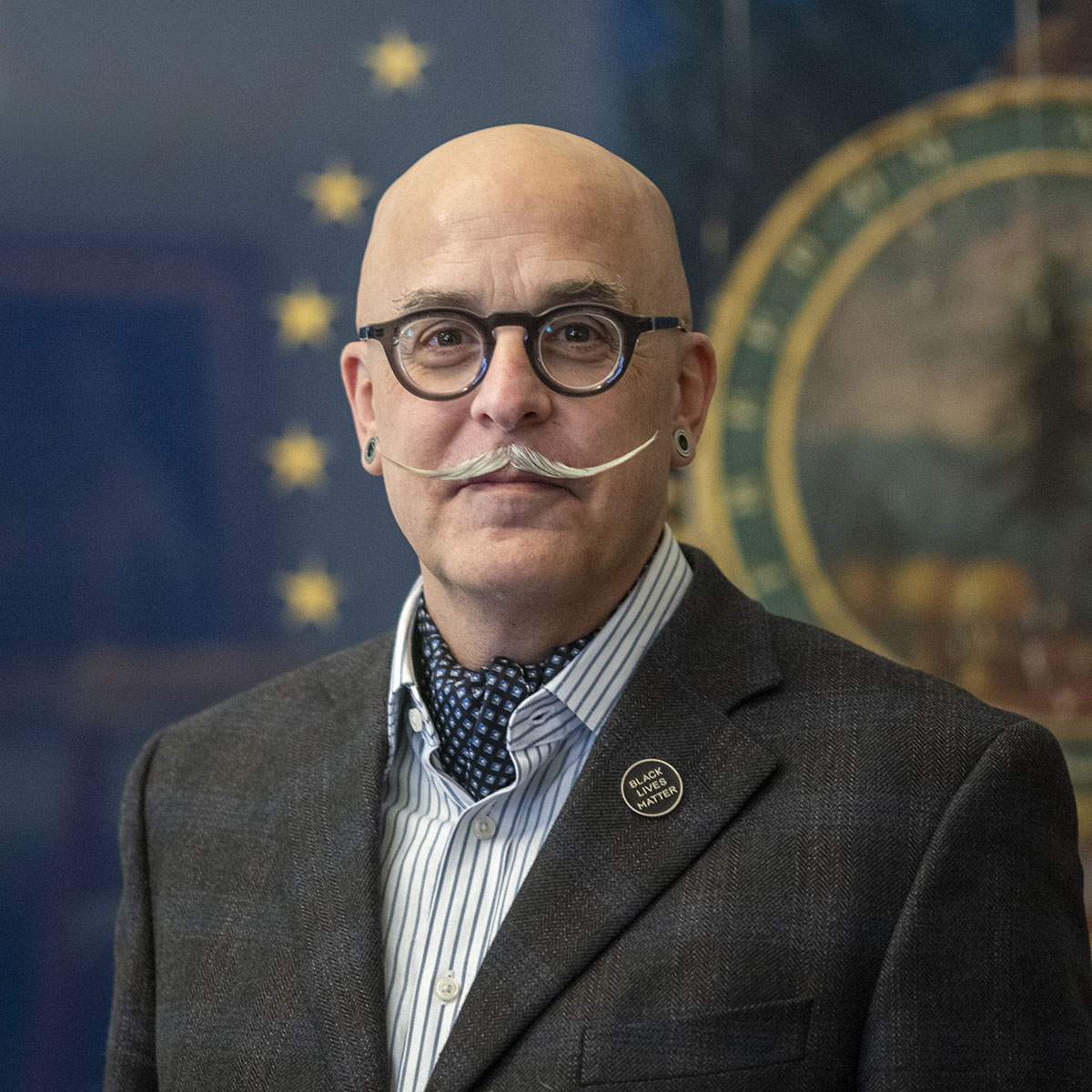
Rep. Troy Headrick
Sponsored bills
Maddy summaryThis Vermont House resolution (H.R. 13) is a symbolic statement, not a binding law. It calls for a global ceasefire, truth and reconciliation processes, and an end to apartheid, specifically referencing concerns about Israeli conduct in Gaza as noted in a future-dated UN report (2025). The resolution directs Vermont’s House Clerk to send copies to U.S. President Trump, Israeli President Herzog, Palestinian Authority President Abbas, UN Secretary-General Guterres, and Vermont’s congressional delegation. It does not create new legal obligations but expresses Vermont’s support for conflict resolution between Palestinians and Israelis. The resolution cites Vermont’s historical opposition to apartheid (e.g., divestment from South Africa in 1986) as context for its position.
Maddy summaryH 865 requires Vermont public servants to disclose travel costs and details to the Ethics Commission for any travel related to their official duties or public role. This includes the purpose, destination, all costs (transportation, lodging, meals), and who paid for each expense (state, personal, or outside sources like lobbyists). Public servants must submit these disclosures within 30 days of travel start (or weekly for trips over 30 days), excluding regular commuting. The bill takes effect July 1, 2026, aiming to increase transparency in public travel spending.
Maddy summaryH 859 establishes a Psychedelic Therapy Advisory Board to review research on psychedelic therapy's benefits for mental health and substance use disorders, and to recommend state programs allowing therapeutic use of psychedelics. The bill requires Vermont's Department of Health to contract with a Vermont entity to conduct clinical drug development trials specifically for ibogaine - a treatment being studied for substance use disorders and trauma. The Advisory Board will assess public health impacts, monitor other states' programs, and propose pilot projects for psychedelic-assisted therapy in end-of-life care or for mental health conditions. This directly affects Vermont's healthcare system, mental health providers, and individuals seeking treatment for conditions resistant to current therapies.
Maddy summaryThis bill (H.868) would require Vermont public schools to phase out ultra-processed foods - like packaged snacks, pre-made meals, and sugary drinks - from school meals and replace them with foods made from scratch using whole, fresh ingredients. It directly affects all Vermont public school food programs, including cafeterias serving students. The key mechanism is establishing new guidelines to gradually eliminate ultra-processed items while increasing the use of unprocessed or minimally processed foods. The bill aims to improve student nutrition by prioritizing fresh, whole foods over highly processed options in school meals.
Maddy summaryThis is a commemorative resolution (HCR 175), not a substantive bill. It honors the late Venerable J. Stannard Baker of Shelburne, recognizing his pivotal role in Vermont's marriage equality history. The resolution commemorates his leadership in the landmark 1999 *Baker v. State* case that established marriage equality under the Vermont Constitution, leading to civil unions and later marriage rights. It expresses the legislature's condolences to his family and directs the Secretary of State to share the resolution with his family and the Episcopal Diocese of Vermont.
Maddy summaryHCR 177 is a ceremonial resolution honoring Twin Valley High School's Athletic Director and boys' soccer coach Buddy Hayford for achieving 500 career coaching victories. It recognizes his 43-year coaching career, including 10 divisional titles, two state basketball titles, and his status as Vermont's first high school soccer coach to reach 500 wins. This resolution, offered by all House members and sponsoring senators, formally congratulates Hayford and directs the Secretary of State to send a copy to him and his school - **it is not a law but a symbolic gesture of appreciation**.
Maddy summaryThis bill (H.825) simplifies the process for property owners to install wheelchair ramps by removing the requirement to submit a zoning permit application. It directly affects property owners seeking to make accessibility improvements and the municipal panels that review development projects. The key provision requires these panels to allow ramp construction without permits and mandates they receive training on the Americans with Disabilities Act (ADA) as it relates to zoning. This change aims to reduce barriers for accessible home modifications while ensuring local officials understand ADA compliance.
Maddy summaryThis is a symbolic House resolution (HR 12), not a policy bill. It expresses Vermont's support for Governor Philip B. Scott's statement criticizing federal immigration enforcement actions in Minnesota. The resolution specifically endorses the governor's call for halting "Operation Metro Surge" (the federal deployment of ICE/CBP agents), condemning the fatal shooting of a protester, and demanding adherence to constitutional rights. As a resolution, it has no legal effect or policy changes - it solely conveys legislative support for the governor's position.
Maddy summaryThis bill establishes liability standards for developers and deployers of high-impact artificial intelligence systems in Vermont. It directly affects companies (excluding small businesses with <20 employees or <10,000 users) that create or operate AI systems making consequential decisions - such as in criminal justice, housing, employment, healthcare, or critical infrastructure. Key provisions require developers to ensure systems are safe for foreseeable use and deployers to guarantee systems don’t harm individual rights, with specific definitions for "high-impact AI" and "harm" (including physical, financial, reputational, or psychological injury). The law applies only to systems meeting the defined high-impact criteria, not general AI tools.