

Maddy summaryThis bill imposes a moratorium on the study, design, construction, expansion, or renovation of correctional facilities in Vermont until July 1, 2028, while also ending a long-standing suspension of state aid for school construction projects. The corrections provisions prohibit the state from building new prisons, expanding existing ones beyond current capacity, converting facilities for detention purposes, or renovating them to increase bed capacity, with only basic maintenance and code compliance exceptions allowed. Simultaneously, the bill restores state funding for school construction projects starting in fiscal year 2024, allowing the state to accept and review applications that had been blocked since 2007. The legislation takes effect on July 1, 2023, and includes findings that link poor school environments to incarceration rates and that harsh prison conditions contribute to recidivism and trauma.
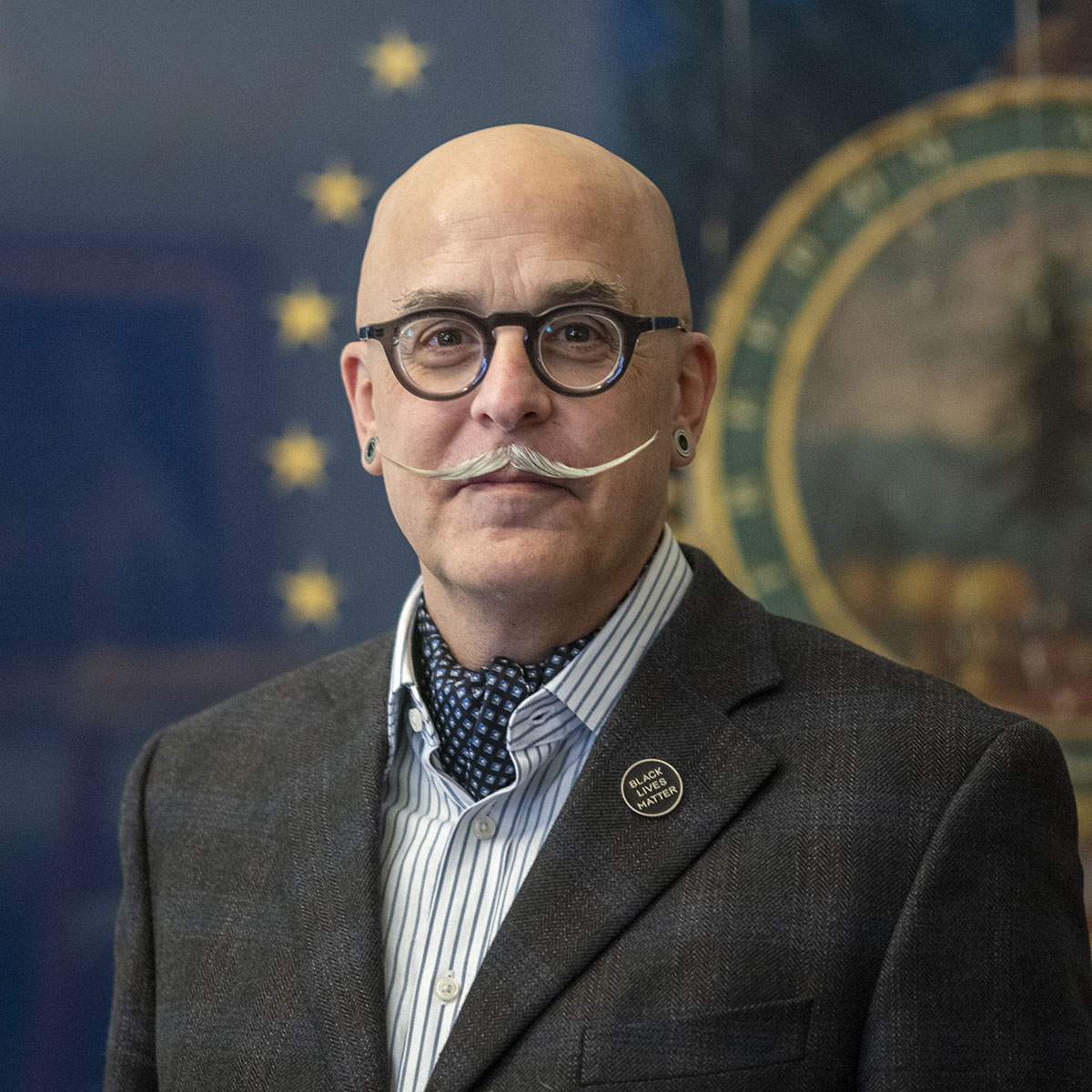
Rep. Troy Headrick
Sponsored bills
Maddy summaryThis bill creates a Just Transition Working Group to develop a plan for replacing Vermont's correctional facilities with a community-based system focused on restorative justice and rehabilitation. The working group would include legislators, agency representatives, and individuals with lived experience in the criminal justice system to design services addressing housing, education, workforce development, and mental health needs. The plan aims to reduce recidivism by shifting resources from incarceration to community supports, beginning with the Chittenden County Correctional Facility. The bill does not mandate immediate changes but establishes a framework for studying and planning a transition away from traditional incarceration methods.
Maddy summaryThis bill restructures the University of Vermont Board of Trustees by adding two new voting faculty members and clarifying student representation requirements. The legislation expands the board to 27 members total, with two faculty positions elected by the Faculty Senate and two student positions reserved for one undergraduate and one graduate student. These student trustees serve two-year terms and must be full-time students enrolled in degree programs, while faculty members serve four-year terms with full voting rights. The changes take effect on July 1, 2023, with a transition period for initial faculty appointments beginning in August 2023.
Maddy summaryThis bill requires independent schools in Vermont to pay their teachers' retirement contributions and administrative expenses directly, rather than having these costs covered by the state education budget. It also clarifies that "education spending" includes the portion of retirement payments attributable to school districts, while excluding funds from other sources like endowments or federal grants. The changes take effect on July 1, 2024, and include requirements for independent schools to submit annual payment statements and for the state to report on implementation to relevant committees.
Maddy summaryThis bill requires students graduating from Vermont public high schools to demonstrate civics knowledge as a condition of receiving a diploma. The law offers two pathways: passing the standard U.S. citizenship civics test with a minimum score of 60 percent, or completing one semester of community service with a local government organization under a mentor's supervision. The requirement applies to all public high school and career technical center students, though students with individualized education programs may participate at the discretion of their IEP team. The measure would take effect for students graduating in the 2025-2026 academic year or later.
Maddy summaryThis bill proposes to remove certain plant and fungi-derived substances from Vermont's list of regulated drugs, meaning they would no longer be subject to criminal penalties for possession or use. Specifically, it excludes peyote, ayahuasca, mescaline, psilocybin, psilocin, ibogaine, and N,N-dimethyltryptamine from the legal definition of regulated drugs under state law. The legislation applies to these specific compounds and the plants or fungi that contain them, regardless of whether they are used for medicinal, spiritual, religious, or other purposes. If passed, the changes would take effect on July 1, 2023, and would be implemented by the state Board of Health.
Maddy summaryThis bill requires the State of Vermont to develop a comprehensive plan for transitioning to a regenerative economy by 2026, which aims to repair and restore natural and human resources rather than simply reducing harm. The legislation mandates that the state be divided into 11 regions, each forming a People's Assembly to create local plans through broad public engagement involving community members, businesses, and organizations. These regional plans must address specific goals including regenerative agriculture, food justice, waste reduction, renewable energy, and racial equity while guiding state investments and policy decisions. The bill establishes a long-term target of achieving 90 percent of a regenerative economy by December 31, 2046, and requires all state funding streams to align with the resulting roadmap.
Maddy summaryThis bill directs Vermont's Secretary of Natural Resources to update drinking water standards for specific chemicals known as PFAS. It requires setting a maximum contaminant level of zero parts per trillion for six named PFAS compounds and a combined limit of 20 parts per trillion for all other testable PFAS. The Department of Environmental Conservation must finalize these rules by July 1, 2024, affecting water treatment facilities and public water systems in the state. The legislation takes effect on July 1, 2023, giving agencies time to develop the necessary regulatory framework.
Maddy summaryThis bill establishes a study committee to examine how perfluoroalkyl and polyfluoroalkyl substances in landfill leachate affect natural resources across Vermont. The committee will be tasked with evaluating the presence and impacts of these chemical substances found in liquid waste from landfills. The legislation directly involves state environmental officials and land management agencies responsible for monitoring landfill operations. No specific regulatory changes or funding allocations are included in this measure, which focuses solely on creating a framework for further investigation.
Maddy summaryThis bill prohibits Vermont schools and educational programs that receive state funding from using unlawful physical restraints, seclusion, mechanical restraints, or chemical restraints on students. It defines specific types of restraints and seclusion that are banned, while allowing certain voluntary physical contacts like escorts and prompts that do not restrict movement. Covered entities must report and document any incidents involving restraint or seclusion, notify parents within 24 hours, and hold meetings within five school days to discuss prevention strategies and potential behavioral support plans. The Agency of Education is tasked with creating a performance review system to monitor compliance and provide technical assistance to schools for implementing evidence-based programs that reduce the need for restraints.