

Maddy summaryThis bill requires Vermont's Housing Division to track and report on progress toward statewide and regional housing targets established in the Statewide Housing Needs Assessment. The legislation mandates the development of specific metrics, including timelines with deadlines and regional measures covering investment rates, price, quality, and zoning compliance. Through 2030, the Division must publish annual reports detailing progress against these targets, assess whether advancement is satisfactory, and provide recommendations to accelerate housing development if needed. The bill affects the Department of Housing and Community Development, regional planning commissions, and housing developers by creating a structured accountability system for meeting housing goals.
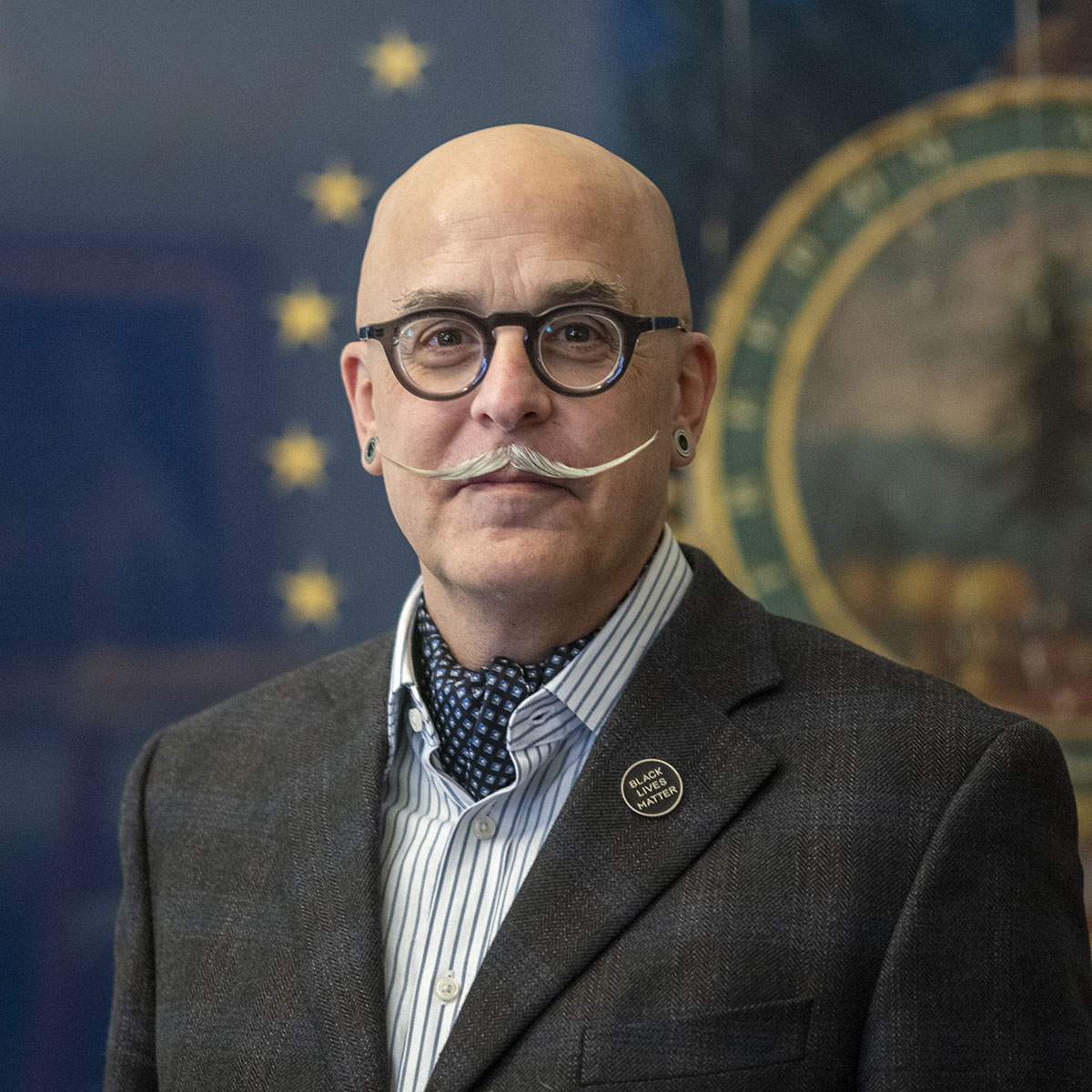
Rep. Troy Headrick
Sponsored bills
Maddy summaryThis bill, known as the Transportation Infrastructure and Resiliency Act of 2024, directs state funding and policy changes to improve roads, support electric vehicle adoption, and enhance transportation options across Vermont. It increases funding for road repair programs, provides grants for eBike and electric vehicle charging infrastructure, and establishes new rules allowing property owners to install charging stations. The legislation also expands funding for bicycle and pedestrian projects, creates a plan for carsharing expansion, and requires the state to develop new revenue sources for transportation and environmental initiatives. Additionally, it allows certain areas to set speed limits below 25 mph and mandates reporting on electric vehicle outreach efforts and charging station availability.
Maddy summaryThis bill directs Vermont's Department of Health to create free opioid overdose response training videos and distribute naloxone, a medication that reverses opioid overdoses, to businesses and organizations likely to encounter people experiencing overdoses. The legislation also requires the department to expand community prevention programs, improve access to treatment services, educate healthcare providers and recovery program participants on overdose prevention, and establish public kiosks where naloxone can be dispensed. These measures aim to increase public awareness and access to life-saving resources for individuals at risk of opioid-related overdoses across the state. The law is set to take effect on July 1, 2024.
Maddy summaryThis bill would require online companies to design their services with children's best interests in mind if those services are likely to be accessed by minors under 18. It mandates that companies consider different developmental stages when creating features and prohibits the use of deceptive user interface designs known as dark patterns that could manipulate children's choices. The law applies to businesses operating in Vermont and defines specific rules for how personal data about children can be collected, processed, and shared, including restrictions on profiling and geolocation tracking. Companies must also provide clear default settings that protect children's privacy rather than requiring them to opt out of data collection.
Maddy summaryThis bill creates a new Office of Entrepreneurship within the Agency of Commerce and Community Development to support new and small businesses in Vermont. The office will focus on strengthening policies for entrepreneurs, providing technical assistance, helping businesses under five years old navigate state agencies, and ensuring at least five percent of state contracts go to these newer businesses. Additionally, the bill eliminates all first-year registration fees for new businesses and requires an annual report on contract awards to businesses under five years old, including data on demographic representation. A third provision directs the Agency of Commerce and Community Development to study and recommend ways to reduce regulations on home-based food businesses while protecting public health. The legislation takes effect on July 1, 2024.
Maddy summaryThis bill directs Vermont's Public Utility Commission to create a statewide low-income electric ratepayer protection program that helps eligible households pay their electricity bills. The program would assist residential customers earning at or below 150 percent of the federal poverty level, aiming to ensure those at or below 60 percent of state median income spend no more than 10 percent of their monthly income on electricity if they heat with electricity, or no more than six percent if they do not. The Commission must work with a collaborative group including utility companies, consumer representatives, and state agencies to design the program, which would use automatic screening methods based on existing financial assistance programs and include arrearage forgiveness. Funding for the program would be collected statewide from all customer classes in an equitable manner, with the Commission considering options like voluntary payments or surcharges on high-volume users. The bill also repeals an existing section of state law and takes effect immediately upon passage.
Maddy summaryThis bill, known as the Thermal Energy Network Act, would bring utility-style thermal energy networks under the oversight of Vermont's Public Utility Commission. It defines thermal energy networks as infrastructure that distributes heat and cooling from non-fossil fuel sources to multiple buildings and requires the Commission to issue a certificate of public good before any private company can operate such a network for more than 20 customers. Municipalities would retain the ability to build and operate these networks without Commission approval, similar to how they currently manage water and sewer services. The bill also directs the Commission to create rules that simplify permitting, allow pilot projects, and prioritize serving low- and moderate-income customers.
Maddy summaryThis bill creates a new grant program administered by the Agency of Human Services to help municipalities and other organizations acquire or renovate existing buildings for permanent supportive housing. The program provides up to $4.5 million in 2025 funding for projects that convert buildings into multiple studio apartments with kitchens and bathrooms, while requiring energy-efficient renovations. Each funded site must employ or contract two staff members to provide daily on-site support services such as case management, support groups, and connections to community resources. The bill targets individuals experiencing chronic homelessness, those recovering from mental health or substance use disorders, aging out of foster care, and other vulnerable populations. Eligible applicants must submit proposals identifying specific buildings, outlining costs and local contributions, and demonstrating accessibility to healthcare and transportation.
Maddy summaryThis bill, titled the Protecting Soils and Waters from Forever Chemicals Act, prohibits the land application of septage throughout Vermont and restricts landfill disposal of waste containing perfluoroalkyl and polyfluoroalkyl substances (PFAS) when state standards are exceeded or when facilities lack proper certification. The legislation requires all solid waste management facilities to obtain state certification before operating, with specific exemptions for certain domestic wastewater treatment plants that meet defined conditions. Additionally, the bill bans the use of sludge as daily cover at landfills and mandates that the Secretary of Natural Resources and the Secretary of Agriculture, Food and Markets develop a memorandum of understanding by January 15, 2025, to enforce PFAS soil standards. These changes directly affect wastewater treatment facilities, landfills, and municipalities that manage septage and sludge waste.
Maddy summaryThis bill creates a new Community Resilience and Disaster Mitigation Grant Program and Fund to help Vermont municipalities prepare for and reduce the impact of natural disasters. The program would provide grants to cities, towns, and other local governments for projects like slope stabilization, watershed restoration, and drought mitigation, with priority given to communities facing higher vulnerability. Funding comes from a $15 million appropriation in fiscal year 2024 and an annual assessment on insurance companies writing policies in Vermont, capped at $4.3 million. The Department of Public Safety would administer both the grant program and the fund, which must keep records and submit annual reports on how money is spent.