

Maddy summaryThis bill would require annual mental health screenings for anxiety, depression, and suicide risk among school-aged youth in Vermont. The screenings would be implemented as part of existing school health services, directly affecting students and school districts. The legislation mandates that these assessments occur regularly to identify mental health concerns early, without specifying additional funding or enforcement details.
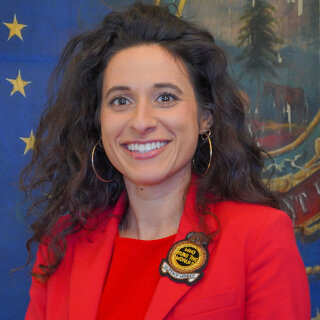
Rep. Mary-Katherine Stone
Sponsored bills
Maddy summaryThis bill creates a new Climate Infrastructure and Resilience Fund to provide loans and financing for projects that help communities adapt to climate change and protect against flooding. The fund will be managed by a board including state officials and appointed representatives, with money drawn from state cash balances, donations, and future legislative appropriations. It also adjusts how the Clean Water Fund distributes money, prioritizing projects that improve water quality, build climate resilience, and support ecological health. Additionally, the bill authorizes new staff positions across several state agencies to administer these programs and requires clean water service providers to prioritize projects that create climate-resilient communities.
Maddy summaryThis bill would allow incarcerated individuals in Vermont to receive time off their sentences for earning higher education degrees or credentials. Under the proposal, offenders would get six months off for completing a certificate program with at least 30 credit hours, one year for an associate or bachelor's degree, 18 months for a master's degree, and two years for a doctoral degree. The legislation also directs that any cost savings from reduced incarceration time be transferred to the state's education budget to support colleges and universities. This change directly affects the Department of Corrections and institutions of higher education in Vermont.
Maddy summaryThis bill would change how Vermont towns without their own public schools use education funds by requiring them to designate up to five specific public or approved independent schools as eligible to receive public tuition payments. The legislation establishes new criteria that independent schools must meet to qualify for public funding and allows school districts to close existing schools and pay tuition to designated schools only with voter approval. It also sets spending limits on private school tuition, capping payments for nonprofit independent schools at the average tuition of Vermont union elementary schools. The bill aims to ensure public funds support schools that serve all children while keeping tax dollars within the state.
Maddy summaryThis bill amends Vermont state law to clarify how harassment is defined and evaluated in schools, directly affecting students, families, and school administrators. It removes the requirement that harassment must be "severe or pervasive" to be unlawful, allowing a single incident to constitute harassment if it objectively undermines a student's education or creates an intimidating environment. The law also specifies that harassment can be determined by looking at all circumstances together rather than isolating individual incidents, and it clarifies that harassment can occur even if the student continues their education or if the conduct happens outside school grounds. However, the bill maintains that behavior considered a petty slight or trivial inconvenience by a reasonable person would not qualify as harassment. These changes take effect on July 1, 2024.
Maddy summaryThis bill creates the Climate Superfund Cost Recovery Program, which would require fossil fuel companies that operated in Vermont between 2000 and 2019 to pay for their share of climate change costs. The program targets entities involved in extracting coal, oil, or natural gas, charging them based on how much greenhouse gas their products contributed to global emissions. Money collected from these payments would go into a dedicated fund to finance climate resilience projects like flood protections, upgraded infrastructure, and health programs addressing climate-related health risks. The law defines specific types of infrastructure projects eligible for funding and establishes rules for determining which companies must pay and how much they owe.
Maddy summaryThis bill would allow certain undocumented students to pay in-state tuition rates and access state-funded financial aid at Vermont's public colleges if they meet standard residency requirements. It prohibits the Vermont State Colleges Corporation from excluding students based solely on immigration status and requires the Vermont Student Assistance Corporation to make state financial aid available to all residents regardless of immigration status. The law specifically includes protections for refugees, those granted parole to enter the U.S., and Afghan Allies Protection Act visa holders, while also clarifying residency rules for military families. The changes would take effect on July 1, 2025, and include provisions ensuring students can apply for and participate in financial aid programs to the full extent allowed by federal law.
Maddy summaryThis bill creates a two-year pilot program to fund a community-based organization that coordinates mental wellness and climate resilience efforts across Vermont. The program would receive $100,000 in fiscal year 2025 from the state's General Fund to support activities that address how extreme weather events and other social stresses impact mental health. The coordinating body must include representatives from diverse groups including schools, faith organizations, environmental groups, disaster response agencies, and people with lived experience of mental health challenges. The program uses a public health approach to prevent mental health problems before they emerge and to help entire communities build resilience against various adversities.
Maddy summaryThis bill designates April 10 as Ken Squier Day to honor the late Vermont broadcaster and auto racing commentator. The legislation recognizes Squier's contributions to radio through his ownership of WDEV and founding of the Radio Vermont Group, as well as his pioneering work with the Motor Racing Network and NASCAR Hall of Fame induction. It also acknowledges his community leadership roles, including chairing the Vermont Symphony Orchestra Board and his extensive involvement in local sports broadcasting. The bill adds a new section to Vermont's statutes formally establishing the commemorative day without requiring any additional government funding or administrative changes.
Maddy summaryThis bill proposes a new 11 percent excise tax on the retail sale of firearms, firearm precursor parts, and ammunition in Vermont, which would be paid by sellers at the time of each transaction. The tax applies to both licensed firearm dealers and ammunition vendors, with licensed dealers required to collect the tax during background checks and remit it quarterly to the state. All revenue generated from this tax would be deposited into the Domestic and Sexual Violence Special Fund, which supports grants for domestic and sexual violence prevention services. The legislation excludes transfers exempt from background checks, such as those to law enforcement agencies or immediate family members, and would take effect on July 1, 2025.