

Maddy summaryH.652 prohibits all landfill leachate discharges - whether treated or untreated - from entering the Lake Memphremagog watershed. This includes direct discharges from landfills or transfers to wastewater treatment facilities within the watershed. The bill targets PFAS-contaminated leachate, citing studies showing Lake Memphremagog has the highest PFOS levels in Vermont (2.8 ppt) and fish with PFAS at 1,000 ppt. It directly affects landfill operators and wastewater facilities in the watershed, banning any discharge that could harm the lake’s water quality or public health.
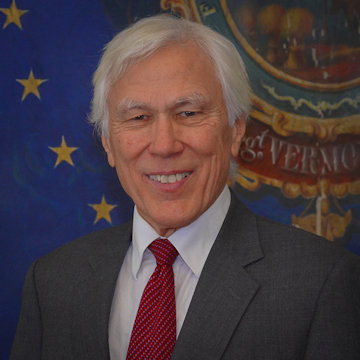
Rep. Scott Campbell
Sponsored bills
Maddy summaryThis bill establishes specific statewide targets for energy storage capacity: 200 megawatts (MW) by 2030, 450 MW by 2035, and 800 MW by 2040. It requires the Vermont Department of Public Service to track progress toward these goals in the state’s Comprehensive Energy Plan. The policy directly affects energy providers and infrastructure developers who must contribute to meeting these storage capacity milestones. The bill takes effect July 1, 2026, creating a measurable framework for expanding grid-scale battery storage.
Maddy summaryH.610 directs Efficiency Vermont to study creating a statewide community-based energy navigator program by January 2027. The program would provide in-person and remote coaching to residential consumers, especially low- and moderate-income homeowners, landlords, and renters, helping them navigate energy efficiency options, access grants/rebates, prioritize upgrades, and connect with contractors. It requires a report detailing program design, costs, funding sources (including $15,000 for the study and $150,000 for the Climate Economy Action Center), and projected energy savings. The bill does not implement the program but mandates a study to inform future rollout.
Maddy summaryH.609 establishes a regulatory framework for thermal energy networks - pipelines that transfer heat between buildings to reduce emissions from heating and cooling. It clarifies that the Public Utility Commission (PUC) will oversee non-municipal operators of these networks, while allowing municipalities or fire districts to directly build, operate, and set rates for such networks without needing a PUC "certificate of public good." The bill defines key terms like "thermal energy exchange" (noncombustible fluid systems for heat transfer) and excludes cooperatives, landlords, or self-served entities from PUC jurisdiction. Fire districts can now fund these networks through local taxes, similar to existing fire protection or water infrastructure funding. This bill directly affects communities, fire districts, and private operators seeking to deploy district heating systems for emissions reduction.
Maddy summaryThis bill directs Vermont's Public Utility Commission to study how to speed up renewable energy projects by identifying municipal or regional sites near existing power infrastructure. The study will examine whether developing projects closer to current transmission lines could reduce construction timelines and increase renewable energy facility development. The Commission must report findings to legislative committees by January 15, 2027. This study does not create new regulations or funding but aims to identify potential efficiency improvements for future renewable energy projects. The bill directly affects the Public Utility Commission's responsibilities and indirectly impacts renewable energy developers and communities.
Maddy summaryH 599 simplifies modifications to small solar energy systems by removing the need for new permits if capacity stays under 25 kW. It directly affects Vermont homeowners and small businesses with existing solar installations who want to make minor upgrades (like adding panels) without seeking additional approval. The bill amends Vermont law to state that only changes exceeding 25 kW capacity require a revised "certificate of public good." This reduces administrative steps for small system adjustments while maintaining oversight for larger expansions. The change takes effect July 1, 2026.
Maddy summaryH.593 requires the Public Utility Commission (PUC) to approve any agreement the Department of Public Service (DPS) enters into for interregional electricity transmission projects. This applies when the DPS negotiates deals involving electricity transmission between regions, such as those affecting Vermont’s connections to New England’s grid. The bill aims to ensure these agreements align with Vermont’s energy policies and protect ratepayers from financial harm. The change amends Vermont law to add this PUC approval step for regional transmission agreements.
Maddy summaryH 397 updates Vermont's emergency management and flood response systems. It requires the Division of Emergency Management to annually report on mitigation plans to legislative committees and revise the State Emergency Management Plan every five years to cover response coordination, preparedness, and local planning templates. The bill expands grant funding for flood mitigation projects, including voluntary buyouts for flood-affected properties, and mandates new assistance for municipalities to access river monitoring and weather alert systems. It also provides municipalities with greater flexibility to borrow funds for emergency-related expenses and manage unspent budget balances. These changes directly affect state agencies, local governments, and communities in flood-prone areas.
Maddy summaryThis resolution, HCR 81, honors the life and public service of Brenda Churchill, a former Bakersfield Select Board member and advocate for transgender rights. It extends the Vermont General Assembly's condolences to her family and recognizes her contributions to local and state government, including her work on the Vermont Commission on Women.
Maddy summaryThis House concurrent resolution commemorates the 50th anniversary of the conclusion of the Vietnam War, which took place on April 30, 1975. The resolution directs the General Assembly to acknowledge this anniversary and sends copies to the Vermont State Council of the Vietnam Veterans of America, the American Legion Department of Vermont, and the Veterans of Foreign Wars Department of Vermont.