

Maddy summaryH 865 requires Vermont public servants to disclose travel costs and details to the Ethics Commission for any travel related to their official duties or public role. This includes the purpose, destination, all costs (transportation, lodging, meals), and who paid for each expense (state, personal, or outside sources like lobbyists). Public servants must submit these disclosures within 30 days of travel start (or weekly for trips over 30 days), excluding regular commuting. The bill takes effect July 1, 2026, aiming to increase transparency in public travel spending.
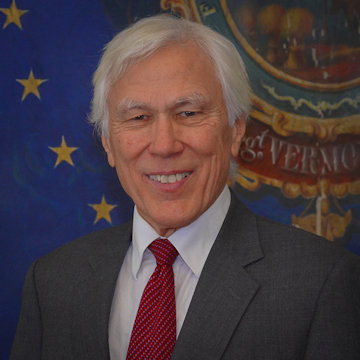
Rep. Scott Campbell
Sponsored bills
Maddy summaryH.863 imposes a $0.30 fee on retail deliveries (like online orders shipped to Vermont) that are subject to sales tax, collected by vendors and listed separately on receipts. It permits municipalities to levy a local tax on gasoline and diesel fuel sales and allocates funds to transportation programs including electric vehicle incentives, public transit coordination, and creating pollinator habitats along roads. The bill also requires public EV charging stations to accept credit cards and provide real-time availability, and mandates a study on electric bicycle safety. These provisions aim to fund infrastructure improvements, support clean energy transitions, and enhance transportation equity.
Maddy summaryThis is a commemorative resolution (HCR 175), not a substantive bill. It honors the late Venerable J. Stannard Baker of Shelburne, recognizing his pivotal role in Vermont's marriage equality history. The resolution commemorates his leadership in the landmark 1999 *Baker v. State* case that established marriage equality under the Vermont Constitution, leading to civil unions and later marriage rights. It expresses the legislature's condolences to his family and directs the Secretary of State to share the resolution with his family and the Episcopal Diocese of Vermont.
Maddy summaryHCR 177 is a ceremonial resolution honoring Twin Valley High School's Athletic Director and boys' soccer coach Buddy Hayford for achieving 500 career coaching victories. It recognizes his 43-year coaching career, including 10 divisional titles, two state basketball titles, and his status as Vermont's first high school soccer coach to reach 500 wins. This resolution, offered by all House members and sponsoring senators, formally congratulates Hayford and directs the Secretary of State to send a copy to him and his school - **it is not a law but a symbolic gesture of appreciation**.
Maddy summaryThis bill (H.825) simplifies the process for property owners to install wheelchair ramps by removing the requirement to submit a zoning permit application. It directly affects property owners seeking to make accessibility improvements and the municipal panels that review development projects. The key provision requires these panels to allow ramp construction without permits and mandates they receive training on the Americans with Disabilities Act (ADA) as it relates to zoning. This change aims to reduce barriers for accessible home modifications while ensuring local officials understand ADA compliance.
Maddy summaryThis is a symbolic House resolution (HR 12), not a policy bill. It expresses Vermont's support for Governor Philip B. Scott's statement criticizing federal immigration enforcement actions in Minnesota. The resolution specifically endorses the governor's call for halting "Operation Metro Surge" (the federal deployment of ICE/CBP agents), condemning the fatal shooting of a protester, and demanding adherence to constitutional rights. As a resolution, it has no legal effect or policy changes - it solely conveys legislative support for the governor's position.
Maddy summaryH.796 requires all publicly available electric vehicle charging stations (EVSE) to accept multiple payment methods, including credit cards. It mandates clear display of all fees - such as parking charges for remaining at the station after charging - and real-time status updates showing availability. The bill also requires compliance with additional rules set by Vermont's Secretary of Transportation to ensure reliable service. These changes directly affect EVSE operators and drivers using public charging infrastructure.
Maddy summaryHCR 172 is a commemorative resolution honoring Jon Gailmor, a Vermont folk singer and former Elmore Town Moderator who died in 2025. The resolution expresses the Vermont General Assembly’s condolences to his family and Elmore residents, recognizing his contributions as a musician who celebrated Vermont through songs like "A Town Meeting Tune" and his 15+ years serving as Elmore's town moderator. It directs the Secretary of State to send copies of the resolution to Gailmor’s family and the Elmore Town Clerk. This is a ceremonial measure with no policy impact.
Maddy summaryThis bill requires federal immigration authorities to obtain a judicial warrant before entering nonpublic areas of Vermont's schools, healthcare facilities, polling places, public libraries, or childcare centers. It also prohibits Vermont's Department of Corrections from assisting federal immigration enforcement beyond what federal law permits and limits civil arrests in government buildings. The Human Rights Commission must create a model policy for sensitive locations by April 2027, guiding institutions on refusing warrantless access requests. These provisions directly affect federal immigration agents, Vermont schools, healthcare providers, and other sensitive location operators.
Maddy summaryH.717 changes Vermont's oversight of building energy standards by renaming the Division of Fire Safety to the Division of Fire and Building Safety and transferring responsibility for residential and commercial building energy standards from the Department of Public Service to this new division. It requires the Division to adopt a residential building code specifically for public buildings that contain residential units. The bill repeals the existing Chapter 2 on building energy standards and updates enforcement procedures, including fines for violations and municipal enforcement options. This directly affects builders, local municipalities, and developers of public buildings with residential spaces.