

Maddy summaryThis concurrent resolution (SCONRES 25) commemorates the 15th anniversary of the January 8, 2011, Tucson shooting that killed six people and injured 13, including former Congresswoman Gabby Giffords. It honors the victims (such as Judge John Roll, Gabriel Zimmerman, and 9-year-old Christina-Taylor Green), survivors like Giffords and Ron Barber (who later became a U.S. Representative), and the community's response. The resolution expresses support for survivors, recognizes Giffords’ advocacy against gun violence, and reaffirms commitment to respectful dialogue and opposing political violence. As a symbolic gesture, it does not enact new laws or policy changes.
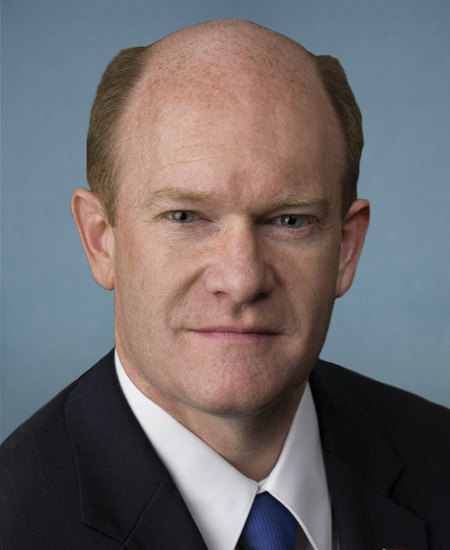
Sen. Christopher A. Coons
Sponsored bills
Maddy summaryThe ICE Accountability Act establishes an independent Commission to monitor U.S. immigration enforcement agencies (including ICE and CBP) for compliance with civil rights and liberties laws. The Commission will observe operations, review records like body camera footage, accept public complaints, and issue monthly public reports; it can issue findings of serious violations and refer cases to prosecutors for potential criminal charges. The Commission has subpoena power to access agency records and can take legal action against noncompliant agencies, imposing daily penalties of $500,000 for ongoing violations. The Commission, staffed by four non-governmental monitors appointed by congressional leaders, will operate for up to four years or until agencies achieve sustained compliance with oversight requirements.
Maddy summaryThe Healthy Families Act would require most private employers and certain government entities to provide employees with earned paid sick time, allowing workers to take up to 56 hours per year for their own health needs, caring for family members, or addressing domestic violence, sexual assault, or stalking. Employees would earn 1 hour of paid sick time for every 30 hours worked, with the ability to use it for medical appointments, caring for family members with health needs, or seeking safety from violence. The bill prohibits employers from retaliating against workers who use this time and requires employers to post clear notices about the policy. It applies to most private employers, with specific provisions for government entities like the Library of Congress and Government Accountability Office.
Maddy summaryS 3868, the Count the Crimes to Cut Act, requires the Attorney General and specific federal agencies to compile detailed reports on federal criminal offenses. The bill mandates that agencies submit lists of all criminal statutory offenses (under federal law) and criminal regulatory offenses (enforceable via regulations), including their penalties, annual prosecution numbers over 15 years, and mental state requirements. These reports will be made publicly accessible via online indexes on government websites within two years. The bill directly affects agencies like the DOJ, EPA, FTC, and others listed, aiming to increase transparency about the scope of federal criminal law without changing existing penalties or enforcement.
Maddy summaryThe Strategic Subsea Cables Act of 2026 aims to protect critical subsea fiber-optic cables that form the backbone of global internet infrastructure. It requires the U.S. government to increase engagement in international bodies like the International Cable Protection Committee, establish an interagency committee for coordination, and impose sanctions on foreign entities damaging cables. The bill mandates annual reports on Chinese and Russian cable activities, strengthens information sharing between government and private cable owners, and creates new reporting requirements for U.S. agencies. These provisions directly affect U.S. government agencies, private cable companies, and foreign entities that might threaten cable security. The act focuses on enhancing the security, resilience, and protection of subsea cable networks that are vital for global communications.
Maddy summaryThe SHADOW Fleet Sanctions Act of 2026 imposes sanctions on vessels and foreign entities supporting Russia's shadow fleet - vessels used to circumvent sanctions on Russian oil exports. It targets foreign vessels engaging in unsafe maritime behavior, lacking proper insurance, or evading the crude oil price cap, as well as foreign persons facilitating such activities through ship-to-ship transfers, insurance, or port services. The bill requires sanctions on port terminals in China or India accepting oil from sanctioned vessels and establishes a public database of vessels suspected of sabotage activities. It also creates reporting requirements and a strategy to counter China's role in evading sanctions on Russian energy products.
Maddy summaryThis bill directs U.S. agencies to prioritize facilitating U.S. liquefied natural gas (LNG) exports to Taiwan and strengthen Taiwan's energy infrastructure resilience. It requires the State, Commerce, and Energy Departments to identify barriers to LNG exports, support Taiwan's grid cybersecurity, physical security, and emergency planning, and establish a U.S.-Taiwan Energy Security Center. The bill mandates annual reports to Congress on implementation progress, barriers to exports, and the effectiveness of resilience programs. It directly affects U.S. LNG exporters, Taiwan's energy infrastructure operators, and U.S. federal agencies coordinating with Taiwan. The legislation does not authorize new funding but directs existing agencies to prioritize these activities under the Taiwan Enhanced Resilience Act.
Maddy summaryThe GUARD Act allows state, local, and tribal law enforcement agencies to use existing federal grant funds to investigate elder financial fraud (targeting elderly or disabled individuals), "pig butchering" scams (where victims are tricked into investing in fake crypto schemes), and general financial fraud. It requires agencies to hire specialized staff, use technology tools for tracking scams, and report annually on how funds were used and their impact on fraud statistics. The bill also mandates two key federal reports: one to Congress on scam trends and enforcement actions, and another detailing annual consumer losses and government spending on fraud prevention. These provisions aim to improve coordination between law enforcement, financial institutions, and federal agencies to combat evolving fraud schemes.
Bankruptcy Administration Improvement Act of 2025 This act makes several changes to the administration of bankruptcy cases, particularly by increasing amounts received by certain trustees, extending the sunset date of various fees, and extending the term of specified bankruptcy judgeships. (Sec. 3) The act increases the amounts paid out of fees to the trustee in Chapter 7 (liquidation) cases. (Sec. 4) The act extends for an additional five years the fees paid quarterly to the U.S. trustee in Chapter 11 (reorganization) cases. The act also increases the fee percentage for cases with large disbursements, subject to limitations. (Sec. 5) Finally, temporary bankruptcy judgeships in various districts are extended for an additional five years.
Maddy summaryThis resolution designates January 2026 as "National Mentoring Month" to raise public awareness about mentoring programs. It recognizes the benefits of mentoring for youth - including improved academic performance, mental health, career development, and reduced risk of delinquency - and highlights that 40% of U.S. youth lack a mentor. The Senate encourages community, school, and workplace efforts to expand existing mentoring programs and recruit volunteers to support young people. It does not create new laws or funding but aims to promote existing mentoring initiatives across the country.