

Maddy summaryThis bill establishes the America's Living Library Project, a pilot program within the Department of the Interior to collect and analyze genomic data from species found in National Park System units. The program will create a publicly available genomic database while protecting sensitive location information and requires coordination with multiple federal agencies including the National Park Service, Smithsonian Institution, and Department of Agriculture. It authorizes funding through fiscal year 2031 to support genome sequencing, sample storage, and data management, with initial implementation at five selected parks and potential expansion to twenty additional units within two years. The bill also mandates tribal consultation, establishes cybersecurity safeguards for genomic data, and includes provisions for long-term sample storage in U.S. facilities only.
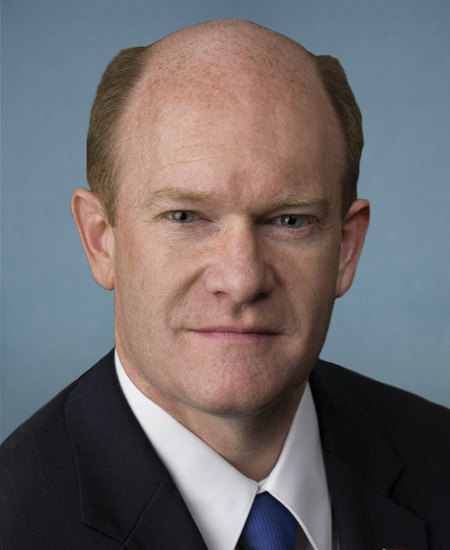
Sen. Christopher A. Coons
Sponsored bills
Maddy summaryThis bill establishes a new Fiscal Commission within Congress to analyze the nation's long-term fiscal health and propose reforms to reduce the federal debt and deficit. The commission will be composed of 16 members appointed by Senate and House leadership, including outside experts, and will have two co-chairs representing opposing political parties to ensure balanced oversight. Its primary duties include educating the public about fiscal risks, developing policies to achieve a sustainable debt-to-GDP ratio of 100 percent by 2039, and producing a final report with legislative recommendations by November 2026. If the commission approves its recommendations, the resulting implementing bills would receive expedited consideration in both chambers with limited debate and no amendments allowed. The commission would operate for approximately two years before terminating, with funding provided through existing Senate accounts.
Maddy summaryThis bill reauthorizes the Tropical Forest and Coral Reef Conservation Act of 1998, which provides funding to protect tropical forests and coral reefs around the world. It directly affects the U.S. government agencies responsible for implementing conservation programs, primarily through the Department of State. The key provision allocates $20 million annually for fiscal years 2028 through 2032 to support ongoing conservation efforts. This legislation extends existing funding authority without changing the underlying conservation goals or program structure.
This joint resolution directs the President to remove U.S. Armed Forces from hostilities within or against Iran unless a declaration of war or authorization to use military force for such purpose has been enacted. The resolution specifies that it shall not be construed to prevent the United States from defending against an attack on the United States or its personnel or facilities in other nations.
Maddy summaryThis resolution designates March 6, 2026, as "National Speech and Debate Education Day" to recognize the value of speech and debate programs in schools. It does not create new laws or funding but encourages educational institutions, businesses, and communities to celebrate and promote these programs. The resolution highlights how speech and debate education develops communication, critical thinking, and civic skills for students. It directly affects schools, teachers, and students participating in these programs by raising awareness of their importance. The Senate formally designates the date and urges nationwide participation in honoring this educational focus.
Maddy summaryThis bill, the PrEP Access and Coverage Act of 2026, requires most health insurance plans to cover HIV prevention medication without charging patients any cost-sharing fees. It directly affects people enrolled in private insurance, Medicare, Medicaid, and other government health programs by mandating that these plans cover the medication, related lab tests, and follow-up care without requiring prior approval. The law also prohibits insurance companies from denying life, disability, or long-term care insurance to individuals taking HIV prevention medication and requires a public education campaign to increase awareness about the medication.
Maddy summaryThis bill, known as the DISCLOSE Act of 2026, strengthens campaign finance transparency by requiring corporations, labor organizations, Super PACs, and other entities to disclose more information about their spending and funding sources. It closes loopholes that allow foreign nationals to contribute to U.S. elections by expanding disclosure requirements and prohibiting foreign money in ballot initiatives and referenda. The legislation also mandates that certain advertisements include lists of top funders and requires reporting of spending related to federal judicial nominations. Additionally, it streamlines administrative processes for challenging campaign finance laws and ensures coordination between the Federal Election Commission and financial authorities to enforce these rules.
Maddy summaryThis bill would allow federal judges more flexibility in deciding whether to keep defendants in jail before trial when they are charged with nonviolent drug crimes. It changes existing federal law by removing a specific provision that currently requires courts to consider certain factors when making pretrial detention decisions for these cases. The changes would apply to all federal criminal cases involving nonviolent drug offenses, giving judges broader authority to release defendants on bail or other conditions instead of holding them without bail. The legislation does not affect violent crimes or other types of offenses outside the scope of nonviolent drug charges.
Maddy summaryThis resolution designates February 21-28, 2026, as "National FFA Week" to honor the National FFA Organization’s work in agricultural education. It recognizes FFA’s role in developing leadership and career skills for students (with over 1 million members nationally) and celebrates the 50th anniversary of Alaska’s State FFA Association, which has 19 chapters and 493 members. As a symbolic resolution, it has no legal effect but formally expresses Senate support for FFA’s mission.
Maddy summaryThis resolution (SRES 617) designates February 2026 as "Career and Technical Education (CTE) Month" to symbolically recognize CTE programs nationwide. It supports CTE's role in preparing students for high-demand careers by promoting workforce readiness through academic and technical skills training. The resolution encourages educators, counselors, parents, and school administrators to advocate for CTE as a valid educational pathway. As a non-binding Senate resolution, it does not create new laws or allocate funds but affirms bipartisan support for CTE's importance in workforce development.