

Maddy summaryThis bill exempts public school employees from a $100,000 fee required for H-1B work visas under a 2025 presidential proclamation. It directly affects foreign workers seeking to work in specialty occupations at public schools or school districts in the United States. The legislation removes the financial barrier for these specific workers while leaving other visa fee requirements unchanged. This change ensures that public school employees can apply for H-1B visas without paying the additional non-processing related fee imposed by the proclamation.
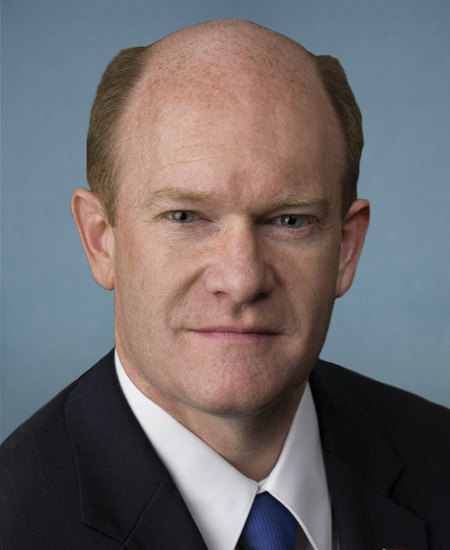
Sen. Christopher A. Coons
Sponsored bills
Maddy summaryThis bill, titled the Working Americans' Tax Cut Act, proposes two main tax changes: it creates an alternative maximum tax rate of 25.5% for low- and middle-income individuals earning less than 175% of a cost-of-living exemption, and it imposes a progressive surcharge on high-income individuals earning over $1 million. The low-income provision calculates taxes based on income above a living expense threshold that adjusts annually with inflation, while the high-income surcharge applies rates of 5%, 10%, and 12% to income brackets above $1 million, $2 million, and $5 million respectively. Both provisions use modified adjusted gross income as the base for calculations and apply to taxable years beginning after December 31, 2025. The bill would directly affect individual taxpayers by altering how their income is taxed under the Internal Revenue Code.
Maddy summaryThis bill, titled the Tariff Refunds for Working Families Act, would create a new tax credit for eligible individuals in 2026, providing $600 per adult and $600 per qualifying child. The credit is limited to taxpayers with adjusted gross income below $180,000 for joint filers, $120,000 for heads of household, and $90,000 for other filers. The legislation states that the revenue for these rebates would come from tariffs described as unlawful, including those imposed under the International Emergency Economic Powers Act. Payments would be issued rapidly after enactment, with no interest allowed on the refunds, and the bill includes provisions for coordinating payments with U.S. territories.
Maddy summaryThis bill authorizes the Attorney General to provide grants to law enforcement agencies and nonprofit organizations that partner to create or support blue envelope programs. These programs are designed to help individuals with autism spectrum disorder or developmental, cognitive, sensory, or communication disabilities interact safely with law enforcement by providing training, resources, and materials like blue envelopes containing emergency information. The funding, totaling $5 million annually from 2027 to 2031, prioritizes programs that demonstrate scalability, community support, and input from people with disabilities. The Attorney General must also maintain a public directory of funded programs and submit regular reports to Congress on implementation and best practices.
Maddy summaryThis bill reorganizes AmeriCorps by converting it from a government corporation into a new executive department called the AmeriCorps Administration. It creates an advisory board with seven members appointed by various officials, including the President and congressional leaders, to guide policy and program oversight. The legislation increases financial benefits for participants, doubling educational awards to twice the average in-state tuition and raising living allowances to 175-210 percent of the federal minimum wage. It also establishes a new National Service Foundation to accept private donations and gifts for the program, and sets a goal of serving one million participants annually by 2036.
Reclaim Trade Powers Act This bill repeals the statute that directs the President to take certain actions, such as imposing a tariff of up to 15% for up to 150 days on articles imported into the United States, when necessary to address large and serious U.S. balance-of-payments deficits or certain other situations that present fundamental international payments problems.
Living Donor Protection Act of 2025 This bill prohibits life insurance, disability insurance, and long-term insurance carriers from denying or otherwise restricting coverage for living organ donors. Specifically, carriers may not deny, cancel, vary premiums, or otherwise impose conditions on policies based on an individual's status as a living organ donor. The bill also expressly specifies that recovery from organ-donation surgery constitutes a serious health condition that entitles eligible employees to job-protected medical leave. In addition, the Department of Health and Human Services must update educational materials on living organ donation to include information about the benefits and risks of living organ donation and the impact of donation on insurance access, particularly with respect to the bill's changes.
Maddy summaryThis bill, known as the AADAPT Act, would expand the Project ECHO Grant Program to include public and nonprofit private entities in addition to existing eligible organizations. The legislation specifically adds dementia care to the list of health areas the program can support, alongside palliative care. By broadening eligibility and scope, the bill aims to increase the number of healthcare providers trained to address Alzheimer's disease and other forms of dementia. The changes would be implemented through amendments to the Public Health Service Act, allowing for greater knowledge sharing and capacity building in dementia care across the healthcare system.
Maddy summaryThis bill, known as the Professional Degree Access Restoration Act, aims to restore federal student loan limits that were previously reduced for graduate and professional students. It directly affects students pursuing advanced degrees such as law, medicine, and education by increasing the amount of federal loans they can access. The legislation reverses specific loan cap reductions established by Public Law 119-21, allowing students to borrow more money during their period of instruction. By amending the Higher Education Act of 1965, the bill removes certain restrictions on annual and aggregate loan amounts for these student categories.
Maddy summaryThis bill would extend the time limit for prosecuting foreign bribery offenses under the Foreign Corrupt Practices Act from the current standard to 10 years. It directly affects individuals and companies accused of bribing foreign officials by giving prosecutors more time to build cases. The law would apply to all such offenses committed after the bill's enactment, except those occurring within five years before the law takes effect. The provision includes a sunset clause, meaning it would expire eight years after being enacted.