

Maddy summaryThe Medicare Advantage Improvement Act of 2026 aims to speed up care decisions and increase transparency for Medicare Advantage enrollees by establishing strict time limits for insurance plan responses to requests for coverage authorization. Beginning in 2028, plans must provide real-time approvals for low-risk services, respond to other authorization requests within 72 hours, and automatically pay claims for authorized services without manual review. The bill also prohibits plans from requiring new authorizations for clinically necessary changes to already approved treatments and mandates that medical necessity standards match those used in traditional Medicare. To ensure accountability, the legislation introduces a new compliance scoring system that could reduce payments to plans failing to meet these requirements and adds a specific domain to the public star ratings based on adherence to these rules.
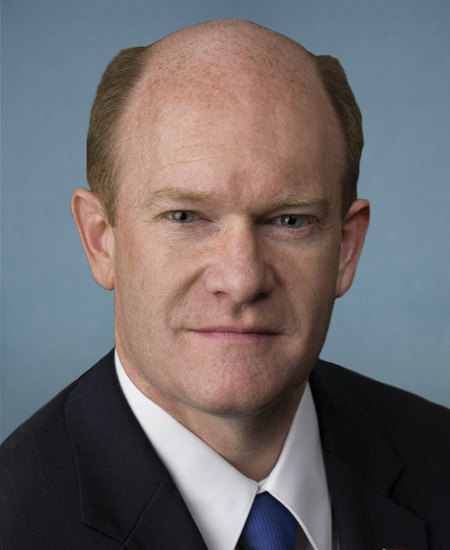
Sen. Christopher A. Coons
Sponsored bills
Maddy summaryThis bill, known as the Absentee and Mail Voter Protection Act, aims to overturn a specific executive order by repealing it and prohibiting the use of federal funds to implement similar directives in the future. It directly affects the United States Postal Service, various federal agencies, and state election officials by restricting their ability to regulate mail-in ballots or create national citizenship lists for voting purposes. Key provisions ban federal agencies from sharing voter registration data, compel the Postal Service to continue delivering state-issued mail ballots without interference, and forbid the use of taxpayer money to enforce rules that would require states to adopt specific citizenship verification methods. The legislation seeks to preserve the current system where states manage their own election administration while the Postal Service delivers ballots, citing historical precedents and the high volume of mail-in voting used by Americans.
Maddy summaryThe CLEAR Path Act (S 2132) imposes a 5-year restriction on Senate-confirmed U.S. government officials (such as cabinet members or agency heads) who may not represent foreign governments from "countries of concern" before U.S. officials to influence decisions after leaving their positions. It requires agencies to provide written notice of these restrictions at both appointment and departure. The bill also establishes a process for the Secretary of State to propose adding or removing countries from the "countries of concern" list, requiring congressional approval via a simple joint resolution. This affects senior officials transitioning from government service to roles representing foreign entities in the U.S. government system.
Maddy summaryThis bill amends the National Child Protection Act of 1993 to expand who must undergo background checks for roles involving children. It adds two new categories: individuals seeking to volunteer with organizations that contract with "qualified entities," and those seeking licensing/certification by "qualified entities." The changes specifically modify existing background check requirements under the 1993 law, directly affecting people applying for jobs or volunteer positions in child-focused settings. The bill does not create new licensing standards but adjusts who must meet current background check protocols.
Hot Rotisserie Chicken Act This bill includes hot rotisserie chicken as an eligible food to purchase with Supplemental Nutrition Assistance Program (SNAP) benefits.
Maddy summaryThe Railroad Retirement Fairness Act of 2026 amends the existing Railroad Retirement Act to eliminate a specific deduction applied to certain annuity payments. This change directly affects railroad workers and their beneficiaries who receive retirement benefits under the current system. By removing subdivision (6) of Section 2(f), the bill alters the calculation method used to determine the amount of these monthly payments. Consequently, eligible recipients may receive higher annuity amounts than they would have under the previous rules.
Maddy summaryThis resolution expresses the Senate's view that the President should prioritize securing the release of specific individuals detained by the People's Republic of China. It names Pastor Jin Mingri, Pastor Gao Quanfu and his wife Pang Yu, Dr. Gulshan Abbas, and Jimmy Lai, who are reportedly held for reasons related to peaceful expression or religion. The resolution calls for the President to raise these cases during future engagements with Chinese President Xi Jinping, including an anticipated May 2026 summit. It also urges the President to seek verifiable proof of life, access to legal counsel, family communication, and medical care for these detainees.
Maddy summaryThis resolution supports designating April 11-17, 2026, as "Black Maternal Health Week." The designation aims to bring national attention to the maternal and reproductive health crisis in the United States, specifically emphasizing the importance of reducing maternal mortality and morbidity among Black women and birthing people.
Maddy summaryThe YouthBuild for the Future Act expands the YouthBuild program, which helps young people gain job skills through construction training and education, by directing a larger share of funding to rural areas and tribal communities. It updates program rules to better support participants by allowing grant funds to cover matching financial requirements, providing food assistance, and offering specific support services for individuals with disabilities. The bill also introduces new grants to help program partners form alliances with local employers to create more relevant job training opportunities and requires the government to consult regularly with program operators to set realistic performance goals. Additionally, the legislation increases the total amount of money available for the program over the next six years and establishes a new specific fund to support these employer partnerships.
Maddy summaryThe Stop CHEATERS Act directs the Internal Revenue Service to increase its enforcement efforts against high-income individuals and large corporations while also expanding taxpayer support services. To achieve this, the bill appropriates billions of dollars over several years to fund IRS investigations, hire additional staff, purchase vehicles, and modernize outdated technology systems. Additionally, the legislation requires the IRS Commissioner to submit regular reports to Congress detailing plans to shift auditing resources toward wealthy taxpayers and analyzing collection gaps across different income levels.