

Maddy summaryThis Senate resolution formally commends the "Donut Dollies" and the earlier "Doughnut Lassies" for their support of U.S. servicemembers during various wars, including World War II and the Vietnam War. The bill recognizes the volunteers' contributions to morale and well-being in combat zones and urges that their story be preserved and shared. It does not create new laws or funding but serves as an official acknowledgment of their historical service.
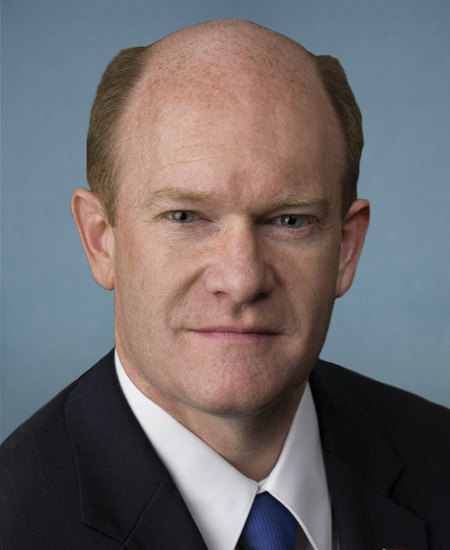
Sen. Christopher A. Coons
Sponsored bills
Maddy summaryThis Senate resolution formally recognizes the week of May 3 through May 9, 2026, as National Small Business Week to honor the contributions of small business owners and entrepreneurs across the United States. The measure expresses appreciation for the economic role these businesses play and acknowledges the resilience of their owners and employees. By adopting this designation, the Senate aims to celebrate the entrepreneurial spirit within every community without imposing any new laws or regulations.
Maddy summaryThis Senate resolution formally commends the American Chemical Society on the occasion of its 150th anniversary and acknowledges its long-standing contributions to U.S. science and innovation. The bill recognizes the organization's role in advancing research, supporting education, and fostering economic growth through chemical advancements. It also affirms the importance of STEM education and requests that a copy of the resolution be sent to the society's leadership. Ultimately, this measure serves as an official expression of appreciation rather than enacting new laws or funding.
Maddy summaryThe Puppy Protection Act of 2026 amends the Animal Welfare Act to impose stricter housing and care standards on dog dealers. It requires dealers to provide dogs with solid flooring, sufficient indoor space based on size, and temperature control between 45 and 85 degrees Fahrenheit. The bill also mandates daily nutritious food, unrestricted outdoor exercise for most dogs over 12 weeks, and at least 30 minutes of daily social interaction with humans. Additionally, it establishes specific rules for breeding, such as limiting the number of litters a female dog can produce and requiring health screenings before breeding. These new requirements must be implemented through final regulations issued by the Secretary within 18 months of the law's enactment.
Maddy summaryThis bill, known as the Protecting Human Rights and Public Health in Foreign Assistance Act, directs federal agencies to ignore three specific final rules issued by the Department of State. It explicitly prohibits any government department from implementing, enforcing, or creating new policies similar to these existing rules, effectively treating them as if they never existed. The targeted regulations concern protecting life, combating discriminatory equity ideology, and addressing gender ideology within foreign aid programs. By nullifying these rules, the legislation removes the current administrative requirements related to these topics from U.S. foreign assistance activities.
Maddy summaryThis joint resolution (SJRES 99) seeks congressional disapproval of a specific U.S. Citizenship and Immigration Services (USCIS) rule that removed automatic extensions for Employment Authorization Documents (EADs). The rule, published in the Federal Register on October 30, 2025, ended the prior practice of automatically extending work permits for certain immigrants while their renewal applications were pending. If approved, this resolution would block the rule from taking effect, restoring the automatic extension process for EAD holders. The policy change directly affects non-citizens in the U.S. who hold EADs and are waiting for renewal processing, preventing potential gaps in work authorization.
Maddy summaryThis bill extends increased dependency and indemnity compensation to surviving spouses of veterans who die from amyotrophic lateral sclerosis (ALS). It directly affects the spouses of veterans whose death was caused by ALS, specifically those who died on or after October 1, 2022. The key provision amends a law to treat veterans who died from ALS as if they had the disease for the required period before death, removing a prior time requirement for compensation eligibility. This change ensures surviving spouses qualify for the same benefits previously available only to veterans with longer ALS diagnoses.
Maddy summaryThis Senate resolution formally welcomes King Charles III and Queen Camilla to the United States for a state visit where the King will address a joint session of Congress. The document highlights the long-standing diplomatic and security partnership between the two nations, noting shared values and cooperation on issues like defense and technology. It also marks the occasion as the first time a British monarch has addressed Congress since 1991, coinciding with the 250th anniversary of American independence.
Maddy summaryThis resolution designates the week of April 20 through April 24, 2026, as "National Home Visiting Week" to highlight the importance of home visiting programs for families. The bill does not create new laws or funding but serves as a symbolic gesture to recognize the work of over 20,000 home visitors who support parents and children across the United States. By formally acknowledging these efforts, the Senate aims to raise awareness about how such programs help strengthen family relationships and promote healthy child development.
Maddy summaryThe Investing in the American Dream Act expands eligibility for Small Business Administration loans to include businesses owned by certain immigrants, such as refugees, asylees, and individuals with deferred action. To qualify, these businesses must be located in the United States and at least 51 percent owned and controlled by U.S. citizens or nationals of the United States. The law explicitly states that businesses meeting these ownership and location requirements cannot be denied loans solely because they are owned by eligible immigrants. Additionally, the bill clarifies that it does not grant the SBA authority to increase the 51 percent ownership threshold for any type of loan.