Issue · Criminal Justice

Criminal Justice

Every criminal justice bill, vote, and legislator stance in Vermont, automatically classified by Maddy, our AI policy reader.

Total bills
148
2025-2026 Regular Session
Top supporter
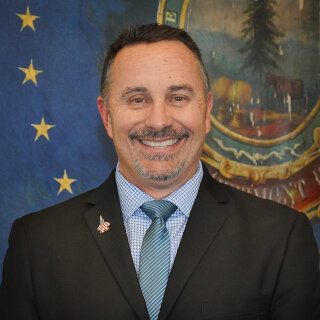
Jed Lipsky
100% support rate
Top opponent
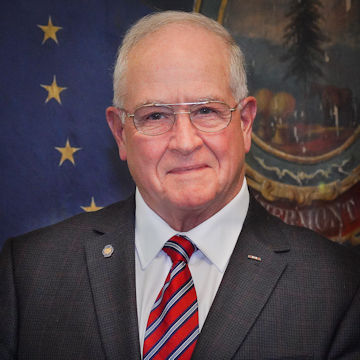
Tom Oliver
17% support rate
Ranked legislators
10
5 support · 5 oppose
Key legislators

Who's moving criminal justice in Vermont

Legislators moving criminal justice in Vermont
Legislator Party Stance Support rate Votes
Jed Lipsky
Jed Lipsky House · District Lamoille-1
I
Strong +
100% 14
Ashley Bartley
Ashley Bartley House · District Franklin-1
R
Strong +
100% 15
Tony Micklus
Tony Micklus House · District Chittenden-Franklin
R
Strong +
89% 15
Leland Morgan
Leland Morgan House · District Grand Isle-Chittenden
R
Strong +
89% 16
Mike Morgan
Mike Morgan House · District Grand Isle-Chittenden
R
Strong +
88% 15
Tom Oliver
Tom Oliver House · District Franklin-4
R
Strong −
17% 13
Russ Ingalls
Russ Ingalls Senate · District Essex
R
Oppose
22% 13
Terry Williams
Terry Williams Senate · District Rutland
R
Oppose
22% 13
Steven Heffernan
Steven Heffernan Senate · District Addison
R
Oppose
22% 12
Zak Harvey
Zak Harvey House · District Rutland-3
R
Oppose
29% 14
Showing 51–60 of 148 bills

All criminal justice bills

introduced · Vermont · House Jan 9, 2026

H 637: An act relating to operating a vehicle under the influence of alcohol or other substances

This Vermont bill (H 637) amends laws governing driving under the influence (DUI) by clarifying that "under the influence of a drug" means any slight impairment of driving ability from drugs (not just alcohol), per Section 1201. It updates testing procedures, requiring blood or saliva samples when breath tests aren't feasible or when drugs (not alcohol) are suspected, while preserving rights to challenge warrants (Section 1202). For penalties, it increases mandatory minimum jail time for repeat offenses: 80 hours for a second offense, 96 hours for a third, and 192 hours for a fourth or subsequent offense, with no suspension allowed except under specific court findings (Section 1210). The bill directly affects drivers suspected of DUI involving drugs or alcohol, focusing on clearer definitions, testing protocols, and stricter penalties for repeat violations.
introduced · Vermont · Senate Jan 6, 2026

S 195: An act relating to judicial proceedings for involuntary treatment

This Vermont bill (S 195) requires the Office of Defender General to provide legal representation for individuals involved in criminal cases who are subject to mental health commitment proceedings (e.g., those found incompetent to stand trial or acquitted due to insanity). It also gives courts authority to review and modify orders for treatment outside hospitals (nonhospitalization) if the treatment isn't working or the person isn't complying, potentially switching to hospitalization. The law applies directly to criminal defendants in mental health cases and changes how courts handle treatment plans for up to 90 days. It takes effect July 1, 2026.
Sub-Topics Mental Health
introduced · Vermont · House Jan 6, 2026

H 530: An act relating to establishing a forensic facility

This bill proposes creating a specialized forensic facility in Vermont for individuals involved in the criminal justice system who meet specific criteria for involuntary mental health treatment. It directly affects people facing criminal charges or sentencing who require court-ordered psychiatric care under state commitment laws. The key provision establishes a dedicated facility to provide structured mental health treatment and supervision for these individuals, separate from general correctional or hospital settings. The bill aims to address the intersection of mental health care and criminal justice by creating a specialized environment for those needing involuntary commitment. It does not alter existing commitment standards but provides a new facility to meet these needs.
introduced · Vermont · House Jan 15, 2026

H 693: An act relating to approval of amendments to the charter of the Town of Bennington concerning the Town police department

H.693 approves charter amendments for the Town of Bennington that allow the Select Board to delegate the review of complaint materials (like video footage and transcripts) following police investigations. This directly affects the Bennington Police Department and the Community Policing Advisory Review Board (or any new board the Select Board creates). The amendment, approved by Bennington voters on March 4, 2025, gives the Select Board the authority to assign this specific duty to the designated board, streamlining how police complaint reviews are handled.
Sub-Topics Policing
passed · Vermont · Senate Mar 20, 2026

S 203: An act relating to penalties for second or subsequent violations of operating a motor vehicle under the influence of alcohol or drugs

This bill clarifies the timeframe for counting prior DUI convictions to determine enhanced penalties. It specifies that a second or subsequent DUI offense penalty applies when a person has been convicted of a prior violation within the 20 years *before the date of the current violation*, not the conviction date for the current offense. This directly affects drivers convicted of repeat operating under the influence (OUI) offenses in Vermont. The change ensures penalties for second offenses (fines up to $1,500, mandatory community service or 80 hours in jail) are applied consistently based on the violation timeline.
Sub-Topics Corrections
introduced · Vermont · Senate Jan 21, 2026

S 284: An act relating to possessing and dispensing regulated drugs

This bill establishes the Drug Use Health and Safety Advisory Board to determine "benchmark personal use supply" limits for each regulated drug (like cannabis), aiming to reduce criminal penalties for personal use. It lowers penalties for low-level drug possession offenses to a maximum $500 fine or six months in jail (instead of felony charges) and reclassifies some drug possession violations from felonies to misdemeanors. The bill eliminates the crime of dispensing regulated drugs, except when dispensing to someone under 21 (which remains a five-year felony). For cannabis specifically, it sets civil penalties for small amounts (e.g., up to $100 for first offense) and requires court diversion for first-time possession over certain limits.
introduced · Vermont · Senate Jan 6, 2026

S 186: An act relating to jurisdiction of the Criminal Division over plea agreements in proceedings related to juvenile offenders

S.186 allows juvenile offenders (under 20) in certain criminal cases to choose whether to enter a plea agreement in the Criminal Division of the Superior Court instead of the Family Division. This applies when the offense charged is not specified in existing law (subsections 5204(a), 5201(c)(2), or (3)), giving juveniles a direct option to handle their case in Criminal Division. The bill amends Vermont statutes §5201 and §5203 to establish this election process, requiring the Criminal Division to retain jurisdiction if the juvenile chooses this path. It directly affects minors under 20 facing specific non-specified offenses who would otherwise be transferred to Family Division proceedings. The change takes effect immediately for sections 1-2 and July 2, 2027, for sections 3-4.
introduced · Vermont · House Jan 9, 2026

H 636: An act relating to an independent monitoring board for body-worn camera footage

H 636 would create a five-member independent civilian board to oversee police body camera footage in Vermont. The board, appointed by all three branches of government, would review public requests for footage, control access to stored recordings, and redact sensitive information before releasing any material. This directly affects law enforcement agencies (which must provide footage to the board) and the public (which can request access to recordings). The bill establishes a formal process for managing bodycam data without changing how police use the cameras.
introduced · Vermont · Senate Jan 6, 2026

S 184: An act relating to community justice centers

S 184 creates a Community Justice Center Working Group to identify available support services for pretrial diversion and transitional needs, including behavioral health services, across Vermont's community justice centers. The group, composed of representatives from community justice centers, courts, mental health, health, corrections, and the Attorney General's office, will assess service gaps and develop mechanisms to share this information with courts and stakeholders. The Working Group must submit findings and recommendations to the Vermont General Assembly by December 1, 2026. This bill does not make direct policy changes but establishes a process to improve service coordination for individuals navigating the justice system.
Sub-Topics Mental Health
introduced · Vermont · Senate Jan 6, 2026

S 168: An act relating to the aggregate value of stolen property in certain crimes

S 168 (An act relating to the aggregate value of stolen property in certain crimes) changes how Vermont courts classify theft offenses. It allows the total value of multiple stolen items or separate thefts within 180 days to be added together to determine if a crime is a felony (grand larceny or felony retail theft) or misdemeanor. Specifically, if the combined value of stolen property exceeds $900, it upgrades the charge from petit larceny/misdemeanor retail theft to grand larceny/felony retail theft. This directly affects individuals committing repeated thefts (e.g., multiple shoplifting incidents) where the cumulative value meets or exceeds $900 within the 180-day window. The bill amends Vermont statutes §2501 (grand larceny) and §2575-2577 (retail theft penalties).
Showing 51 to 60 of 148 bills
Previous 1 5 6 7 15 Next