Issue · Criminal Justice

Criminal Justice

Every criminal justice bill, vote, and legislator stance in Vermont, automatically classified by Maddy, our AI policy reader.

Total bills
119
2025-2026 Regular Session
Top supporter
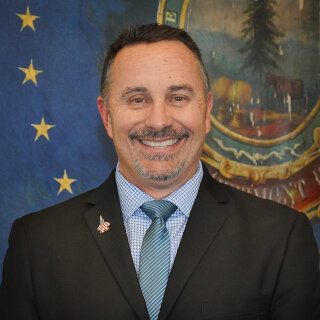
Jed Lipsky
100% support rate
Top opponent
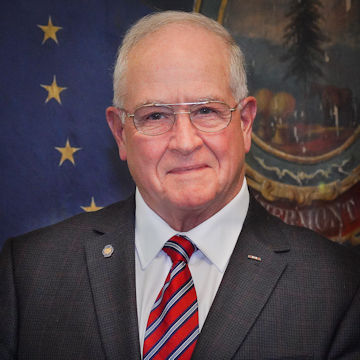
Tom Oliver
17% support rate
Ranked legislators
10
5 support · 5 oppose
Key legislators

Who's moving criminal justice in Vermont

Legislators moving criminal justice in Vermont
Legislator Party Stance Support rate Votes
Jed Lipsky
Jed Lipsky House · District Lamoille-1
I
Strong +
100% 14
Ashley Bartley
Ashley Bartley House · District Franklin-1
R
Strong +
100% 15
Tony Micklus
Tony Micklus House · District Chittenden-Franklin
R
Strong +
89% 15
Leland Morgan
Leland Morgan House · District Grand Isle-Chittenden
R
Strong +
89% 16
Mike Morgan
Mike Morgan House · District Grand Isle-Chittenden
R
Strong +
88% 15
Tom Oliver
Tom Oliver House · District Franklin-4
R
Strong −
17% 13
Russ Ingalls
Russ Ingalls Senate · District Essex
R
Oppose
22% 13
Terry Williams
Terry Williams Senate · District Rutland
R
Oppose
22% 13
Steven Heffernan
Steven Heffernan Senate · District Addison
R
Oppose
22% 12
Zak Harvey
Zak Harvey House · District Rutland-3
R
Oppose
29% 14
Showing 21–30 of 119 bills

All criminal justice bills

signed · Vermont · Senate May 7, 2026

S 181: An act relating to eliminating the requirement for a presentence investigation for imposition of a deferred sentence

This bill (S.181) eliminates the requirement for a presentence investigation report to be filed before a Vermont court can impose a deferred sentence. It directly affects defendants eligible for deferred sentencing under Vermont law, removing a procedural step that currently must be completed before a judge can place someone on probation instead of imposing an immediate sentence. The amendment revises 13 V.S.A. § 7041 to remove the requirement for the court to order a presentence investigation, while maintaining other conditions like victim impact statements and court review of available information. The change takes effect July 1, 2026, and does not apply to certain serious sex offenses against children.
passed · Vermont · House Mar 10, 2026

H 566: An act relating to sealing post-charge court diversion records upon successful completion

H 566 (Vermont) changes how court diversion records are handled for people who successfully complete adult or juvenile diversion programs. Instead of automatically expunging (erasing) these records, the bill requires courts to seal (confidentially restrict access to) records 30 days after the two-year anniversary of program completion, provided the participant has no new convictions, owes no restitution, and meets other specified conditions. The bill also expands the Adult Diversion Program to include municipal violations, such as traffic offenses. This policy change directly affects individuals who complete diversion programs by making their records confidential after meeting the requirements, improving access to opportunities like housing or employment that might otherwise be denied due to past records.
signed · Vermont · House Apr 22, 2026

H 540: An act relating to the recommendations of the Post-Adjudication Reparative Program Working Group

H 540 adopts recommendations from Vermont's Post-Adjudication Reparative Program Working Group to create a structured alternative to traditional sentencing for certain nonviolent offenses. The bill allows courts to refer nonviolent felony, misdemeanor, or nonviolent misdemeanor offenders (who pled guilty) to community reparative boards instead of probation, requiring the offender to complete the program or return to court for further sentencing. Key provisions include mandatory court consideration of victim input, community impact, offender willingness, and standardized referral forms for all courts. This directly affects nonviolent offenders and community reparative boards, shifting focus toward restorative practices rather than standard probation. The policy change takes effect July 1, 2026.
introduced · Vermont · House Jan 7, 2026

H 592: An act relating to the appointment of legal counsel and record keeping in civil forfeiture actions

This bill requires public defenders to represent low-income individuals in specific civil forfeiture cases, such as property seizures related to alcohol, drug offenses, or big game violations. It mandates that law enforcement and courts maintain detailed records of seized property - including its description, value, and disposition - and provide notice of the right to counsel. The law applies to cases under statutes covering livestock products, alcohol, wildlife violations, controlled substances, and vehicles. These provisions aim to ensure transparency in property seizures and access to legal representation for vulnerable individuals.
introduced · Vermont · Senate Jan 15, 2026

S 256: An act relating to voyeurism and disclosure of sexually explicit images without consent

This Vermont bill (S.256) criminalizes threatening to disclose intimate images without consent to coerce someone into producing more images, engaging in sexual conduct, or providing something of value. It also expands existing voyeurism laws to cover non-consensual disclosure of images showing a person nude or engaged in sexual conduct, extending criminal statute of limitations for such acts and eliminating it for civil lawsuits. Victims can now seek damages for harm caused by intentional disclosure of their intimate images, including recovery for trauma-related disorders. The law directly affects individuals whose private images are exploited and those who threaten or disclose such images without consent.
introduced · Vermont · House Jan 22, 2026

H 747: An act relating to standards for law enforcement identification

H.747, the "No Secret Police Act," requires all Vermont local, state, and federal law enforcement officers to visibly display their agency name and either their name or badge number during public interactions. It prohibits wearing masks or disguises that conceal identity, except for specific safety-related exceptions like medical masks, fire operations, or declared weather emergencies. Law enforcement agencies must create and publicly post written policies ensuring compliance with these identification standards. The bill aims to promote transparency and trust between officers and the public during routine engagements.
introduced · Vermont · House Jan 23, 2026

H 765: An act relating to qualified mental health professionals

H.765 expands Vermont's definition of "qualified mental health professional" to include licensed clinical mental health counselors, marriage and family therapists, psychoanalysts, and other specific licensed practitioners (such as advanced practice nurses and psychologists), removing the prior requirement that they must be employed by designated agencies. This directly affects mental health providers who can now qualify under the law for roles like emergency examinations and court testimony. The bill modifies statutes to allow these expanded professionals to perform duties previously restricted to a narrower group, such as applying for emergency warrants and providing expert testimony. It does not change eligibility for patient services but broadens who can provide certain legally defined mental health services.
signed · Vermont · House May 29, 2026

H 642: An act relating to youthful offender proceedings

H.642 modifies Vermont's youthful offender proceedings to strengthen court considerations and protections. It requires courts to specifically evaluate whether a youth has acknowledged causing harm (§ 5284(a)(11)) when deciding if public safety allows youthful offender treatment. The bill also mandates revoking youthful offender status if a youth on probation is charged with a violent crime (unless public safety is protected) or fails to attend a probation hearing without valid reason. Additionally, it clarifies victims' right to attend and speak at key hearings. This bill directly affects youth aged 12-18 facing charges, courts making disposition decisions, and the Departments of Children and Families and Corrections responsible for supervision.
introduced · Vermont · House Jan 29, 2026

H 828: An act relating to banning the transfer of military-grade weapons to State, county, and local law enforcement agencies

This bill prohibits Vermont's state, county, and local law enforcement agencies from receiving military-grade weapons transferred from the U.S. Department of Defense, military branches, or other federal agencies. It directly affects all Vermont law enforcement entities by blocking these specific federal transfers. The key mechanism is a clear ban on accepting such weapons from federal sources, preventing their acquisition through existing federal programs. The bill does not address weapons already in possession by law enforcement or restrict local purchases. It focuses solely on halting new transfers of military-grade equipment from federal entities to Vermont agencies.
introduced · Vermont · House Jan 6, 2026

H 529: An act relating to enforcing violations of court-imposed pretrial supervision conditions

H.529 allows pretrial supervision officers to formally request court reviews when defendants violate court-imposed release rules. It directly affects defendants with five or more pending court cases or who have violated prior release conditions, requiring courts to reassess supervision needs. The bill establishes a clear process where officers can file motions for review, and courts must evaluate factors like the violation’s nature, defendant’s history, and public safety risks before adjusting supervision levels or issuing warrants for noncompliance.
Sub-Topics Courts
Showing 21 to 30 of 119 bills
Previous 1 2 3 4 12 Next