

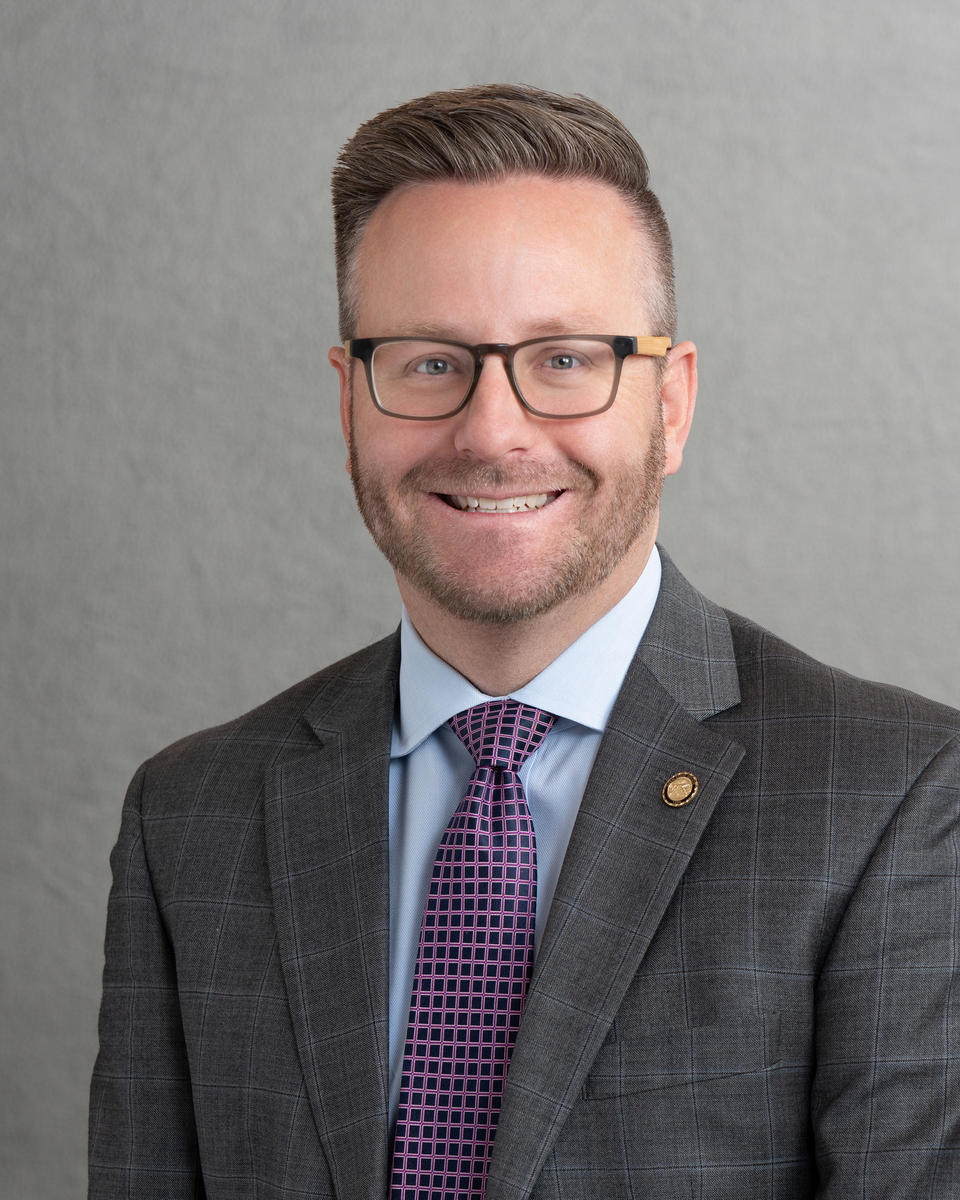
Photo of Brady Brammer
R Utah Senate · District 21 On the 2026 ballot

Sen. Brady Brammer

Compare
Total votes
4,957
all sessions
Attendance
91%
394 missed
Near the chamber average
With party
95%
of cast votes
Lower than 83% of chamber peers
Bipartisan score
3%
crosses aisle rarely
Near the chamber average
Sponsored
186
bills & resolutions
Higher than 96% of chamber peers
Committees
9
assignments
186 bills and resolutions

Sponsored bills

Total
186
Primary
80
Co-sponsor
106
This page
186
matching current filters
Co-sponsor HB 235
Passed · Utah House · Co-sponsor
Income Tax Revisions

Maddy summaryHB 235 reduces Utah's corporate and individual income tax rates from 4.5% to 4.45% for tax years beginning on or after January 1, 2026. It directly affects Utah corporations and residents who pay state income tax, lowering their tax burden slightly. The bill amends three key tax code sections (59-7-104, 59-7-201, and 59-10-104) to reflect the new rate, with no new state funding required. The change applies retroactively to 2026 tax years and takes effect on May 6, 2026.

Passed Mar 7, 2026 1 co-sponsor
Primary SB 173
Introduced · Utah Senate · Lead sponsor
Cryptocurrency Amendments

Maddy summarySB 173 regulates virtual currency kiosks (physical terminals for buying/selling cryptocurrency with cash) in Utah. It requires operators to obtain money transmitter licenses, limits daily transactions to $1,000 per customer (or $2,000 for new customers), caps transaction fees at 3%, and mandates clear fraud warnings about irreversible transactions. Operators must provide detailed disclosures, including exchange rates and transaction hashes, and display customer service contact information. The law takes effect May 6, 2026, and enforcement falls to the attorney general under Utah’s consumer protection laws.

Introduced Mar 7, 2026 0 co-sponsors
Co-sponsor HB 191
In committee · Utah House · Co-sponsor
Airport Land Use Amendments

Maddy summaryHB 191 amends Utah's airport definitions to explicitly include "flight parks" - areas used for hang gliding or similar nonmotorized aircraft that are FAA-recognized and publicly owned. This change ensures flight parks receive the same land use protections as traditional airports, including a 1,000-foot "influence area" buffer (compared to 500 feet for vertiports) and requirements for local governments to adopt airport overlay zones. The bill mandates that cities/counties within these areas must enforce noise notifications, conform development to FAA airspace rules, and may require avigation easements for new construction. It applies directly to flight parks (like public hang gliding sites) and local zoning authorities, with a delayed deadline (2026) for flight parks versus regular airports (2024). No funding is appropriated, and the bill focuses solely on clarifying regulatory treatment.

In committee Mar 7, 2026 1 co-sponsor
Co-sponsor HJR 15
Passed · Utah House · Co-sponsor
Joint Resolution Amending Court Rules to Address Sanctions and Dismissals

Maddy summaryThis joint resolution amends Utah's civil procedure rules to change how courts handle sanctions and dismissals. It adds a new penalty option allowing courts to order charitable donations (instead of cash fines) for certain misconduct under Rule 11. It also updates Rule 41 to let defendants seek dismissal if named solely for representing another party in a related case, and permits awarding attorney fees to defendants in those situations. These changes directly affect lawyers, defendants, and courts handling civil lawsuits in Utah.

Passed Mar 7, 2026 1 co-sponsor
Co-sponsor HB 149
Passed · Utah House · Co-sponsor
Sexual Material Modifications

Maddy summaryHB 149 creates new civil rights for individuals harmed by the non-consensual depiction of themselves in obscenity or child sexual abuse material, including being portrayed on child sex dolls. It allows victims to sue offenders directly without needing a prior criminal conviction and specifies court remedies like injunctions or damages. The bill also clarifies that online platforms (like social media or cloud services) cannot be held liable for such content if they didn’t create it. These changes apply specifically to Utah residents affected by these types of material, with no new government funding required.

Passed Mar 7, 2026 1 co-sponsor
Co-sponsor HB 355
Introduced · Utah House · Co-sponsor
Nuisance Modifications

Maddy summaryHB 355 modifies Utah's governmental immunity laws to allow private citizens to sue government entities for public or private nuisance claims. It specifically removes governmental immunity as a defense in these cases, meaning governments cannot avoid liability for nuisance issues like unsafe public infrastructure or environmental harm. The bill affects anyone who might bring a nuisance claim against a government agency, such as residents harmed by a dangerous public building or polluted water source. This change directly alters the legal process by enabling lawsuits that were previously blocked by immunity protections.

Introduced Mar 7, 2026 1 co-sponsor
Co-sponsor HJR 10
Passed · Utah House · Co-sponsor
Joint Rules Resolution - Sponsor's Supporting Information

Maddy summaryHJR 10 is a procedural resolution that establishes rules for Utah legislators to provide supplementary "sponsor's supporting information" about their bills. It defines this as a PDF document (max two pages) containing the sponsor's policy goals, expected impacts, or other relevant details, but clarifies this information is not part of the official legislation. The bill requires sponsors to include a specific disclaimer stating the information hasn't been reviewed for accuracy and isn't evidence of legislative intent. It mandates that the Senate secretary or House chief clerk make this information publicly accessible on the bill's webpage. This resolution affects all Utah legislators introducing bills, streamlining how they share context without altering the bill's legal text.

Passed Mar 7, 2026 1 co-sponsor
Primary SB 207
In committee · Utah Senate · Lead sponsor
Protection from Unfair Treatment Based on Religion or Other Irrelevant Characteristics

Maddy summarySB 207 prohibits discrimination based on religion, race, age, gender, or other protected characteristics in credit decisions by lenders and credit reporting agencies, and in insurance underwriting. It requires schools to grant excused absences for religious holidays and mandates state universities to reasonably accommodate students' religious practices during admissions, class attendance, exams, and academic requirements. The bill directly affects consumers applying for loans or insurance, public school students, and state higher education institutions. It amends existing Utah laws to clarify prohibited practices and enforcement mechanisms without appropriating new funds. The law aims to ensure equal access to financial services and educational opportunities while protecting individuals from bias based on irrelevant personal traits.

In committee Mar 7, 2026 0 co-sponsors
Co-sponsor HB 315
Passed · Utah House · Co-sponsor
Human Development Instruction

Maddy summaryHB 315 requires Utah public schools to include two specific videos in human growth and development instruction for students in grades 3-12: a high-definition ultrasound showing fetal organ development and a video depicting fertilization and pregnancy stages. It mandates that schools make all instructional materials available to parents upon request and directs the State Board of Education to publish approved materials, conduct compliance audits, and share audit results. The bill affects all local education agencies (LEAs) in Utah and their students, while giving parents access to curriculum content. No new funding is provided, and the policy focuses on specific educational content requirements within existing health curriculum standards.

Passed Mar 7, 2026 1 co-sponsor
Co-sponsor HB 70
Passed · Utah House · Co-sponsor
Correctional Health Services Amendments

Maddy summaryHB 70 requires Utah's Department of Health and Human Services to implement a new electronic health record system for inmate care by 2026, based on a working group's recommendations. It makes funds for unexpected high-cost correctional health care non-lapsing (meaning they won't expire if unused), and mandates a treatment plan for all inmates with substance use disorders, including medication-based treatment. The bill also sets accreditation standards for correctional health facilities and allows parole boards to consider health examiner reports when deciding parole conditions. These changes directly affect inmates in Utah's correctional facilities, the Department of Health and Human Services, and the Department of Corrections.

Passed Mar 7, 2026 1 co-sponsor
Showing 51 to 60 of 186 bills
Previous 1 5 6 7 19 Next