

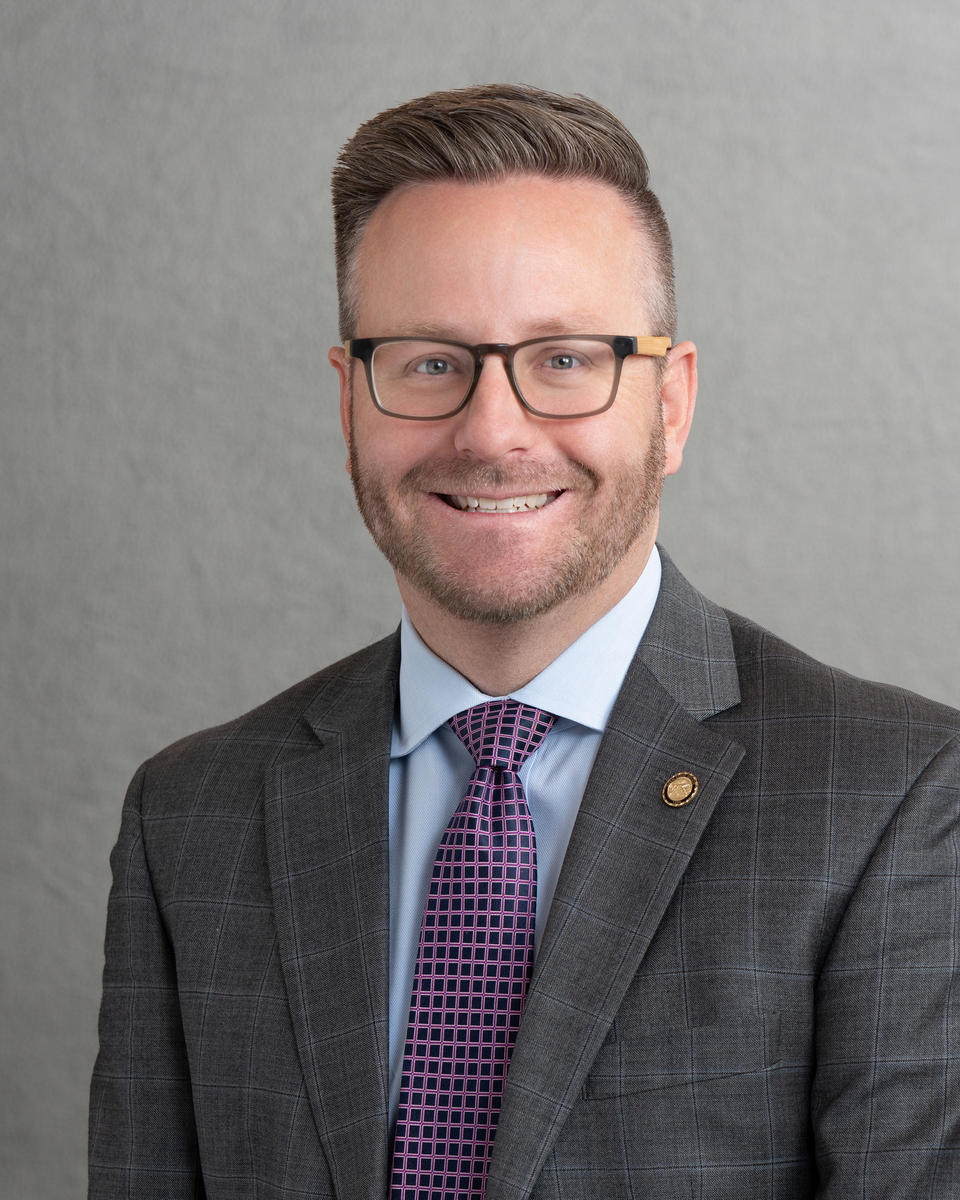
Photo of Brady Brammer
R Utah Senate · District 21 On the 2026 ballot

Sen. Brady Brammer

Compare
Total votes
4,957
all sessions
Attendance
91%
394 missed
Near the chamber average
With party
95%
of cast votes
Lower than 83% of chamber peers
Bipartisan score
3%
crosses aisle rarely
Near the chamber average
Sponsored
186
bills & resolutions
Higher than 96% of chamber peers
Committees
9
assignments
186 bills and resolutions

Sponsored bills

Total
186
Primary
80
Co-sponsor
106
This page
186
matching current filters
Co-sponsor HB 396
Signed into law · Utah House · Co-sponsor
Public Project Subcontractor Amendments

Maddy summaryHB 396 modifies disclosure rules for subcontractors working on Utah public construction projects. It requires subcontractors to sign a statement confirming they have no employees (to qualify for a "zero estimated exposure" workers' compensation policy) and to report employee details to the state division. The bill also mandates general contractors and property owners to keep records for audits, shifts interest rates and penalties for unemployment insurance to be set by rule, and expands "unprofessional conduct" to include failing to meet these new requirements. These changes directly affect subcontractors, contractors, and property owners involved in public construction projects.

Signed into law Mar 19, 2026 1 co-sponsor
Primary SB 235
Signed into law · Utah Senate · Lead sponsor
Governor Compensation Amendments

Maddy summarySB 235 adjusts the governor's salary to match the total annual compensation of Utah's chief justice of the Supreme Court, effective July 1, 2026. This change directly affects the governor's pay and indirectly impacts other constitutional offices (like attorney general, lieutenant governor, and state auditor) since their salaries are set as fixed percentages of the governor's salary. The bill makes technical updates to existing salary formulas in Utah law without appropriating new funds. It does not alter the attorney general's current 95% salary formula but ensures future adjustments align with the chief justice's compensation. The bill requires no new spending and takes effect on the specified date.

Signed into law Mar 18, 2026 0 co-sponsors
Co-sponsor HB 280
Signed into law · Utah House · Co-sponsor
Third Party Litigation Funding Amendments

Maddy summaryHB 280 regulates third-party litigation funding in Utah by creating clear distinctions between funding for individuals ("consumer maintenance") and businesses ("commercial maintenance"). It extends consumers' right to cancel funding agreements (rescission), restricts foreign entities from providing such funding, and prohibits funding providers from influencing case decisions or settlements. The bill also requires businesses to disclose outcome-based funding agreements in court and holds funding providers jointly liable for costs if a case fails. These changes primarily affect individuals in personal injury or wrongful death cases and businesses using litigation funding, aiming to increase transparency and protect consumers from predatory practices.

Signed into law Mar 18, 2026 1 co-sponsor
Co-sponsor HB 205
Signed into law · Utah House · Co-sponsor
Substance Use Intervention Amendments

Maddy summaryHB 205 creates new pathways for substance use treatment within Utah's criminal justice system. It allows county jails to establish recovery housing pods for incarcerated individuals with substance use disorders, requiring approval by local substance abuse authorities and structured treatment programs. The bill also restricts syringe exchange programs to only distributing syringes (not other drug paraphernalia) and prohibits exchanges in public parks. Additionally, it authorizes courts to implement structured treatment programs for drug offenses and issue geographic "off-limits" orders for individuals charged with drug crimes. These changes primarily affect jails, local health authorities, and courts managing drug-related cases.

Signed into law Mar 18, 2026 1 co-sponsor
Co-sponsor HB 272
Signed into law · Utah House · Co-sponsor
Tourism Taxes Amendments

Maddy summaryHB 272 strengthens oversight of how counties spend tourism-related taxes (like transient room taxes and tourism facility taxes). It requires counties to submit detailed annual reports on tourism tax spending to the state auditor and legislative fiscal analysts, who must jointly review if funds comply with state rules. If reports are inadequate, the state auditor can block counties from accessing tourism revenue until compliance is proven. This directly affects counties collecting these taxes, ensuring they account for spending on tourism promotion, emergency services, and infrastructure tied to tourism.

Signed into law Mar 18, 2026 1 co-sponsor
Co-sponsor HJR 26
Passed · Utah House · Co-sponsor
Joint Resolution Amending Rules of Evidence to Address Machine-Generated Evidence

Maddy summaryHJR 26 amends Utah's Rules of Evidence to establish new standards for admitting evidence generated by automated systems (like AI or algorithms) that make inferences or predictions. It requires such evidence to meet four criteria for admissibility: it must help the court understand the case, be based on sufficient facts, use reliable methods, and apply those methods correctly to the facts. This rule specifically excludes basic measuring devices (like speedometers or thermometers) from these requirements. The bill affects Utah courts and legal proceedings involving machine-generated evidence, ensuring such evidence meets reliability standards before being used in trials.

Passed Mar 17, 2026 1 co-sponsor
Primary SB 145
Signed into law · Utah Senate · Lead sponsor
Lobbying Amendments

Maddy summarySB 145 restricts former state officials from lobbying for one year after leaving office. It directly affects individuals who served in state government, barring them from working as lobbyists for any entity during this cooling-off period. Exceptions include lobbying for themselves or for a business they're associated with (unless that business primarily does lobbying). The restriction also requires lobbying to occur outside the specific government branch the former official previously served in.

Signed into law Mar 17, 2026 0 co-sponsors
Co-sponsor HB 53
Signed into law · Utah House · Co-sponsor
Community Rehabilitation Program Amendments

Maddy summaryHB 53 amends Utah's Community Rehabilitation Program purchasing rules by requiring the Purchasing from Persons with Disabilities Advisory Board to submit an annual report to the Government Operations Interim Committee starting January 1, 2027. The report must include specific details like the number of contracts, total revenue, employment data for people with disabilities, and program success metrics. The bill extends the sunset date for the board's duties and updates technical provisions in existing law. This affects government procurement units that purchase goods/services from community rehabilitation programs and the Advisory Board itself. The changes focus on reporting requirements and administrative continuity, with no new funding or procurement mandates.

Signed into law Mar 17, 2026 1 co-sponsor
Primary SJR 1
Passed · Utah Senate · Lead sponsor
Joint Resolution Amending Rules of Evidence Concerning Crimes or Other Acts

Maddy summarySJR 1 amends Utah's Rules of Evidence to allow courts to admit evidence of prior similar child molestation or sexual assault acts in criminal cases involving those specific offenses. It permits prosecutors to present evidence of past child molestation (including sexual exploitation of minors) or prior sexual assaults to show a defendant's propensity, provided they give the defendant reasonable notice before trial. This change directly affects defendants in criminal cases accused of child molestation (involving children under 14) or sexual assault. The amendment does not alter other evidence rules but specifies new procedures for disclosure and admissibility in these limited cases.

Passed Mar 16, 2026 0 co-sponsors
Co-sponsor HB 366
Signed into law · Utah House · Co-sponsor
Judicial Modifications

Maddy summaryHB 366 clarifies how Utah district courts assign judges to handle criminal cases filed by cities (called "municipal cases"). It requires each district court to assign at least one judge for a municipality's cases and limits this to one judge per 500 municipal cases filed, appealed, or transferred annually. The bill mandates that these cases be heard as close as possible to the municipality's main office (measured by driving distance), unless a presiding judge approves an exception for "good cause." This applies directly to cities filing cases in district court and aims to streamline case management without changing court authority or public access.

Signed into law Mar 13, 2026 1 co-sponsor
Showing 31 to 40 of 186 bills
Previous 1 3 4 5 19 Next