

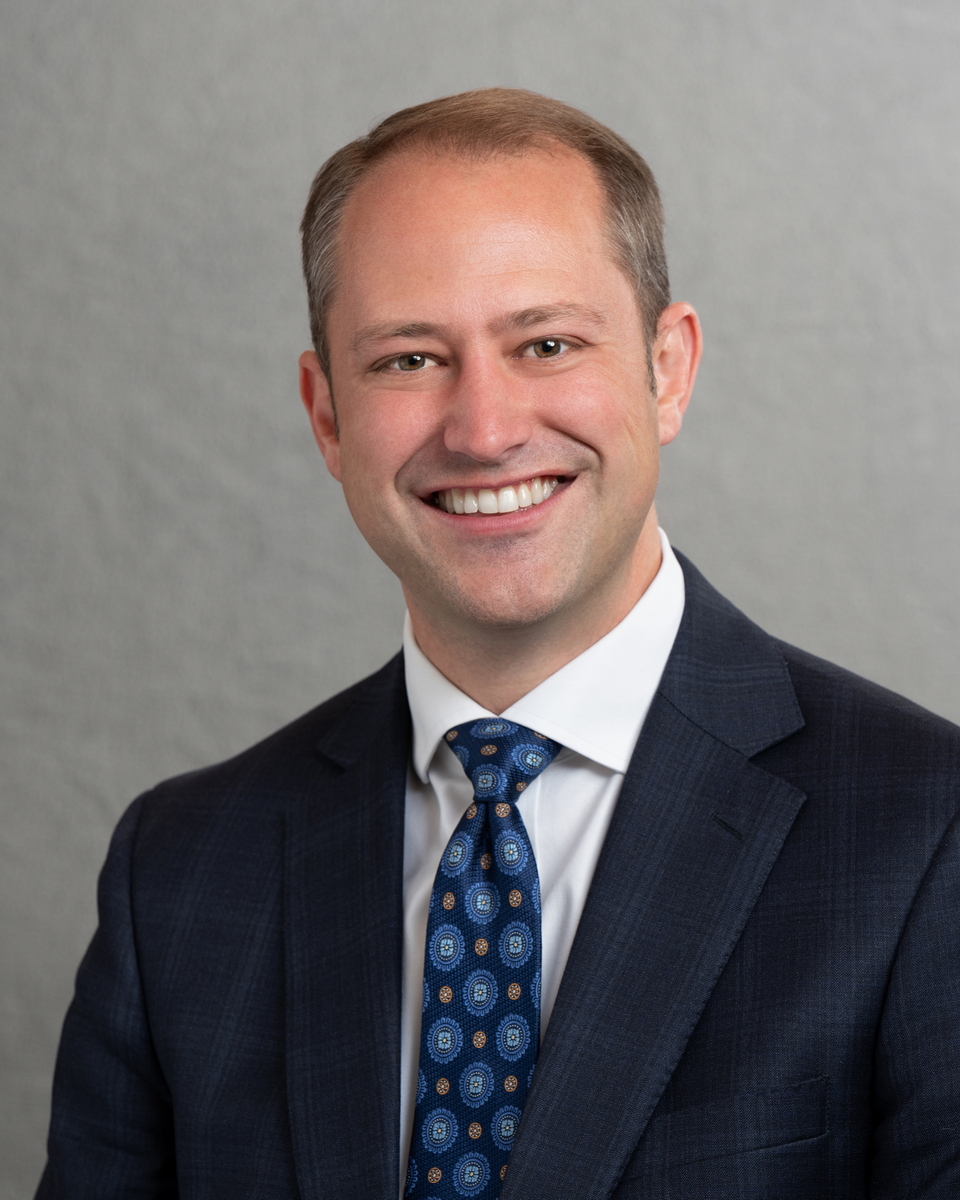
Photo of Jordan Teuscher
R Utah House · District 44 On the 2026 ballot

Rep. Jordan Teuscher

Compare
Total votes
4,532
all sessions
Attendance
92%
302 missed
Lower than 78% of chamber peers
With party
96%
of cast votes
Near the chamber average
Bipartisan score
2%
crosses aisle rarely
Near the chamber average
Sponsored
166
bills & resolutions
Higher than 97% of chamber peers
Committees
7
assignments
166 bills and resolutions

Sponsored bills

Total
166
Primary
112
Co-sponsor
54
This page
166
matching current filters
Co-sponsor SB 145
Signed into law · Utah Senate · Co-sponsor
Lobbying Amendments

Maddy summarySB 145 restricts former state officials from lobbying for one year after leaving office. It directly affects individuals who served in state government, barring them from working as lobbyists for any entity during this cooling-off period. Exceptions include lobbying for themselves or for a business they're associated with (unless that business primarily does lobbying). The restriction also requires lobbying to occur outside the specific government branch the former official previously served in.

Signed into law Mar 17, 2026 1 co-sponsor
Primary HB 366
Signed into law · Utah House · Lead sponsor
Judicial Modifications

Maddy summaryHB 366 clarifies how Utah district courts assign judges to handle criminal cases filed by cities (called "municipal cases"). It requires each district court to assign at least one judge for a municipality's cases and limits this to one judge per 500 municipal cases filed, appealed, or transferred annually. The bill mandates that these cases be heard as close as possible to the municipality's main office (measured by driving distance), unless a presiding judge approves an exception for "good cause." This applies directly to cities filing cases in district court and aims to streamline case management without changing court authority or public access.

Signed into law Mar 13, 2026 0 co-sponsors
Co-sponsor SB 301
Passed · Utah Senate · Co-sponsor
Summons Amendments

Maddy summarySB 301 amends criminal procedure rules regarding summons for defendants released from jail before trial. It directly affects defendants, prosecutors, and magistrates by changing when prosecutors can file charges (after 60 days of release) and modifying requirements for magistrates releasing defendants. The bill adds that a presumption favoring defendants' release can be overcome if the defendant fails to appear on a served summons or if good-faith service attempts fail. These changes clarify procedural timelines and service requirements for pretrial releases.

Passed Mar 7, 2026 1 co-sponsor
Co-sponsor SB 273
In committee · Utah Senate · Co-sponsor
License Plate Amendments

Maddy summarySB 273 amends Utah's license plate system by changing how standard and special group plates are designed, issued, and managed. It creates a rotating process for standard plate options, updates visibility requirements for faded plates, modifies special group plate funding rules, and requires both license plates and driver ID card designs to be approved by a new design review board. The bill affects state agencies like the Motor Vehicle Division and State Tax Commission, not individual drivers or vehicle owners.

In committee Mar 7, 2026 1 co-sponsor
Co-sponsor SB 265
Passed · Utah Senate · Co-sponsor
Uniform Community Property Disposition at Death Act Amendments

Maddy summarySB 265 amends the Uniform Community Property Disposition at Death Act to clarify surviving spouses' rights to community property owned with a deceased spouse. It ensures that a surviving community-property spouse automatically retains ownership of community property upon the spouse's death, unless the deceased spouse transferred it via a will or other means that explicitly gives it to a third party. The bill explicitly excludes property transferred through right of survivorship (like joint bank accounts) or revocable trusts from these rules. This affects surviving spouses in community property states who may otherwise face disputes over inherited assets.

Passed Mar 7, 2026 1 co-sponsor
Primary HB 216
Passed · Utah House · Lead sponsor
Child Support Calculation Amendments

Maddy summaryHB 216 amends Utah's child support law to exclude Social Security Disability Insurance (SSDI) benefits from the gross income calculation used to determine child support payments. This change directly affects parents who receive SSDI, ensuring these disability benefits are not counted as income when calculating their child support obligation. The bill modifies Utah Code Section 81-6-203 by adding SSDI to a list of excluded benefits, alongside other means-tested programs like Medicaid and SNAP. This adjustment aligns with existing exclusions for similar benefits and prevents SSDI recipients from having these funds considered as available income for support payments. The change takes effect May 6, 2026.

Passed Mar 7, 2026 0 co-sponsors
Primary HB 239
Introduced · Utah House · Lead sponsor
Local Land Use Amendments

Maddy summaryHB 239 creates the Commission on Unincorporated Areas for counties classified as "first class" in Utah. The commission, composed of mayors from specific cities and appointed officials, will develop plans to determine which unincorporated areas should remain outside municipalities and which should eventually be annexed by existing cities. It requires counties to provide staff support and mandates the commission to consult with local governments, school districts, utilities, and property owners during planning. The bill establishes a process for adopting, modifying, or repealing these plans, with modifications requiring a two-thirds vote of the commission. This directly affects county governments, municipalities, and service providers operating in unincorporated areas of first-class counties.

Introduced Mar 7, 2026 0 co-sponsors
Primary HB 212
Failed · Utah House · Lead sponsor
County Formation Amendments

Maddy summaryHB 212 establishes a formal process for creating new counties in Utah, primarily affecting municipalities in large counties (population over 1 million) seeking to secede. It requires petitioning municipalities to meet population thresholds (at least one-third of the county's population), complete a feasibility study, and propose boundaries that avoid dividing cities or leaving the original county unable to function. The bill ensures new counties maintain the same local sales tax rates for transportation as the seceding county and clarifies how property taxes and debts will be handled during the transition. These changes aim to make county formation more structured and financially responsible while protecting the viability of both the new and remaining counties.

Failed Mar 7, 2026 0 co-sponsors
Co-sponsor SB 207
In committee · Utah Senate · Co-sponsor
Protection from Unfair Treatment Based on Religion or Other Irrelevant Characteristics

Maddy summarySB 207 prohibits discrimination based on religion, race, age, gender, or other protected characteristics in credit decisions by lenders and credit reporting agencies, and in insurance underwriting. It requires schools to grant excused absences for religious holidays and mandates state universities to reasonably accommodate students' religious practices during admissions, class attendance, exams, and academic requirements. The bill directly affects consumers applying for loans or insurance, public school students, and state higher education institutions. It amends existing Utah laws to clarify prohibited practices and enforcement mechanisms without appropriating new funds. The law aims to ensure equal access to financial services and educational opportunities while protecting individuals from bias based on irrelevant personal traits.

In committee Mar 7, 2026 1 co-sponsor
Primary HB 418
Introduced · Utah House · Lead sponsor
School Class Size Requirements

Maddy summaryThis bill sets a 25-student maximum for most classes in Utah public schools, directly affecting school districts, teachers, and students in grades K-12. It exempts classes with teaching aides present for most of the time, online asynchronous courses, and designated large-group classes like band or physical education in secondary grades (6-12). School districts may temporarily exceed the limit due to enrollment changes if they create a written compliance plan and notify parents within 10 days. The State Board of Education will develop rules for reporting class sizes and may designate additional exempt class types. The law takes effect on July 1, 2026.

Introduced Mar 7, 2026 0 co-sponsors
Showing 21 to 30 of 166 bills
Previous 1 2 3 4 17 Next