

Maddy summaryThis bill creates a 5-year pilot program for U.S. Customs and Border Protection (CBP) to hire two new image technician roles (Image Technician 1 and 2) to review scanning images of cargo and containers at ports of entry. Image Technician 1s assess images for anomalies indicating contraband or unauthorized persons, recommending release or further inspection to CBP officers, while Image Technician 2s also analyze intelligence on smuggling tactics and report to the National Targeting Center. Supervisory CBP officers retain final decision-making authority, and all technicians must undergo annual training on privacy rights, image analysis, and identifying threats like drugs or weapons. The program establishes five regional command centers, requires detailed quarterly reports to Congress on metrics like seizure rates and wait times, and ends after five years with potential for staff transfers to permanent CBP roles.
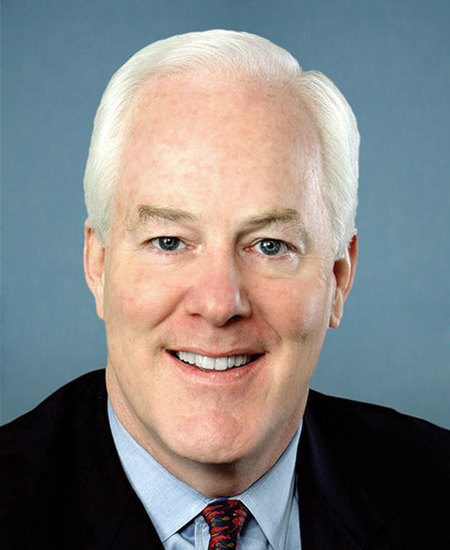
Sponsored bills
Maddy summaryThis bill repeals the federal estate tax and generation-skipping transfer tax for estates of people who die on or after the bill's enactment date, directly affecting heirs of large estates (typically valued over $13 million for 2025). It also modifies the gift tax by establishing a $10 million lifetime exemption (adjusted for inflation), replacing the current exemption amount. The bill sets new tax brackets for gifts exceeding this threshold and adjusts the calculation method for gift tax liability. These changes apply to gifts made or estates settled after the bill becomes law, with no impact on existing estate plans or transfers before enactment.
Maddy summaryThis resolution expresses the Senate's view that NATO members not spending at least 2% of GDP on defense should face consequences. It specifically prohibits such countries from holding NATO leadership roles (like Secretary General or military commands above 2-star rank) or hosting major events (such as NATO Summits or ministerial meetings). The resolution targets members who fail to meet the 2% target, as 23 of 31 members did meet it in 2024. It is a symbolic statement, not a binding law, aiming to pressure non-compliant nations ahead of the June 2025 NATO Summit.
Maddy summaryS 533, the National Right-to-Work Act, eliminates requirements for workers to join a union or pay dues as a condition of employment in private-sector workplaces and railroads. It amends the National Labor Relations Act (NLRA) and Railway Labor Act by removing language that allowed "union security agreements," meaning employers and unions can no longer mandate union membership or financial dues for employees. This directly affects workers in unionized private companies and railroad jobs covered by collective bargaining agreements. The law applies to new or renewed contracts after its enactment, changing how labor agreements can structure financial obligations for employees.
Maddy summaryThis bill prohibits federal agencies (like the Fish and Wildlife Service and Forest Service) from banning lead ammunition or tackle on public lands and waters used for hunting or fishing, directly affecting hunters and anglers who use federal lands. It blocks new federal regulations on lead levels in hunting gear, except in limited cases where a specific area's wildlife decline is linked to lead use and the state wildlife agency approves the restriction. The law requires federal agencies to explain in notices how any exception meets state wildlife department requirements or state law. It does not change existing state laws or allow federal bans on lead where states already prohibit it.
Maddy summaryThis bill establishes a formal U.S.-Israel defense partnership focused on joint development of counter-unmanned systems technology, authorizing $150 million annually from 2026-2030 for a dedicated program. It directly affects U.S. and Israeli defense departments, contractors, and military personnel through collaborative research, joint training, and shared procurement of counter-drone systems. Additional provisions include extending existing anti-tunnel and counter-UAS cooperation with increased funding, creating a new emerging tech program for AI/cybersecurity collaboration, and establishing a U.S. Defense Innovation Unit office in Israel. The bill requires annual reports to Congress on program progress and mandates semiannual financial oversight for all joint activities.
Maddy summaryThis bill imposes new sanctions on foreign entities (including banks, insurers, and logistics companies) that knowingly facilitate Iran's oil, gas, LNG, or petrochemical exports. It blocks U.S. property of sanctioned entities and bars targeted individuals from entering the U.S. via visa restrictions or revocation. Exceptions cover goods imports and certain international obligations, while the President may grant limited 180-day waivers for national security reasons, subject to congressional reporting. The law aims to disrupt Iran's energy revenue streams used for terrorism, weapons programs, and repression, with enforcement coordinated through a new interagency working group.
Maddy summaryThis bill amends the Fair Labor Standards Act to create a specific exemption for 16- and 17-year-olds working in family-owned logging operations. It defines "logging operation" to include mechanized equipment (like skidders and processors) but explicitly excludes manual chainsaw work and cable skidders. The exemption allows teens to work in these family businesses without applying standard child labor restrictions for hazardous occupations, provided the employer is their parent or legal guardian. This change directly affects young workers in small, family-run logging operations across the logging industry.
Maddy summaryThe Financing Our Energy Future Act (S 510) expands tax-qualified activities for green energy publicly traded partnerships under the Internal Revenue Code. It directly affects businesses investing in renewable energy projects by adding specific eligible activities, such as generating power from qualified renewable sources (e.g., solar, wind, or advanced nuclear), storing energy using new technology, capturing carbon dioxide, and producing low-emission fuels. Key provisions require new fuels to achieve at least a 60% reduction in lifecycle greenhouse gas emissions compared to baseline standards, and mandate that carbon capture facilities capture at least 50% of their carbon oxide output. The changes take effect for taxable years beginning after December 31, 2025.
Maddy summaryThe SHIELD Act of 2023 makes it a federal crime to knowingly distribute intimate visual depictions (like private photos or videos) without consent when the person had a reasonable expectation of privacy, the image wasn’t voluntarily shared in public, and the distribution causes harm (e.g., psychological or reputational damage). It specifically targets non-consensual sharing of intimate images of adults and prohibits distributing images of minors for abuse or sexual gratification, with penalties of up to 2 years in prison for adults and 3 years for minors. The law includes exceptions for law enforcement, legitimate reporting, medical/educational use, and legal proceedings. It does not apply to platforms that host user content unless they intentionally promote such material.