

Maddy summaryThis bill requires the EPA to adjust emissions calculations so that flexible fuel vehicles (FFVs) using E85 ethanol count as having 31% lower carbon emissions per mile compared to standard gasoline vehicles. It directly affects automakers who must meet fleet-wide CO2 emissions standards under current regulations. The change would allow manufacturers to use a reduced CO2 value for FFVs in their emissions calculations, based on EPA's assessment that E85 reduces emissions by 37% compared to gasoline. This adjustment applies to how the EPA determines compliance for FFVs under existing Clean Air Act standards.
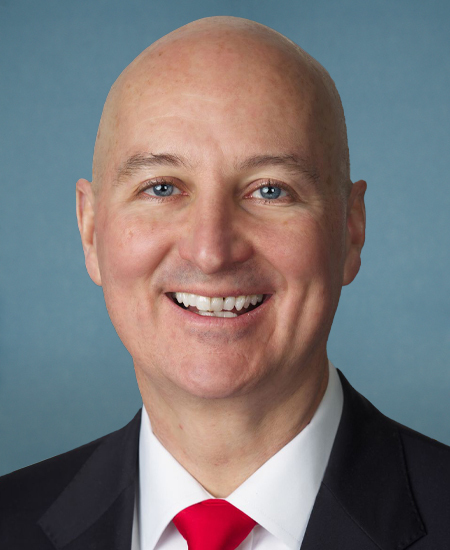
Sen. Pete Ricketts
Sponsored bills
Maddy summaryThis Senate resolution (SRES 283) designates July 6, 2025 - the 90th birthday of the 14th Dalai Lama - as "A Day of Compassion." It affirms U.S. support for the Tibetan people’s human rights, including their distinct religious, cultural, linguistic, and historical identity. The resolution references the 2020 Tibetan Policy and Support Act, emphasizing that decisions about Tibetan Buddhist leadership (including future Dalai Lamas) must be determined by religious authorities within Tibetan Buddhism, not by the Chinese government. As a ceremonial resolution, it expresses symbolic support but does not create new legal obligations.
Maddy summaryThis bill requires adding a citizenship checkbox to the 2030 and future decennial censuses, asking respondents about their U.S. citizenship status for themselves and all household members. It mandates that the Census Bureau publicly release each state's total citizen and noncitizen population counts within 120 days after each census. The bill then changes how congressional representation is calculated by excluding noncitizens from the population numbers used to apportion House seats and electoral votes starting with the 2030 census. This directly affects how states' representation in Congress and the Electoral College is determined based on citizen population counts rather than total population.
Maddy summarySRES 307 is a non-binding Senate resolution expressing support for U.S. and Israeli military strikes targeting Iran's nuclear facilities on June 21, 2025 (Operation Midnight Hammer). It states the Senate opposes Iran acquiring nuclear weapons and commends the military actions taken to degrade Iran's nuclear program. The resolution does not create new laws, impose requirements, or directly affect any individuals or entities. It serves solely as a symbolic expression of congressional backing for the strikes, referencing specific operations and Iran's nuclear activities as context.
Maddy summaryS 2108 (VARIANCE Act) allows commercial trucks transporting specific dry bulk goods to exceed standard axle weight limits by up to 10% (110% of the maximum). It directly affects trucking companies hauling homogeneous, unpackaged dry bulk cargo (like grain or sand) in trailers designed for that purpose. The bill amends federal law to permit this weight variance for dry bulk goods only, while still requiring compliance with the overall gross vehicle weight limit. This change applies solely to vehicles carrying defined dry bulk goods in purpose-built trailers, not to other cargo or vehicles.
Maddy summaryThis bill requires the Committee on Foreign Investment in the United States (CFIUS) to maintain and annually update a list of U.S. government facilities and property considered sensitive for national security - such as intelligence sites and National Laboratories. It mandates that each CFIUS committee member review their agency’s properties on this list each year by January 31 and submit recommended updates to the chairperson after agency approval. The committee must also report annually on all real estate transactions reviewed under this list, including completed reviews and any classified briefings requested by Congress. This formalizes an existing process into a structured annual requirement, directly affecting federal agencies and CFIUS oversight of foreign investments involving sensitive government sites.
Maddy summaryThis bill directs the U.S. government to actively support Taiwan's membership in the International Monetary Fund (IMF) and its meaningful participation in other international financial institutions. If Taiwan applies for IMF membership, the U.S. Governor at the IMF must use the U.S. vote to support that application, ensure Taiwan's participation in economic reviews, and facilitate access to technical assistance. The bill requires annual reports from the Treasury Secretary on U.S. efforts to advance Taiwan's engagement in these organizations for seven years. It aligns with longstanding U.S. policy supporting Taiwan's participation in international bodies where statehood is not required, without altering Taiwan's current non-member status.
Maddy summaryThe COUNTER Act of 2025 requires U.S. government agencies to develop a coordinated strategy to address China's expansion of military infrastructure overseas. Specifically, it mandates that the State Department and Defense Department submit a plan within 180 days identifying five priority locations where China has or seeks military bases (like Djibouti and Cambodia), detailing current efforts to counter these bases, and proposing actions to prevent new bases. The bill also establishes an interagency task force to implement the strategy and requires a comprehensive review every four years. This legislation directly affects U.S. foreign policy and defense agencies, focusing on strategic coordination to protect U.S. interests and allies' security.
Maddy summaryThis bill authorizes the President to extend U.S. legal immunities (such as diplomatic protections) to three international organizations: ASEAN (Association of Southeast Asian Nations), CERN (European Organization for Nuclear Research), and the Pacific Islands Forum (PIF). It amends the International Organizations Immunities Act to allow these extensions on terms determined by the President, mirroring how the U.S. grants such protections to other international bodies it participates with. The bill directly affects these organizations by potentially granting them legal status and protections during their activities in the United States. It does not create new programs or funding but adjusts existing legal authority for diplomatic relations.
Maddy summaryThis bill restricts how credit bureaus share consumer credit reports during mortgage applications. It limits sharing with third parties unless the request is for a firm mortgage offer or the recipient is the loan originator, servicer, or a bank holding the consumer's account. The law directly affects consumers (by limiting data sharing), credit bureaus (requiring new compliance), and mortgage lenders/banks (with restricted access). Key provisions require explicit consumer authorization for sharing and prevent broad data use during prescreening for home loans.