

Maddy summaryThis bill ensures military personnel and their support staff continue receiving pay during government funding gaps in fiscal year 2026. It authorizes funds from the Treasury to cover pay and allowances for active-duty service members, reserves, military support civilians (including Coast Guard staff), and qualifying contractors if regular budget appropriations aren't approved. The funding remains available until the earliest of: a new budget passing, a continuing resolution without this funding, or January 1, 2027. It directly affects all active-duty military, reserve components, and civilian/contractor support staff within the Department of Defense and Coast Guard.
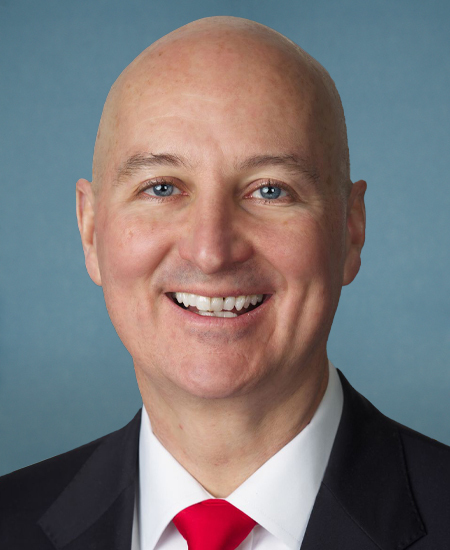
Sen. Pete Ricketts
Sponsored bills
Maddy summaryThis bill establishes a U.S. government task force to prepare sanctions against Chinese entities if the People's Republic of China (PRC) takes actions threatening Taiwan's sovereignty, such as military aggression, territorial occupation, or cyberattacks. The PRC Sanctions Task Force, to be created within 180 days of enactment, will identify potential targets, assess existing and needed sanctions authorities, and coordinate with allies to minimize economic impacts on the U.S. and partners. It requires annual classified reports to Congress detailing target entities, potential economic effects, and strategies for imposing sanctions. The bill directly affects U.S. agencies (State, Treasury, Commerce) and could impact PRC entities supporting actions against Taiwan, but it does not authorize sanctions itself - only prepares the framework for potential future action.
Maddy summaryThis bill directs the U.S. State Department to monitor and counter Chinese efforts to pressure Latin American and Caribbean countries that maintain diplomatic ties with Taiwan to sever those relations. It requires establishing a mechanism to track Chinese infrastructure projects in those countries that involve "strategic risks" or opaque financing, and mandates semiannual reports to Congress on nations considering ending ties with Taiwan. The bill also requires annual reports detailing China's influence tactics in the region, U.S. actions to support Taiwan's diplomatic partners, and plans for deepening U.S.-Taiwan coordination on development in the Western Hemisphere. These provisions directly affect countries in Latin America and the Caribbean with formal ties to Taiwan, aiming to protect their sovereign foreign policy choices from coercion.
Maddy summaryThe THINK TWICE Act of 2025 requires the U.S. Department of Defense and State Department to submit annual reports analyzing Chinese arms sales, including their impact on global security and U.S. military alliances. The reports must detail Chinese weapons systems available for sale, risks to U.S. interests, and countries likely to purchase them. It also mandates a U.S. strategy to discourage nations from buying new Chinese weapons (excluding spare parts) through information campaigns, improving U.S. defense sales processes, and countering Chinese disinformation. This bill directly affects U.S. defense agencies, foreign partners, and U.S. defense contractors seeking to compete with Chinese arms exports. The strategy must be developed within one year of the law’s enactment and shared with relevant congressional committees.
Maddy summaryThis bill streamlines defense technology transfers between the U.S., Australia, and the U.K. by removing specific regulatory barriers under the Arms Export Control Act. It allows direct reexports or transfers of defense articles between these governments without requiring presidential consent, and eliminates certification requirements for commercial technical assistance or manufacturing agreements involving Australia or the U.K. The policy change directly affects U.S. defense contractors, government agencies, and the AUKUS partnership by simplifying cross-border defense cooperation. These provisions aim to accelerate joint military technology sharing while maintaining compliance with existing export control frameworks.
Maddy summarySRES 475 is a symbolic Senate resolution designating November 1, 2025 (the first Saturday of November) as "National Bison Day." It directly affects all Americans by officially recognizing this date for public observance. The resolution acknowledges bison's historical, cultural, and economic significance, particularly to Native American tribes and rural communities, and builds on an existing annual tradition celebrated since 2012. The Senate encourages the public to observe the day with appropriate ceremonies and activities, though the resolution contains no new laws or funding.
Maddy summaryThis bill directs the U.S. government to consider Chinese officials responsible for religious freedom abuses as subject to sanctions under existing U.S. law. It requires the State Department to support programs promoting religious freedom in China and monitor Chinese government actions targeting religious minorities. The bill also urges Congress to designate China as a "country of particular concern" for religious freedom, call for the release of detained religious prisoners, and strengthen diplomatic efforts with international partners on this issue. It specifically addresses abuses against groups including Christians, Muslims, Buddhists, and others facing restrictions in China.
Maddy summaryS 3030, the Pay Our Military Act of 2025, ensures that active-duty military members, reservists, civilian Defense personnel, and supporting contractors continue receiving pay and essential benefits during any funding gap in fiscal year 2026. It appropriates necessary funds from the Treasury to cover pay, allowances, housing, travel, and other payments if Congress hasn’t passed full-year appropriations by September 30, 2026. These funds are charged to future appropriations when regular funding is enacted, preventing delays in military compensation. The bill takes effect retroactively as of September 30, 2025, to cover any missed payments during the prior fiscal year.
Maddy summaryThe STREAMLINE Act increases certain anti-money laundering reporting thresholds: it raises the currency transaction reporting threshold from $10,000 to $30,000 and adjusts suspicious activity report thresholds from $2,000/$5,000 to $3,000/$10,000. It also establishes automatic inflation adjustments for these thresholds every five years, based on the Consumer Price Index, rounded to the nearest $1,000. Financial institutions that file these reports (like banks and casinos) will be directly affected by the higher thresholds and updated reporting requirements. The bill requires the Treasury to review and streamline reporting forms within 360 days of enactment to improve efficiency in detecting illicit finance.
Maddy summaryThis bill prohibits all federal enforcement of emissions control requirements for diesel trucks. It directly affects diesel truck manufacturers, importers, distributors, and owners by eliminating all federal mandates (including under the Clean Air Act) for emissions control devices or onboard diagnostic systems on diesel vehicles. Key provisions repeal existing EPA regulations, prevent future rulemaking on emissions devices, and expunge past legal records related to non-compliance with emissions standards. The law would remove all federal legal barriers to modifying or removing emissions equipment from diesel engines.