

Maddy summaryThis bill modifies U.S. export control laws to include Taiwan in specific certification, reporting, and licensing requirements previously listing only New Zealand. It directly affects U.S. military exports and transfers involving Taiwan by adding Taiwan to lists of eligible recipients in multiple sections of the Arms Export Control Act. The key provision creates a new expedited review process (15 days for government-to-government deals, 30 days for others) for defense transfers from U.S. allies (NATO members, Japan, Australia, South Korea, Israel, New Zealand) to Taiwan. This aims to streamline military equipment transfers while requiring a report on implementation within one year.
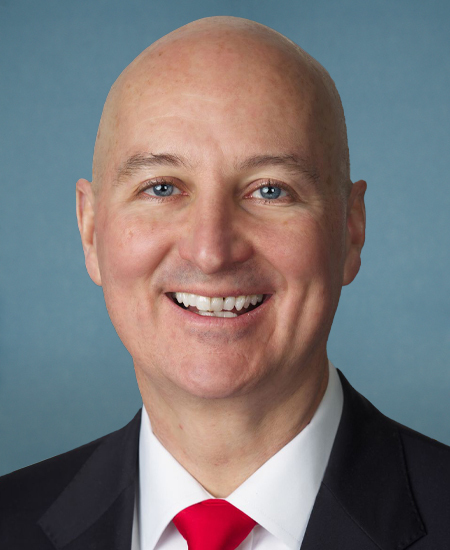
Sen. Pete Ricketts
Sponsored bills
Maddy summaryThis bill, S 3453 ("No Bounties on Badges Act"), authorizes the Attorney General to offer rewards for information leading to arrests, convictions, or prevention of attacks against U.S. federal law enforcement officers. It specifically creates a program allowing rewards for tips about acts harming or killing officers, conspiracies to do so, or efforts to prevent such attacks. The law directly affects federal law enforcement officers (the targets of potential violence) and individuals who provide actionable information to authorities. It amends existing law to add this reward mechanism under Title 18, U.S. Code, section 3071, without restricting other bounty programs.
Maddy summaryThis bill establishes a federal working group under the Department of Health and Human Services to standardize how loneliness (a subjective feeling) and isolation (an objective lack of social contact) are measured across government and healthcare. The Working Group, composed of HHS agencies and state representatives from areas with high/low mental health practitioner shortages, will develop consistent metrics and definitions for research, public health initiatives, and healthcare tools. It requires the group to submit a report to Congress within one year of enactment, detailing recommendations for unified measurement standards. The effort is limited to improving data collection methods and expires by December 31, 2027.
Maddy summaryThe Safeguarding U.S. Rulemaking Act restricts public participation in federal rulemaking to U.S. citizens and entities, excluding foreign governments and their nationals or entities designated as "foreign adversaries" by the Secretary of Commerce under 15 CFR §791.4(a). It amends Section 553 of Title 5, U.S. Code, to add a new provision (f) explicitly barring these foreign adversaries from commenting on or petitioning for agency rules. This change directly affects foreign governments, nationals, and entities meeting the "foreign adversary" definition, preventing them from influencing U.S. regulatory processes during public comment periods. The bill does not alter standard rulemaking procedures but limits who can submit input during agency rulemaking.
Maddy summaryThe Scam Compound Accountability and Mobilization Act establishes a strategy to combat cyber-enabled fraud operations run by transnational criminal organizations from "scam compounds" that use human trafficking victims for forced criminality. The bill requires the State Department to create a global strategy within 180 days of enactment, identify enabling countries (those permitting scam operations) and impacted countries, and coordinate international efforts to prevent recruitment fraud and support trafficking survivors. It authorizes sanctions against foreign individuals or entities that support scam operations, including financial sanctions, visa restrictions, and asset seizures. The strategy will be implemented through an interagency task force that will monitor progress, update the strategy as needed, and report annually to Congress. The bill expires seven years after enactment.
Maddy summaryThe SAFE Chips Act of 2025 requires U.S. exporters to obtain government licenses before sending advanced computer chips to "foreign adversary countries" (including China, Hong Kong, and Macau) or to entities owned by such countries. It defines "advanced integrated circuits" using specific technical standards, such as high processing power (e.g., 4,800+ performance points) or bandwidth (e.g., 4,100+ gigabytes per second), excluding chips designed for data centers. The bill mandates license denials for these exports and allows the Commerce Secretary to update technical definitions after 30 months, with required Congressional briefings on national security impacts. This directly affects chip manufacturers and companies exporting to specified regions, imposing strict controls on advanced semiconductor trade.
Maddy summaryThe Back the Blue Act of 2025 creates new federal criminal offenses for killing or assaulting law enforcement officers, judges, and certain public safety personnel (including firefighters and first responders) while they are on duty or because of their official status. It increases penalties for these crimes, including minimum 10-year prison terms for killing officers and longer sentences for assaults causing serious injury, with the death penalty possible for killings. The bill also adds a "flight to avoid prosecution" provision for those fleeing to evade charges for killing officers, expands law enforcement officers' rights to carry firearms in certain circumstances, and limits federal habeas corpus relief for individuals convicted of killing law enforcement officers. This legislation directly affects law enforcement officers, judges, and public safety personnel, as well as individuals who commit violence against them.
Maddy summaryThis bill clarifies rules for early-stage startup fundraising by updating SEC regulations. It requires the SEC to amend Regulation D to allow certain events - like those hosted by universities, angel investor groups, or incubators - to be held without violating "general solicitation" rules, provided specific conditions are met. Key conditions include no specific securities offering details being shared (only general terms), sponsors not giving investment advice or charging fees for introductions, and mandatory risk disclosures for attendees. The bill ensures attending such events doesn’t create a "pre-existing relationship" between startups and investors under current SEC rules, directly affecting startups seeking funding and angel investor groups hosting events.
Maddy summaryThis bill allows states to assume federal permitting responsibilities for highway, railroad, and public transportation projects under the Clean Water Act. States can take over environmental reviews and permit approvals for these projects through written agreements with the Army Corps and EPA, potentially speeding up project timelines. The program requires states to meet federal standards, maintain financial resources, and undergo regular federal audits to ensure compliance. It does not change environmental standards but shifts implementation authority to states for specific transportation infrastructure projects.
Maddy summaryThis bill exempts active and reserve uniformed service members' active-duty pay from federal income tax. It directly affects military personnel serving in the U.S. Armed Forces, including the Army, Navy, Air Force, Marines, and Coast Guard. The key provision adds a new tax code section (139M) excluding "compensation received in connection with service" from taxable income, but explicitly excludes retirement pay from this exemption. The change applies to income earned in tax years starting after the bill's enactment date.