

Maddy summaryS 3302, the Mikaela Naylon Give Kids a Chance Act of 2025, requires drug manufacturers developing cancer treatments to conduct pediatric-focused research for certain drugs targeting pediatric cancer mechanisms. It amends FDA drug approval processes to mandate molecularly targeted pediatric cancer investigations for drugs with new active ingredients or specific approved combinations, ensuring studies address dosing, safety, and efficacy for children. The bill also extends priority review vouchers (which expedite FDA reviews) for rare pediatric disease treatments until 2030 and mandates GAO studies to evaluate how effectively these incentives spur new pediatric cancer drug development. These changes apply to new drug applications submitted three years after the law's enactment, with reports due to Congress at 6, 8, and 10 years.
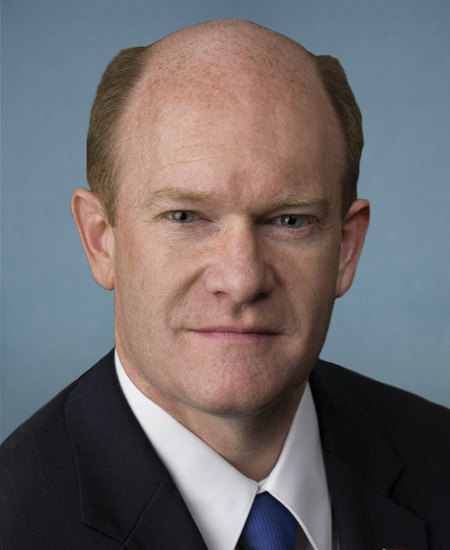
Sen. Christopher A. Coons
Sponsored bills
Maddy summaryThe Medical Foods and Formulas Access Act of 2025 would require Medicare, Medicaid, CHIP, and the Federal Employees Health Benefits Program to cover medically necessary food for people with specific digestive and metabolic disorders. This includes specialized formulas and nutrients prescribed by healthcare providers for conditions like inherited metabolic disorders, inflammatory bowel disease, and food protein allergies. The bill defines "medically necessary food" to include items such as amino acid preparations, low protein modified foods, and vitamins specifically designed for these conditions, along with necessary medical equipment for administration. Coverage would apply to federal health programs with different effective dates (1-3 years from enactment) and encourages private health insurance plans to provide similar coverage for these life-sustaining treatments.
Maddy summaryThis bill reorganizes procedural rules for Inspector General (IG) investigations within the Department of Justice (DOJ). It removes specific language that previously restricted IG access to certain allegations involving DOJ personnel, streamlining the investigation process. The key change eliminates an exception clause in existing law, allowing IGs to investigate all DOJ personnel allegations without that prior limitation. This affects how DOJ investigations are conducted but does not create new policies or change substantive rights. (Procedural bill; summary focuses on specific legal reorganization.)
Maddy summaryThe Platform Accountability and Transparency Act creates a structured process for researchers to access certain platform data for research while protecting user privacy. Platforms with at least 50 million US monthly users must provide specific data to qualified researchers (affiliated with US universities or nonprofits) whose projects are approved by the National Science Foundation and Federal Trade Commission. The bill requires platforms to publicly disclose information about advertising, algorithms, content moderation, and highly disseminated content, while establishing strict privacy and cybersecurity safeguards for the data. It also creates legal protections for platforms and researchers who comply with the law's requirements, ensuring researchers cannot be sued for accessing data through this process.
Maddy summaryS 3267, the ASAP Act, would require Medicare to cover early detection screening tests for Alzheimer's disease and related dementias starting January 1, 2028. The bill defines these tests as FDA-cleared or approved blood, genomic, or imaging-based screenings for pre-symptomatic or early-stage detection. It directly affects Medicare beneficiaries aged 65+ who may be at risk for Alzheimer's, ensuring coverage for these specific tests once approved. The key provision adds these screenings to Medicare's payment system under Section 1833(h)(1)(A) of the Social Security Act.
Maddy summaryThis bill prohibits child welfare agencies receiving federal funding from discriminating against children, youth, or prospective foster and adoptive parents based on religion, sex (including sexual orientation and gender identity), or marital status. It requires agencies to collect data on sexual orientation and gender identity of children in foster care and their prospective parents, and establishes a National Resource Center to improve services for LGBTQ youth. The bill also provides a private right to sue for individuals who experience discrimination and mandates cultural competency training for agency staff. It affects all state child welfare systems receiving federal funds, requiring compliance within one year of enactment. The legislation specifically aims to address the overrepresentation of LGBTQ youth in foster care and improve outcomes for this population.
Maddy summaryThis bill repeals sections 10101 through 10108 of the 2025 Farm Bill (Public Law 119-21) and restores the previous law that existed before those sections were enacted. It directly affects food security programs for American families and farmers by reverting to the prior provisions of the Farm Bill. The key mechanism is a simple repeal and restoration of pre-existing law, without creating new programs or altering current funding structures.
Maddy summaryThis bill prohibits employers from requiring employees to use forced arbitration for race discrimination claims. It directly affects workers who face discrimination based on race, color, or national origin in employment, making pre-dispute arbitration agreements unenforceable for such cases. The key mechanism requires courts - not arbitrators - to decide if an arbitration clause applies, ensuring employees can choose to pursue claims in court under federal, tribal, state, or local law. The law applies to all new or ongoing claims arising after its enactment.
Maddy summaryS 3275, the Humanoid ROBOT Act of 2025, prohibits U.S. federal agencies and their contractors from purchasing or using humanoid robots developed by entities linked to specific countries of concern (like China). The bill directly affects government agencies, defense contractors, and foreign entities designated as "covered entities" under the law. Key mechanisms include a ban on government contracts for such robots, mandatory review of foreign investments in humanoid robot technology via CFIUS, and a requirement for a national security report on risks posed by these robots. The prohibitions take effect 180 days after enactment, with limited waivers allowed for national security or research purposes.
Maddy summaryS 2379, the "Countering Threats and Attacks on Our Judges Act," creates a new program to improve safety for state and local judges and court staff. It authorizes the State Justice Institute to fund eligible national nonprofits (with specific expertise in judicial security, courthouse design, and court operations) to establish State Judicial Threat Intelligence and Resource Centers. These centers will provide safety training, monitor threats, coordinate with law enforcement, develop standardized reporting systems, and create a national database for sharing threat information. The bill also requires an annual report to Congress on the number and types of threats faced by judges and court staff.