

Maddy summaryThe Promoting Police Leadership Act directs the Attorney General to create and certify specialized training programs for police commanders, focusing on leadership, community trust, and data-driven policing. This initiative requires the training to be primarily in-person and include practical problem-solving exercises where officers develop and refine solutions for real-world challenges. The bill mandates that the Attorney General consult with local agencies and universities to design these curricula and publish a list of law enforcement units that successfully complete the courses. Additionally, the legislation requires periodic reports to Congress and a review by the Government Accountability Office to assess the program's effectiveness and implementation barriers. Importantly, the act does not override state or local authority to set their own certification standards for law enforcement officers.
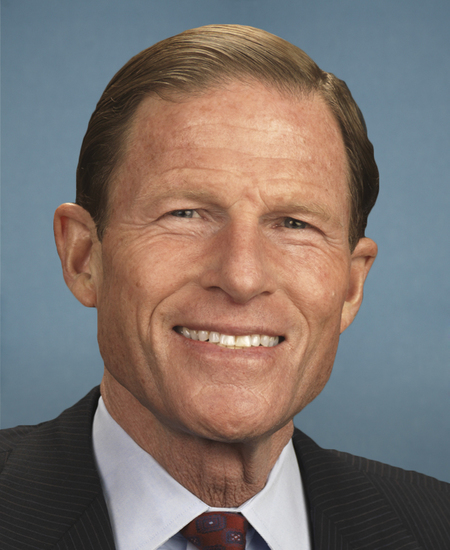
Sen. Richard Blumenthal
Sponsored bills
Maddy summaryThe Tribal Warrant Fairness Act amends two federal laws to explicitly include Indian Tribes in existing law enforcement and security protocols. It requires the U.S. Marshals Service to consider "Tribal fugitive matters" upon request by an Indian Tribe and updates the Presidential Threat Protection Act to include "Indian Tribes" and "Tribal law" alongside local and state entities. These changes ensure Tribal governments are treated equally with local and state authorities in federal processes. The bill directly affects Indian Tribes, the U.S. Marshals Service, and agencies under the Presidential Threat Protection Act by modifying how they handle Tribal matters. This is a technical update to existing statutes without creating new programs or funding.
Maddy summaryS 825 requires the Justice Department to develop a report within 150 days on programs providing evidence-based mental health care for public safety officers, including police, firefighters, EMTs, and 911 dispatchers. The report must outline how to deliver trauma-informed care, peer support, and family services through in-person or telehealth options, while ensuring confidentiality for officers seeking help. It also needs to detail administrative efficiency across states and territories, draft necessary grant conditions, and estimate annual funding needs. This bill does not fund programs but sets a framework for future action based on the high rates of PTSD and suicide among these frontline workers.
Maddy summaryS 736, the Lieutenant Osvaldo Albarati Stopping Prison Contraband Act, amends federal law to increase penalties for providing prohibited items (like phones) to prison inmates. It adds a maximum 2-year prison term for knowingly supplying phones to inmates, specifically targeting violations related to phone trafficking. The bill also requires the Bureau of Prisons to review and update its policies within one year of enactment to better prevent inmate access to prohibited objects and enhance safety for both incarcerated individuals and staff. These changes directly affect prison staff, correctional facilities, and individuals involved in supplying contraband to inmates.
First Rhode Island Regiment Congressional Gold Medal Act This bill provides for the award of a single Congressional Gold Medal to the First Rhode Island Regiment, collectively, in recognition of their dedicated service during the Revolutionary War.
Maddy summaryThis Senate resolution formally acknowledges and apologizes for the decades of discrimination and wrongful termination faced by lesbian, gay, bisexual, and transgender individuals who served in the U.S. military, Foreign Service, and federal civil service. The measure highlights historical policies, such as the "Don't Ask, Don't Tell" rule and the "Lavender Scare," which forced hundreds of thousands of service members to leave their jobs or hide their identities, while also noting recent executive actions that have rescinded protections for gender identity. While the resolution reaffirms a commitment to equal rights and respect for all LGBT government employees, it explicitly states that it does not create any legal claims or settlements for affected individuals.
Maddy summaryThis bill, known as the Gun Records Restoration and Preservation Act, aims to repeal specific restrictions on how the Bureau of Alcohol, Tobacco, Firearms and Explosives manages gun-related data. By removing these limits, the legislation would allow federal agencies to keep instant background check records longer than the current 24-hour requirement and enable the ATF to conduct annual inventory audits of gun dealers. Additionally, the bill would permit the consolidation of firearms records and allow for more Freedom of Information Act requests regarding gun traces. These changes are intended to help law enforcement track illegal firearms more effectively and support research into gun trafficking patterns.
Maddy summaryThe AI Bubble Transparency Act requires major financial institutions to report detailed data on their investments in companies that build artificial intelligence hardware and infrastructure, such as chip makers and data centers. These reports must include specific information about the size, type, and financial health of the companies involved, while smaller banks and those with minimal exposure are exempt from these requirements. Within a year of passing, regulators will compile this information into a public report assessing how risks in the AI sector could impact overall financial stability and will offer recommendations to reduce those risks.
Maddy summaryThe Critical Defense Ownership Review Act requires the Department of Defense to review any attempt by an investment company to acquire at least a 25 percent stake or control of a major defense supplier. Under this law, such transactions must undergo a premerger notification process where the Department evaluates national security risks, competition impacts, and the financial stability of the involved companies. If the Department identifies concerns, it must report its findings to federal antitrust authorities within 30 days. Additionally, the bill mandates a triennial review every three years to assess how mergers and acquisitions affect the health of the defense industrial base, with results reported to Congress. These provisions directly impact investment firms seeking to invest in defense contractors and aim to ensure the continued reliability of critical military supply chains.
Maddy summaryThe No Toxic Chemicals in Food Packaging Act of 2026 prohibits the use of specific harmful substances, such as PFAS, certain phthalates, and bisphenols, in materials that come into contact with food. This law directly affects manufacturers and regulators by amending federal statutes to classify these chemicals as unsafe and requiring the FDA to consider potential risks to vulnerable groups, including children and pregnant women, when evaluating alternative substances. The bill sets a minimum national standard while explicitly allowing states to enforce stricter regulations without fear of federal preemption. These restrictions will not take effect until two years after the law is enacted to provide time for industry adjustments.