

Maddy summaryThis bill directs the Secretary of Education to create and share evidence-based model plans for mental health and suicide prevention specifically for colleges and universities. In partnership with the Substance Abuse and Mental Health Services Administration, the government will provide technical assistance to schools that wish to adopt these models, while also considering existing state efforts and collaborating with various community and student groups. The legislation requires regular updates to these model plans every five years and mandates periodic reports to Congress on the program's progress. Importantly, the bill clarifies that these measures are voluntary guidelines and do not impose new legal requirements on higher education institutions.
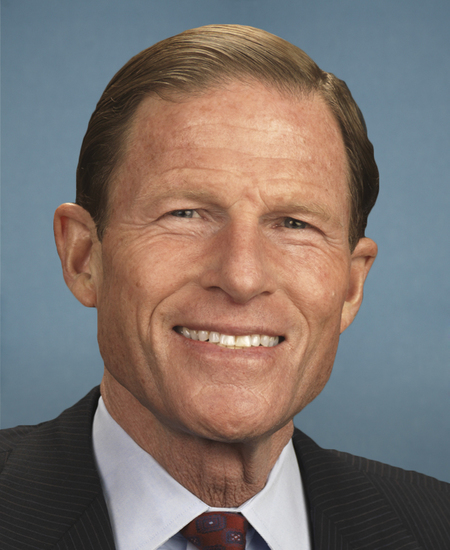
Sen. Richard Blumenthal
Sponsored bills
Maddy summaryThe No Robot Bosses Act prevents employers from relying predominantly on automated systems to make hiring, firing, or other employment decisions, while also requiring these systems to be transparent about how they evaluate workers. Companies using such technology must disclose how the system works, train their staff on potential biases, and allow employees to opt out of having their applications or management handled by algorithms. The bill mandates that developers and employers conduct detailed pre-deployment evaluations and annual impact assessments to ensure these tools do not discriminate or harm workers' rights. A new Fairness and Transparency Office within the Department of Labor will oversee compliance, investigate violations, and enforce penalties that include substantial fines and protections against retaliation for whistleblowers.
Maddy summaryThe Stop Spying Bosses Act establishes new federal rules to limit how employers collect, use, and share employee data, primarily affecting businesses with at least 11 workers and their employees. It prohibits employers from gathering sensitive information such as biometric scans, off-duty activities, or political views unless the data is strictly necessary for specific job functions like ensuring safety or administering benefits. The law requires employers to clearly disclose what data they collect and how it influences decisions about hiring, firing, or promotions, while also granting workers the right to access and correct their own records. To enforce these standards, the bill creates a new Worker Protection and Technology Division within the Department of Labor, which will investigate violations and provide whistleblower protections against retaliation. Additionally, the legislation invalidates pre-dispute arbitration agreements that would stop workers from joining class-action lawsuits regarding privacy violations.
Maddy summaryThis Senate resolution reaffirms the importance of the United States protecting refugees and displaced persons globally and within the country. It highlights specific statistics on displacement crises and criticizes current administration actions, such as an indefinite suspension of refugee admissions and cuts to foreign aid. The bill calls on government officials to restore the Refugee Admissions Program, lift bans on entry, and provide humanitarian support to vulnerable populations. While it does not change existing laws, it serves as a formal statement of support for refugee rights and urges the executive branch to resume resettlement efforts.
Maddy summaryThe Lifeline for First Responders Act creates a new grant program to support the mental health and wellness of emergency medical services and first responder agencies. Funded by $7.5 million annually from 2028 to 2032, these grants are distributed to fire services, EMS agencies, and dispatch centers for specific purposes. The program allows recipients to use the funds for stress reduction, suicide prevention, confidential counseling, family support, and related training. Managed by the National Highway Traffic Safety Administration, the initiative aims to provide resources for behavioral health and stigma reduction within these critical service sectors.
Maddy summaryThis bill directs the Secretary of Homeland Security to grant Temporary Protected Status to nationals of Haiti. Under this provision, eligible Haitian immigrants would be allowed to live and work in the United States without fear of deportation until March 20, 2029. The legislation overrides other existing laws to ensure this designation remains in effect for the specified period.
Maddy summaryThe America the Beautiful Act reauthorizes the National Parks and Public Land Legacy Restoration Fund through 2033, increasing its annual funding from $1.9 billion to $2 billion. It requires that projects funded by the Legacy Restoration Fund must secure at least 15% of their costs from public donations, which will be solicited through public awareness campaigns, donation locations at recreation sites, and during the purchase of recreation passes. The bill also mandates new reporting requirements for deferred maintenance and disposal of assets no longer serving public interest, while ensuring donations are credited to the Fund and allocated to specific projects.
Maddy summaryThe Duty Status Reform Act reorganizes federal laws to consolidate how reserve military members are ordered to active duty, creating a unified framework that applies to the Army, Navy, Air Force, Coast Guard, National Guard, and Space Force. The bill establishes four distinct categories of duty - ranging from mandatory training and remote assignments to emergency mobilization - and aligns the benefits, pay, and survivor protections for National Guard members with those of other reserve components. It also updates the legal definition of a "contingency operation" to include these new reserve duty categories and repeals older, overlapping statutes to streamline the system. Notably, the legislation includes a transition provision that delays the law's effective date by ten years, allowing time for agencies to prepare for implementation.
Maddy summaryThis bill abolishes the Anti-Weaponization Fund, a financial reserve created by the Attorney General during the Trump v. Internal Revenue Service legal case. It also declares an order issued on May 19, 2026, regarding the release of certain claims as invalid and without effect. The legislation directly impacts the Department of Justice by removing this specific fund and reversing the associated administrative directive.
Maddy summaryThis Senate resolution designates June 6, 2026, as National Naloxone Awareness Day to highlight the importance of naloxone in reversing opioid overdoses. The measure aims to educate the public, healthcare providers, and first responders on how to recognize overdose signs and safely administer the medication. It also encourages federal, state, and local governments along with private organizations to support efforts that increase access to and distribution of naloxone.