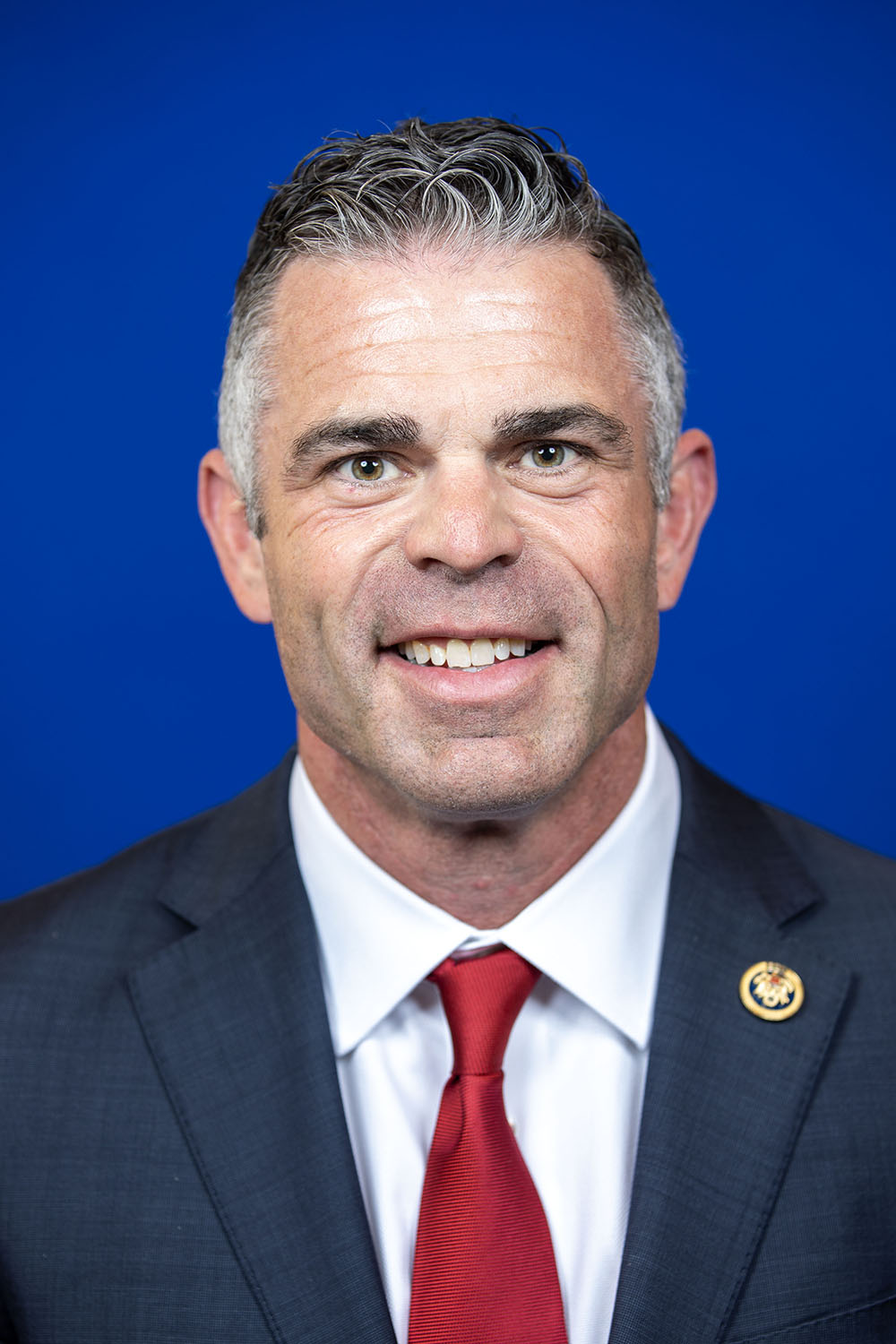
Photo of Tony Wied
R United States House · District 8 · Wisconsin On the 2026 ballot

Rep. Tony Wied

Compare
Total votes
711
all sessions
Attendance
38%
1,158 missed
Near the chamber average
With party
95%
of cast votes
Near the chamber average
Bipartisan score
2%
crosses aisle rarely
Near the chamber average
Sponsored
259
bills & resolutions
Near the chamber average
Committees
12
assignments
259 bills and resolutions

Sponsored bills

Total
259
Primary
21
Co-sponsor
238
This page
259
matching current filters
Primary HR 9387
In committee · Utah House · Lead sponsor
REAL Butter Act

Maddy summaryThe REAL Butter Act requires food manufacturers to clearly label products made from lab-created milkfat as "lab-created butter" on their packaging. This rule applies to any item marketed as butter that uses non-agricultural sources for its milkfat instead of traditional dairy. The law defines these products specifically as those that do not meet the existing federal standard of identity for butter. By mandating this specific wording on labels, the bill aims to ensure consumers can easily distinguish between traditional butter and synthesized alternatives.

In committee Jun 22, 2026 0 co-sponsors
Co-sponsor HR 425
In committee · Utah House · Co-sponsor
Repealing Big Brother Overreach Act

Repealing Big Brother Overreach Act This bill repeals the Corporate Transparency Act. The act requires existing companies and newly created companies to report beneficial ownership information to the Department of the Treasury’s Financial Crimes Enforcement Network for purposes of addressing the financing of terrorism and money laundering.

In committee Jun 18, 2026 1 co-sponsor
Co-sponsor HR 9298
In committee · Utah House · Co-sponsor
Stopping Harmful and Outrageous Torts Act

Maddy summaryThis bill, known as the Stopping Harmful and Outrageous Torts Act, expands legal protections for firearm manufacturers and sellers by strengthening their immunity from civil lawsuits. It requires courts to immediately dismiss any pending cases against these companies that are based on the criminal or unlawful misuse of a gun by a third party, while also clarifying that sellers are not liable for negligence in entrusting products to others. The legislation further restricts who can file such suits by prohibiting foreign governments from bringing these claims and adding a specific exception for victims under the age of 17, though it maintains immunity for cases involving design or manufacturing defects. Additionally, the bill allows companies to move these cases to federal court and grants them the right to appeal dismissal orders immediately, along with the ability to recover legal fees if they win. Finally, it preempts state and local laws that attempt to impose liability on these entities for the same types of misuse-related harms.

In committee Jun 11, 2026 1 co-sponsor
Co-sponsor HR 9009
In committee · Utah House · Co-sponsor
Firearm Freedom Act of 2026

Maddy summaryThe Firearm Freedom Act of 2026 removes the federal ban on the possession and transfer of machineguns by repealing a specific section of the United States Code. This change would allow individuals who currently possess these weapons to keep them and would enable the legal transfer of machineguns between private citizens. The bill directly affects existing owners of machineguns and would alter the rules governing how these firearms can be sold or given away. By eliminating this restriction, the legislation aims to expand the types of firearms that are legally transferable under federal law.

In committee May 22, 2026 1 co-sponsor
Co-sponsor HR 7954
In committee · Utah House · Co-sponsor
Don Young Doug LaMalfa Indian Buffalo Management Act

Maddy summaryThis bill establishes a framework for the Department of the Interior to work with Indian Tribes and Tribal organizations to restore and manage buffalo populations on Indian lands. It authorizes the Secretary of the Interior to provide contracts, grants, and technical assistance to support tribal buffalo restoration programs, commercial buffalo activities, and mobile meat processing facilities. The legislation also requires ongoing consultation between the Department and tribes on buffalo management initiatives and ensures that culturally sensitive tribal information remains confidential. Additionally, the bill allows for the transfer of surplus buffalo from federal lands to Indian lands and explicitly preserves existing treaty rights of Indian Tribes, with all provisions set to expire seven years after enactment.

In committee May 21, 2026 1 co-sponsor
Co-sponsor HR 1993
Passed · Utah House · Co-sponsor
25th Anniversary of 9/11 Commemorative Coin Act

Maddy summaryThis bill authorizes the U.S. Mint to produce commemorative $5 gold and $1 silver coins marking the 25th anniversary of the September 11, 2001, terrorist attacks. The coins must feature designs honoring victims and first responders (including the inscription "Never Forget") and will be sold only during 2027-2028. All surcharges ($35 per gold coin, $10 per silver coin) collected from sales will fund the National September 11 Memorial and Museum at the World Trade Center, with no net cost to the federal government. The coins are legal tender but primarily intended for collectors, not circulation.

Passed May 21, 2026 1 co-sponsor
Co-sponsor HR 1329
Failed · Utah House · Co-sponsor
Smithsonian American Women’s History Museum Act

Maddy summaryThe Smithsonian American Women’s History Museum Act authorizes the creation of a new Smithsonian museum dedicated to women’s history, to be located within the National Mall Reserve in Washington, D.C. If the site is managed by another federal agency, the bill requires that agency to transfer the land after notifying Congress and relevant committees. The museum must ensure exhibits and programs accurately represent diverse women’s experiences by consulting a broad range of experts and community voices. The Smithsonian will submit biennial reports to Congress detailing how the museum meets these representation standards.

Failed May 21, 2026 1 co-sponsor
Co-sponsor HR 7024
In committee · Utah House · Co-sponsor
Hemp Planting Predictability Act

Hemp Planting Predictability Act This bill extends by two years the implementation of changes to the regulation of hemp products, which reimpose certain federal controls over some hemp products. Specifically, Congress enacted the FY2026 agriculture appropriations act (P.L. 119-37) on November 12, 2025. Effective November 12, 2026, the act modifies the statutory definition of hemp products that are considered to be lawful. This bill extends the effective date to November 12, 2028. As background, the 2018 farm bill excluded hemp from the Controlled Substances Act definition of marijuana and defined hemp . As a result, hemp and hemp-derived products at or below the 0.3% delta-9 tetrahydrocannabinol (THC, the psychoactive component of marijuana) concentration threshold were no longer regulated as Schedule I controlled substances and registration with the Drug Enforcement Administration was no longer required to cultivate or handle hemp and hemp-derived products. However, hemp remained subject to Department of Agriculture and Food and Drug Administration regulation. The 2025 changes to the definition of hemp, include changing the limit to a total THC concentration of not more than 0.3% on a dry weight basis rather than only delta-9 THC, explicitly including industrial hemp, excluding seeds from a cannabis plant that exceed a certain THC concentration, and excluding various types of hemp-derived cannabinoid products. Cannabinoids refer to unique chemical compounds that are found in hemp and marijuana (e.g., THC) and are known to exhibit a range of psychological and physiological effects.


In committee May 20, 2026 1 co-sponsor
Co-sponsor HR 2066
Signed into law · Utah House · Co-sponsor
Investing in All of America Act of 2025

Maddy summaryThe Investing in All of America Act of 2025 amends the Small Business Investment Act of 1958 to adjust leverage rules for Small Business Investment Companies (SBICs), which provide capital to small businesses. It lowers the maximum allowable leverage ratio from 300% to 200% and expands eligible investments to include companies in rural areas, critical technology sectors, and small manufacturers. The bill caps excluded leverage at $125 million or 50% of a company’s private capital, whichever is lower, and requires annual inflation adjustments to these dollar amounts. These changes directly affect SBICs, private investment firms that support small business growth nationwide.

Signed into law May 19, 2026 1 co-sponsor
Co-sponsor HR 6260
Passed · Utah House · Co-sponsor
Keeping Violent Offenders Off Our Streets Act of 2025

Maddy summaryHR 6260 amends federal law to clarify that fraud involving bail arrangements falls under existing fraud statutes. Specifically, it adds "including the posting of monetary bail, criminal bail bonds, and Federal immigration bail bonds" to a section of Title 18, U.S. Code. This change directly affects federal prosecutors and courts handling cases where individuals commit fraud related to securing bail. The bill does not create new penalties but ensures these bail-related fraud activities are explicitly covered under current legal definitions. It has no direct impact on the public or defendants beyond clarifying prosecutorial authority.

Passed May 18, 2026 1 co-sponsor
Showing 21 to 30 of 259 bills
Previous 1 2 3 4 26 Next