

Maddy summaryThis bill requires congressional and White House approval before any corporate or individual name, logo, or advertisement can be displayed on the White House grounds or in its buildings. It blocks permanent or semi-permanent displays (like plaques or signage) without consent from the House Speaker, Minority Leader, and White House Curator. The law applies to all White House grounds and structures, preventing unsanctioned commercial endorsements or sponsorships. Existing rules for commemorative monuments (under the Commemorative Works Act) would still govern approved displays.
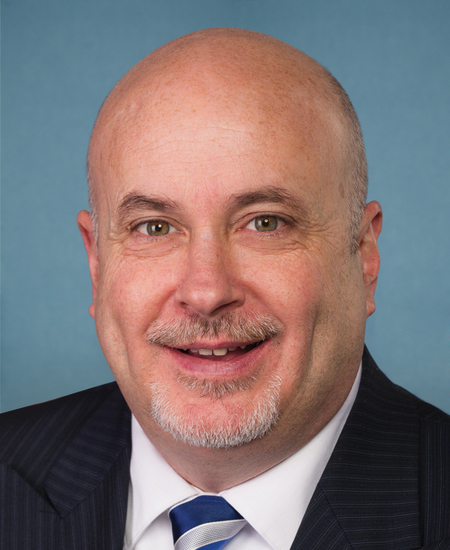
Rep. Mark Pocan
Sponsored bills
Head Start Shutdown Protection Act of 2025 This bill requires the Department of Health and Human Services to reimburse a state, local government, or school district that uses its funds to maintain participation in the Head Start program or the Early Head Start program during a government shutdown in which there is a lapse in federal appropriations for the programs. The Head Start programs provide comprehensive early childhood education and development services to low-income children. The programs seek to promote school readiness through the provision of educational, health, nutritional, social, and other services.
Maddy summaryHRES 809 is a symbolic resolution expressing the House of Representatives' support for designating the second Monday in October 2025 as "Indigenous Peoples' Day." It does not create new law or directly affect any individuals or communities, but rather encourages the public to observe this day through ceremonies celebrating Indigenous history and culture. The resolution highlights existing local and state observances (over 200 municipalities and 17 states) and notes that Columbus Day currently does not honor Indigenous contributions. It urges Americans to recognize Indigenous Peoples' enduring legacy and cultural impact, while supporting the eventual designation of this day as a Federal holiday.
Maddy summaryThis bill makes federal funding for the WIC program mandatory by requiring Congress to appropriate necessary funds annually for fiscal year 2026 and each subsequent year. It removes discretionary language from WIC funding requirements and clarifies that eligible participants must be served without participation limits. The bill directly affects low-income pregnant women, new mothers, and young children who rely on WIC for nutrition assistance, ensuring continued access to critical food, health, and education services.
Maddy summaryHR 5720, the Federal Worker Childcare Protection Act of 2025, would provide reimbursement to federal employees who face a pay gap during a government funding lapse (starting October 1, 2025) while paying for childcare. It directly affects federal workers who are furloughed or working without pay during such a lapse. Employees would receive reimbursement for childcare costs if they provide documentation, such as receipts from a childcare provider, to the General Services Administration. This reimbursement is subject to available congressional appropriations and does not guarantee payment.
Maddy summaryThis bill adds Medicare coverage for multi-cancer early detection screening tests (blood or biological tests analyzing cell-free DNA) starting January 1, 2028. It directly affects Medicare beneficiaries aged 68 and older (starting in 2028, with the age limit increasing by 1 year annually), requiring tests to be FDA-cleared and deemed reasonable/necessary by the Secretary for early cancer detection across multiple organ sites. Payment will initially match current stool DNA test rates before 2031, then shift to a lower rate or new payment system after 2031, with limits preventing more than one test per year. The bill explicitly states it does not alter coverage for existing cancer screenings like breast, colorectal, or prostate cancer tests.
Maddy summaryHR 5653, the Trust Through Transparency Act of 2025, requires U.S. Customs and Border Protection (CBP) and U.S. Immigration and Customs Enforcement (ICE) officers, as well as deputized personnel, to wear body cameras during all public immigration enforcement actions like stops, arrests, or checkpoints. Footage must be kept for six months unless it involves use of force, an arrest, a complaint, or a voluntary request for longer retention (up to three years) by officers, the public, or families. The bill mandates annual reports to Congress detailing enforcement actions, compliance issues, disciplinary actions taken, and public access to these reports (with privacy redactions permitted). It also creates an independent panel to advise on body camera policies, aiming to increase accountability in immigration enforcement.
Maddy summaryHRES 773 is a symbolic resolution (not a law) honoring the principle of separation of church and state. It commemorates the 65th anniversary of President John F. Kennedy’s 1960 speech to the Houston Ministerial Association and the 150th anniversary of President Ulysses S. Grant’s 1875 speech, both emphasizing government neutrality in religious matters. The resolution affirms the constitutional separation of church and state as a core American value and opposes "extreme right-wing Christian nationalism," though it does not create new policies or affect any specific group. As a non-binding statement, it has no legal effect but expresses the House’s position on religious freedom.
Fair Pay for Federal Contractors Act of 2025 This bill provides back pay to employees of federal contractors who lost pay due to a lapse in appropriations (i.e., government shutdown) in FY2026. Specifically, the bill provides appropriations for federal agencies that are subject to a lapse in appropriations in FY2026 to adjust the price of contracts to compensate federal contractors for providing back pay to employees who were affected by the lapse in appropriations. The agencies must adjust the price of any contract for which the contractor stopped, suspended, delayed, or interrupted all or part of the work under the contract due to the lapse in appropriations. The price adjustment must compensate the contractor for reasonable costs incurred to (1) compensate employees who were furloughed or laid off, were not working, or experienced a reduction of hours or compensation due to the lapse in appropriations; or (2) restore paid leave taken by employees during the lapse in appropriations if the contractor required or permitted employees to use paid leave as a result of the lapse in appropriations. The maximum amount of weekly compensation of an employee for which an adjustment may be made under this bill may not exceed the lesser of (1) the employee's actual weekly compensation, or (2) $1,442 (or a lesser amount pro-rated for an employee who works less than 40 hours per week). The bill also requires the Office of Federal Procurement Policy to submit a report to Congress on the adjustments made under this bill.
Physical Therapist Workforce and Patient Access Act of 2025 This bill expands certain health professional programs and Medicare covered services to include physical therapists. Specifically, the bill expands the National Health Service Corps to include physical therapists and provides for the designation of specific health professional target areas for physical therapists under the program. The bill also expands covered services of rural health clinics and federally qualified health centers under Medicare to include physical therapy services. The bill increases funds for FY2025 for the corps and requires a certain amount of funds to be used for student loan repayments for participating physical therapists in the National Health Service Corps Loan Repayment Program.