

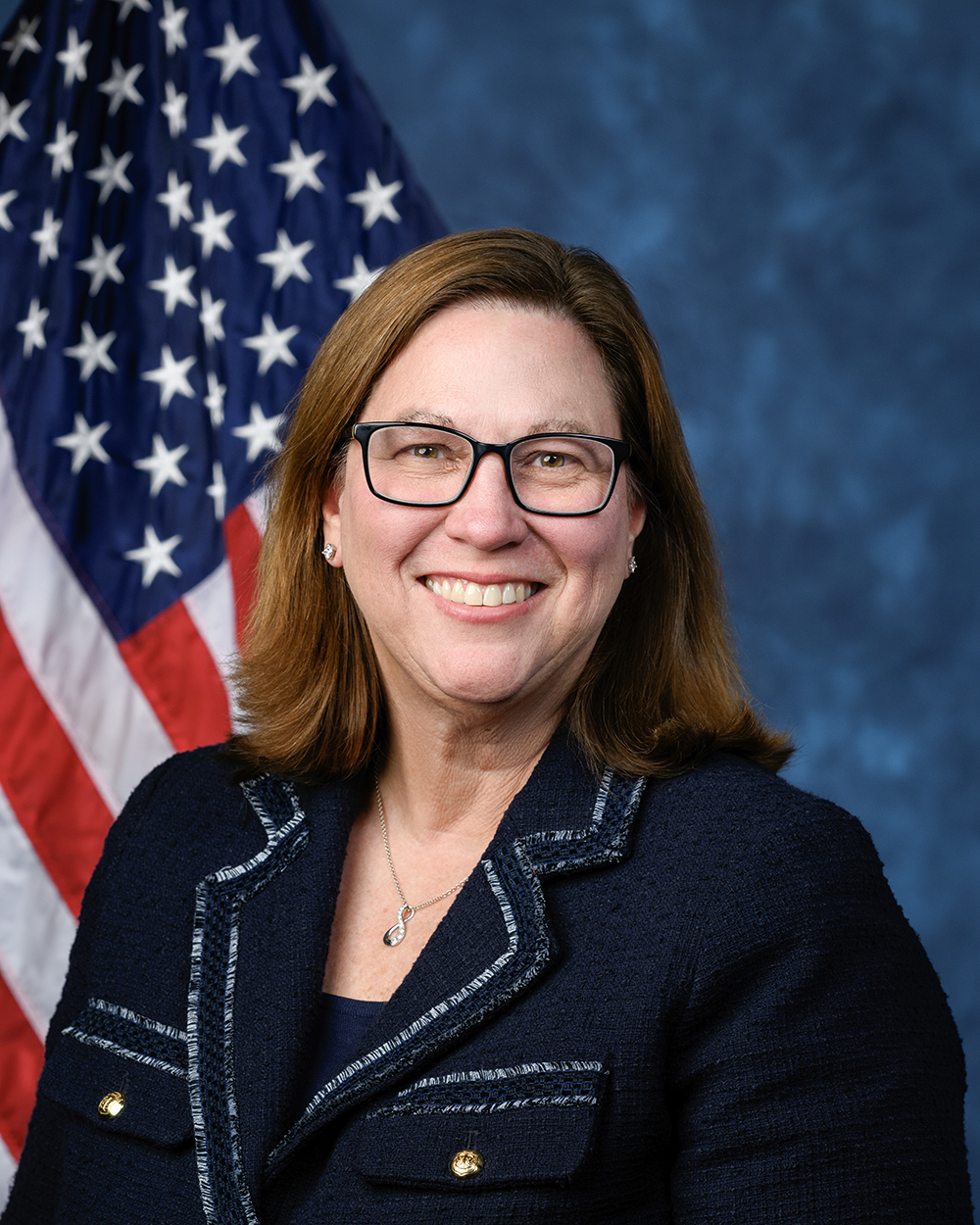
Photo of Julie Johnson
D United States House · District 32 · Texas

Rep. Julie Johnson

Compare
Total votes
650
all sessions
Attendance
96%
25 missed
Near the chamber average
With party
96%
of cast votes
Near the chamber average
Bipartisan score
2%
crosses aisle rarely
Near the chamber average
Sponsored
478
bills & resolutions
Higher than 82% of chamber peers
Committees
9
assignments
478 bills and resolutions

Sponsored bills

Total
478
Primary
25
Co-sponsor
453
This page
478
matching current filters
Co-sponsor HRES 1087
In committee · Utah House · Co-sponsor
Recognizing community water fluoridation as a safe, effective public health intervention to prevent tooth decay and promote oral and physical health.

Maddy summaryHRES 1087 is a non-binding House resolution recognizing community water fluoridation as a safe and effective public health measure to prevent tooth decay. It acknowledges decades of scientific support for fluoridation, including CDC recognition as a top public health achievement, and highlights its cost-effectiveness in reducing dental treatment costs. The resolution encourages states and localities to maintain or adopt optimal fluoridation levels but does not create new legal requirements or directly affect any specific group. It serves as a symbolic endorsement of existing public health practice, referencing support from major health organizations.

In committee Feb 26, 2026 1 co-sponsor
Co-sponsor HRES 1080
In committee · Utah House · Co-sponsor
Original Black History Month Resolution of 2026

Maddy summaryHRES 1080 is a symbolic resolution recognizing and celebrating Black History Month 2026, focusing on its theme "A Century of Black History Commemorations." It highlights historical figures and events central to Black history, including Carter G. Woodson’s founding of Negro History Week (the precursor to Black History Month), Juneteenth, and key moments like the 1865 Charleston commemoration. The resolution emphasizes how Black history commemorations counter historical erasure and affirm Black contributions to U.S. history, referencing figures like Mary McLeod Bethune and W.E.B. Du Bois. As a ceremonial resolution, it has no binding effect but aims to raise awareness of Black achievements through official recognition.

In committee Feb 25, 2026 1 co-sponsor
Co-sponsor HR 2189
Passed · Utah House · Co-sponsor
To modernize Federal firearms laws to account for advancements in technology and less-than-lethal weapons, and for other purposes.

Law-Enforcement Innovate to De-Escalate Act This bill removes less-than-lethal projectile devices (e.g., certain TASERs) from regulation under the Gun Control Act. The term less-than-lethal projectile device means a device that (1) is not designed or intended to expel (and may not be readily converted to discharge) commonly used ammunition or projectiles exceeding a velocity of 500 feet per second; (2) is designed and intended to be used in a manner not likely to cause death or serious bodily injury; and (3) does not accept (and cannot be readily modified to accept) an ammunition feeding device. The bill also requires the Bureau of Alcohol, Tobacco, Firearms and Explosives to determine whether a device satisfies the definition of a less-than-lethal projectile device within 90 days of a request.

Passed Feb 24, 2026 1 co-sponsor
Co-sponsor HR 7622
In committee · Utah House · Co-sponsor
Iran Human Rights, Internet Freedom, and Accountability Act of 2026

Maddy summaryThis bill directs U.S. agencies to support Iranian people's access to uncensored information and hold Iranian officials accountable for human rights abuses. It requires the State Department and FCC to report on technologies (like satellite networks and mesh systems) that could bypass internet restrictions in Iran, and authorizes $2 million annually to develop such tools. The bill also establishes a new "Iran Kleptocracy Initiative" at FinCEN to track corruption, freeze assets of Iranian regime officials and state-owned businesses, and coordinate with international partners. These measures apply to U.S. policy toward Iran but do not alter Iran's domestic laws; they focus on U.S. sanctions, technology development, and anti-corruption efforts targeting the Iranian regime.

In committee Feb 20, 2026 1 co-sponsor
Primary HR 7617
In committee · Utah House · Lead sponsor
To provide funding for administrative expenses of the Department of Homeland Security during any lapse in appropriations during fiscal year 2026, to require that the Department be responsive to congressional offices during such a lapse in appropriations, and for other purposes.

This bill provides appropriations to the Department of Homeland Security (DHS) for the administrative expenses necessary to operate the department for the duration of a lapse in appropriations. This includes appropriations for the DHS Office of Legislative Affairs and U.S. Immigration and Customs Enforcement's Office of Congressional Relations. With respect to any lapse in appropriations during FY2026, DHS must use the funding provided by this bill to ensure that it performs all functions that would be performed in the absence of such a lapse, including responding to communications transmitted to DHS during the lapse by congressional offices. (There is currently a partial government shutdown in effect for DHS agencies and programs due to a lapse in FY2026 appropriations for DHS.)

In committee Feb 20, 2026 0 co-sponsors
Co-sponsor HR 7591
In committee · Utah House · Co-sponsor
Secure Firearm Storage and Suicide Prevention Act of 2026

Maddy summaryHR 7591 requires the U.S. Department of Education to develop and distribute annual firearm safety best practices to schools, focusing on secure storage methods and suicide prevention resources. The bill mandates that local school districts create community-specific guidance incorporating these best practices, to be shared with students, parents, and staff annually before the start of each school year. It specifies that materials must include practical storage solutions (like locks and safes), mental health resources, and neutral information about firearm safety without promoting or discouraging gun ownership. The law directly affects schools receiving federal funding under the Elementary and Secondary Education Act, aiming to reduce firearm-related injuries and suicides through education, not by changing gun ownership laws.

In committee Feb 17, 2026 1 co-sponsor
Co-sponsor HR 7599
In committee · Utah House · Co-sponsor
Federal Extreme Risk Protection Order Act of 2026

Maddy summaryHR 7599 creates a federal framework for extreme risk protection orders (ERPOs), allowing family members or law enforcement to petition courts to temporarily prohibit individuals from possessing firearms when they pose a risk of harm to themselves or others. The bill establishes a process for issuing ex parte orders (up to 14 days) followed by a hearing within 72 hours to determine if a longer-term order (up to 180 days) should be issued, requiring respondents to surrender firearms to U.S. Marshals or designated law enforcement. Courts must consider specific factors like recent threats, violence, substance abuse, or cruelty to animals before issuing orders, with no fees for petitioners. The law requires law enforcement training to address bias, includes annual reporting requirements, and ensures firearms are returned once the order expires and the individual is eligible to own firearms under federal law.

In committee Feb 17, 2026 1 co-sponsor
Co-sponsor HR 7531
In committee · Utah House · Co-sponsor
Healthy Families Act

Maddy summaryThis bill requires most employers to provide workers with earned paid sick leave. Employees would earn 1 hour of paid sick time for every 30 hours worked, up to 56 hours per year, which can be used for their own illness, medical care, caring for family members (including children, parents, spouses, domestic partners, or other family-like relationships), or addressing domestic violence, sexual assault, or stalking situations. The bill prohibits employers from retaliating against workers who use this leave and requires employers to inform employees about their rights. It ensures that workers who leave and return to the same employer within a year can reinstate their unused sick leave. This law would not override more generous state or local paid leave policies.

In committee Feb 12, 2026 1 co-sponsor
Co-sponsor HR 7548
In committee · Utah House · Co-sponsor
SCAM Act

Maddy summaryThe SCAM Act requires online platforms that display paid advertisements (like social media sites) to verify advertiser identities, implement scam detection systems, and remove fraudulent ads within 24 hours of confirmation. It directly affects platforms that accept payment for ads, targeting scams such as fake giveaways, romance scams, and AI impersonations that cost consumers $195 billion in 2024 (per FTC data). Key mechanisms include mandatory identity checks for advertisers, active monitoring systems, and a 72-hour investigation window for reported scams. The law aims to reduce fraud by shifting responsibility to platforms, with enforcement by the FTC and state attorneys general.

In committee Feb 12, 2026 1 co-sponsor
Co-sponsor HRES 1058
In committee · Utah House · Co-sponsor
Recognizing that it is the duty of the Federal Government to develop and implement a Transgender Bill of Rights to protect and codify the rights of transgender and nonbinary people under the law and ensure their access to medical care, shelter, safety, and economic security.

Maddy summaryHRES 1058 is a non-binding House resolution recognizing the federal government’s duty to develop a Transgender Bill of Rights. It calls for specific policy changes, including amending civil rights laws to explicitly prohibit discrimination based on gender identity in employment, housing, and public accommodations; protecting access to gender-affirming medical care; and streamlining legal recognition of gender identity on federal documents like passports and voter registration. The resolution also proposes expanding protections for transgender and nonbinary individuals in healthcare, education, immigration, and correctional facilities, while emphasizing community-led policy development. As a resolution, it does not create new law but sets a framework for future legislative action.

In committee Feb 11, 2026 1 co-sponsor
Showing 81 to 90 of 478 bills
Previous 1 8 9 10 48 Next