

Maddy summaryThe SACRED Act adds a new federal crime to protect access to places of religious worship by prohibiting intimidating or harassing conduct within 100 feet of religious buildings. It directly affects individuals who engage in disruptive behavior near religious sites and those seeking to enter or exit them. The law defines prohibited actions as conduct that causes reasonable fear for physical safety or intentionally harasses people within 8 feet, with penalties ranging from fines up to $10,000 for nonviolent first offenses to potential life imprisonment if death results. The bill also establishes civil remedies allowing aggrieved individuals or religious organizations to sue for damages and injunctive relief, while permitting state and federal attorneys general to bring civil actions on behalf of affected persons. Importantly, the legislation explicitly preserves the right to peaceful expressive conduct like picketing and does not override existing state or local laws.
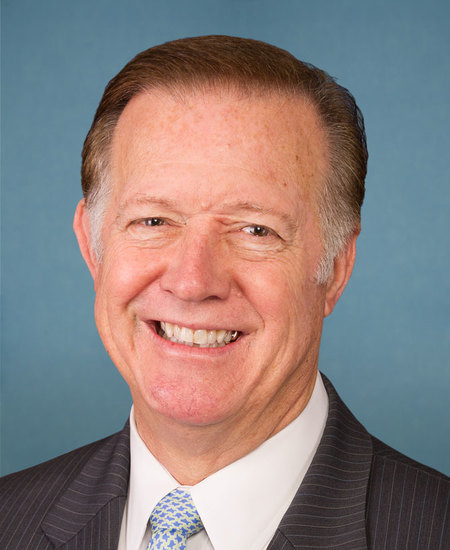
Rep. Randy K. Weber, Sr.
Sponsored bills
Maddy summaryThe Strengthen Taxpayer Rights Act of 2026 limits which IRS employees can participate in appeals conferences without taxpayer permission. Specifically, it prohibits IRS staff from attending these conferences unless the taxpayer explicitly agrees to their presence. This change directly affects individuals requesting appeals through the IRS Independent Office of Appeals. The provision aims to give taxpayers more control over who represents the government during their appeal hearings. It applies to all conferences held after the law is enacted.
Maddy summaryHR 3420, the Words Matter Act of 2025, updates federal law to replace the terms "mentally retarded" and "mental retardation" with "intellectual disability" across numerous statutes. It amends over 20 provisions in laws governing healthcare (like the Social Security Act and Indian Health Care Improvement Act), disability services, criminal justice, and federal programs to use more respectful and current terminology. The bill specifically targets definitions in areas such as medical care for families, nursing home regulations, legal sentencing, and grant programs, ensuring consistent language for individuals with intellectual disabilities. The legislation explicitly states this terminology change is purely linguistic and does not alter eligibility, coverage, or rights for affected individuals.
Maddy summaryHR 556, the Protecting Access for Hunters and Anglers Act, prevents federal agencies from banning lead ammunition or tackle on public lands and waters managed for hunting or fishing. It directly affects hunters and anglers using federal lands (like national wildlife refuges, public forests, and BLM lands) by blocking nationwide restrictions on lead products. The bill allows limited exceptions only for specific locations where wildlife decline is directly linked to lead use, and the restriction must align with state law or get approval from the state wildlife agency. This changes how federal land managers can regulate lead, requiring state coordination for any local restrictions.
Maddy summaryHR 5688, the Non-Domiciled CDL Integrity Act, changes rules for issuing commercial driver's licenses (CDLs) to people who don't live in the state where the license is issued. It allows states to issue CDLs to foreign nationals with lawful U.S. immigration status and work-related visas (valid for up to one year or until their stay ends), requiring states to verify status before issuing and keep records for two years. For residents of U.S. territories like Puerto Rico, it requires proof of U.S. citizenship or permanent residency before issuing CDLs, with similar verification and record-keeping rules. The bill directly affects commercial drivers from foreign countries and U.S. territories seeking CDLs in states where they are not residents.
Maddy summaryHR 2294 reauthorizes the Integrated Coastal and Ocean Observation System Act of 2009, extending funding and updating governance for the nation's ocean and coastal observation network. It changes references from "Council" to "Committee" throughout the law and adds requirements for federal agencies to collaborate with regional coastal observing systems on data sharing. The bill specifically directs agencies to conduct operational oceanography measurements and establishes $56 million annually for fiscal years 2026 through 2030 to support this system. This bill directly affects federal agencies managing ocean observation programs and regional coastal data networks.
Enhanced Iran Sanctions Act of 2025 This bill imposes sanctions on certain foreign persons (individuals and entities) that are involved in Iran's petroleum sector as well as certain associated persons. The bill also requires or authorizes actions to facilitate the enforcement of sanctions on Iran. Specifically, the bill requires the President to impose visa- and property-blocking sanctions on any foreign person that, after the bill's enactment, knowingly engages in any transaction related to the processing, export, or sale of oil, condensates, gas, liquefied natural gas, or other petrochemical products in whole or in part from Iran. The President must also impose sanctions on certain foreign persons associated with a sanctioned individual or entity. For example, the President must sanction the subsidiaries and corporate officers of a sanctioned business. The bill provides certain exceptions to these sanctions, including specifying that sanctions do not apply to the importation of goods or to conducting or facilitating transactions for humanitarian assistance. The Department of State must establish an interagency working group that shall seek to establish a multilateral contact group to coordinate international efforts to enforce sanctions on Iran. The bill expands the State Department rewards program to authorize a reward payment to any individual who furnishes information leading to the identification of a person (1) subject to sanctions under this bill, or (2) that has attempted or is attempting to evade sanctions under this bill.
Maddy summaryThis bill would modify how the Endangered Species Act applies to the National Flood Insurance Program by exempting certain flood insurance actions from endangered species protections. It directly affects the Federal Emergency Management Agency and property owners seeking flood insurance coverage, as well as wildlife agencies that currently review flood insurance decisions. The legislation requires the removal of existing biological opinions that evaluate the program's impact on endangered species and adds language to ensure flood management actions are designed solely for protecting property and human health. These changes would allow the National Flood Insurance Program to operate without the usual environmental review requirements that could delay or restrict flood insurance coverage in areas with endangered species.
Maddy summaryThis bill, known as the Highway Formula Fairness Act, changes how federal highway funds are distributed to states starting in fiscal year 2026. It requires that each state receive at least 95 percent of the funds it would normally get based on its share of highway user taxes paid into the Highway Trust Fund. The law uses historical data from 2012 to calculate each state's initial funding share, then adjusts those amounts to ensure states meet the minimum threshold. This change directly affects state transportation budgets and the allocation of federal highway program money.
Maddy summaryHR 7678, the Gun Owner Registration Information Protection Act, prohibits federal funding for state or local databases that track lawfully owned firearms or their owners. The bill allows federal funding for databases recording lost or stolen firearms but bans it for databases listing legal gun ownership. This means states cannot use federal money to create or maintain systems that compile information about legally owned guns. The bill directly affects state and local governments that rely on federal funds for firearm ownership databases.