

Maddy summaryThis bill, titled the Safeguarding Women from Chemical Abortion Act, aims to revoke federal approval for the drug mifepristone (also known as RU-486) for use in terminating pregnancies. If enacted, the Food and Drug Administration's approval for mifepristone for this indication would be withdrawn within 14 days, making its introduction into interstate commerce for pregnancy termination a violation of federal law. Additionally, the bill establishes a new federal right for individuals to sue manufacturers of mifepristone if they experience bodily injury or harm to mental health attributed to its use for pregnancy termination. This legislation directly affects drug manufacturers, distributors, healthcare providers, and individuals seeking or having used medication abortion.
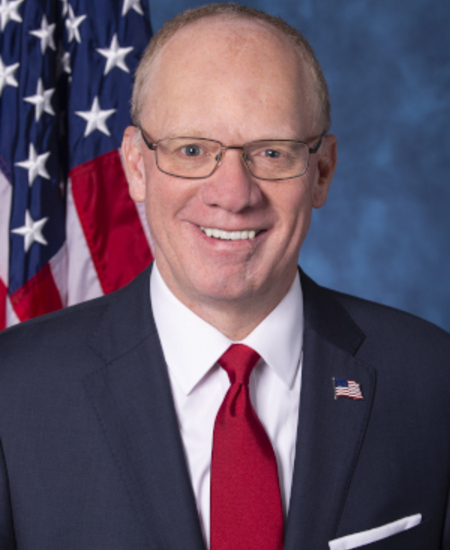
Rep. John W. Rose
Sponsored bills
Maddy summaryHR 7932, the HONOR Gold Star Families Act, increases the death gratuity paid to families of service members who died in the line of duty. It raises the current $100,000 payment to $200,000 for deaths occurring on or after January 1, 2026. The bill also adds an annual cost-of-living adjustment to this amount, increasing it each January 1 based on the previous year’s inflation rate as measured by the Consumer Price Index. This directly affects Gold Star Families - those who have lost a service member in military service - by providing a larger initial payment and ensuring future payments keep pace with inflation.
Maddy summaryThis bill requires the Treasury Secretary to give annual testimony to Congress about how the Community Development Financial Institutions Fund operates. The fund supports small businesses and community organizations through financial services, and this change would make its activities more visible to lawmakers. The testimony would cover the previous year's operations and would be given at the discretion of the chairs of the relevant House and Senate committees. This measure aims to increase transparency and oversight of the fund without changing how it distributes money or what programs it runs.
Maddy summaryThis bill requires the Department of Defense to establish wellness check procedures for military members who have sustained significant injuries or illnesses or are on sick call. If a member does not respond to electronic or phone contact attempts during a wellness check, the person conducting the check must follow up with an in-person visit. If the member cannot be located after these efforts, the bill outlines how to report the situation using existing Department of Defense procedures for missing or unaccounted personnel. Unit commanders must coordinate with legal advisors to implement these checks and regularly review safety requirements while holding confidential meetings with medical officers to discuss significant health issues within their units. The bill also mandates training for all military members and civilian employees on the importance of accountability and the procedures for conducting wellness checks.
Maddy summaryThis bill, known as the Quantum in Practice Act, amends the National Quantum Initiative Act to formally include quantum modeling and simulation as a core area of research. It directly affects federal agencies and researchers involved in quantum information science by updating the legal definition and adding specific funding priorities for quantum molecular modeling. The legislation aims to support scientific work that could lead to breakthroughs in areas like fertilizer production, drug development, battery technology, and new materials. By making these changes, the bill ensures that federal quantum research programs explicitly cover the development and study of quantum simulations for practical applications.
Maddy summaryThis bill requires Veterans Affairs call centers to use multi-factor authentication to verify the identity of callers before taking high-impact actions. It directly affects veterans and beneficiaries who interact with VA services, ensuring their identities are confirmed more securely. The law defines high-impact actions as those where fraud could cause lasting harm, such as diverting funds or accessing sensitive accounts. By adding this requirement to federal code, the bill strengthens existing security controls for vulnerable service members.
Maddy summaryHR 7678, the Gun Owner Registration Information Protection Act, prohibits federal funding for state or local databases that track lawfully owned firearms or their owners. The bill allows federal funding for databases recording lost or stolen firearms but bans it for databases listing legal gun ownership. This means states cannot use federal money to create or maintain systems that compile information about legally owned guns. The bill directly affects state and local governments that rely on federal funds for firearm ownership databases.
Maddy summaryThe Stop Illegal Alien Cops Act amends federal law to modify exemptions for government entities regarding firearms. Currently, federal, state, and local government agencies are generally exempt from many federal prohibitions when acquiring or supplying firearms for official use. This bill would remove that exemption for specific prohibitions, making it unlawful for government entities to provide firearms to or employ individuals who are unlawfully in the United States. Additionally, the bill removes the
Maddy summaryThis bill requires the Federal Reserve, Office of the Comptroller of the Currency, and FDIC to provide detailed annual reports on their interactions with international financial regulatory forums. The reports must include information about the forums they participate in, their funding sources, how their work aligns with U.S. interests, and the positions taken by U.S. representatives. The bill specifically targets five major international financial regulatory bodies including the Basel Committee on Banking Supervision and Financial Stability Board. These reporting requirements will be added to the agencies' existing annual reports to Congress. The legislation aims to increase transparency about U.S. financial regulatory engagement with international bodies.
Maddy summaryHRES 1073 is a non-binding resolution designating February 21-28, 2026, as "National FFA Week" to recognize the National Future Farmers of America (FFA) Organization’s role in developing agricultural education leaders and to celebrate the 50th anniversary of Alaska’s State FFA Association. It does not create new laws or affect any specific groups or policies; instead, it formally expresses the House’s support for this commemorative week. The resolution highlights FFA’s mission to prepare students for leadership and careers in agriculture, food, and natural resources. As a symbolic gesture, it has no direct legislative or financial impact on constituents.