

Maddy summaryHR 6600, the Main Street Lending Improvement Act of 2025, orders a study to examine how small business loans are processed across the U.S. It directs the government auditor (Comptroller General) to analyze disbursement times, approval rates, and loan amounts for small businesses in Appalachian and non-Appalachian regions from 2021 to 2024. The study will measure processing steps, accessibility, and efficiency, with a report due to Congress within two years. This bill does not change loan rules or provide funding - it only gathers data to inform potential future improvements to the small business loan system.
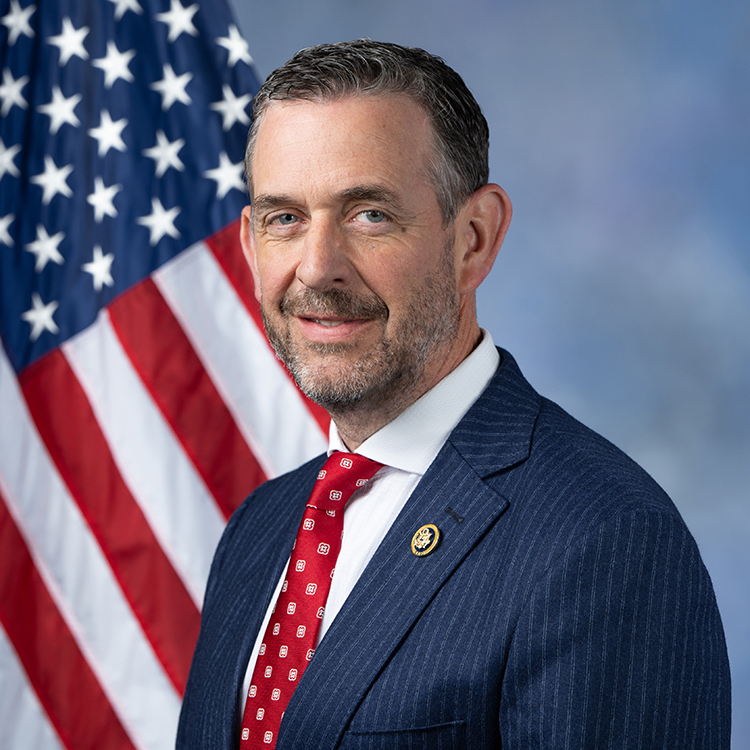
Rep. Michael A. Rulli
Sponsored bills
Maddy summaryHR 6592 redefines Medicaid-covered "private duty nursing" as "continuous skilled nursing services" for complex-care patients requiring multiple hours of daily nursing care (as determined by states), mandating these services be provided by licensed nurses (RNs or LPNs). It requires the Secretary to develop national quality standards for these services through a stakeholder working group, to be published within one year. The bill also updates Medicaid waiver services and quality measures to include continuous skilled nursing services, with standards reviewed every eight years. This directly affects complex-care Medicaid beneficiaries and their nursing providers across all states.
Maddy summaryThis bill establishes the President’s Council on Sports, Fitness, and Nutrition to advise the President on reestablishing the Presidential Fitness Test as the primary assessment tool for a Presidential Fitness Award in U.S. schools. The Council, appointed by the President, would develop school-based fitness programs, promote physical activity through community partnerships, and address childhood obesity as a national security concern. It directs the Secretary of Health and Human Services to fund the Council and its initiatives, with the Council terminating two years after enactment unless extended. The bill specifically aims to impact K-12 schools by integrating the fitness test into physical education programs.
Maddy summaryHRES 931 is a symbolic resolution expressing congressional support for designating December 4, 2025, as "National Scam Prevention Day." It does not create new laws or policies but formally acknowledges the significant financial and psychological harm caused by scams, citing reported losses of $16.6 billion in 2024 and estimated total losses of $158.3 billion when accounting for underreporting. The resolution highlights concerns about international scam operations and their links to criminal organizations, urging a coordinated government and industry approach to scam awareness. It directly affects no specific group but aims to raise public awareness about scam prevention.
Maddy summaryThis bill prohibits public elementary and secondary schools receiving federal education funds from accepting money or entering contracts with the Chinese government, Chinese Communist Party, or their agents. Schools must also disclose any foreign funding or contracts within 30 days, including the source's name, country, amount, and terms. It directly affects all public K-12 schools participating in federal education programs. The law focuses solely on restricting funding sources and requiring transparency, with no provisions related to curriculum content or "combating lies" as referenced in the title.
Maddy summaryThis bill establishes a new interagency Task Force to dismantle foreign scam operations targeting Americans, particularly through "pig butchering" scams in Southeast Asia. The Task Force, chaired by the Secretary of State, will coordinate efforts across multiple agencies to shut down scam centers, impose sanctions on perpetrators, and support victims of trafficking. It requires a detailed strategy within 180 days and annual reports to Congress on progress, including sanctions imposed and funds recovered. The bill authorizes $30 million for these efforts in fiscal years 2026-2027, focusing on countries like Cambodia, Laos, and Burma where scam centers operate with forced labor.
Give Kids a Chance Act of 2025 This bill expands the Food and Drug Administration’s (FDA’s) authority with respect to research on rare pediatric diseases, including by permitting the FDA to take enforcement action against drug sponsors that fail to satisfy pediatric study requirements and by reauthorizing programs that support pediatric research. Specifically, the bill modifies requirements relating to molecularly targeted pediatric cancer investigations to permit research on new drugs in combination with active ingredients that have already been approved, provided certain conditions are met; permits the FDA to take enforcement action against drug sponsors that fail to comply with pediatric study requirements, if such sponsors demonstrated a lack of due diligence in satisfying the requirement; renews the FDA’s authority to award priority review vouchers to sponsors of new products intended to treat rare pediatric diseases through September 30, 2029; and reauthorizes through FY2027 certain funding for the National Institutes of Health to support priority pediatric research. The bill also provides statutory authority for the FDA’s interpretation of the orphan drug exclusivity period. The bill specifies, consistent with FDA regulations, that the seven-year market exclusivity period for drugs for rare diseases or conditions (i.e., orphan drugs) prohibits the approval of the same drug for the same approved use or indication with respect to the disease or condition. (In Catalyst Pharmaceuticals, Inc. v. Becerra , a court rejected the FDA’s interpretation and held that orphan drug exclusivity extends to all uses or indications for the disease or condition.)
Maddy summaryHCONRES 58 is a symbolic congressional resolution denouncing socialism in all its forms. It does not create new laws or affect any policies, as it is a non-binding statement of opinion. The resolution cites historical events and quotes from Founding Fathers to argue that socialism leads to authoritarianism and economic harm, referencing examples like the Soviet Union and Venezuela. It formally "denounces" socialism and opposes implementing socialist policies in the U.S., but has no legal effect on citizens or government actions. This is a procedural resolution, not a policy measure.
Maddy summaryThe ROTOR Act narrows the definition of "sensitive government mission" for aircraft operations, excluding training flights and flights by officials below Cabinet rank. It requires regular reporting to Congress about exceptions to ADS-B Out requirements, establishes deadlines for requiring ADS-B In equipment on most aircraft, and mandates safety reviews for airports with military operations. The bill also improves coordination between the FAA and Department of Defense on airspace management and safety information sharing. These changes increase transparency around aircraft operations that don't broadcast their location while enhancing safety oversight. The bill directly affects Federal agencies operating aircraft, the FAA, and aircraft operators required to equip with ADS-B technology.
Maddy summaryThe Kidney Care Access Protection Act (HR 6214) improves access to innovative kidney treatments for Medicare beneficiaries with end-stage renal disease. It extends transitional payment adjustments for new renal dialysis drugs and devices for at least three years, then establishes permanent payment adjustments based on actual utilization and costs. The bill also expands Medicare's annual wellness benefit to include kidney disease screening and increases access to kidney disease education services through renal dialysis facilities. These changes apply to Medicare beneficiaries, renal dialysis facilities, and healthcare providers, with key provisions effective January 1, 2026.