

Prohibition of Agricultural Land for the People's Republic of China Act This bill requires the President to prohibit nonresident aliens, foreign businesses, and agents associated with China's government from (1) purchasing agricultural (including ranching) real estate located in the United States, or (2) participating in Department of Agriculture programs that are unrelated to food and safety regulatory requirements.
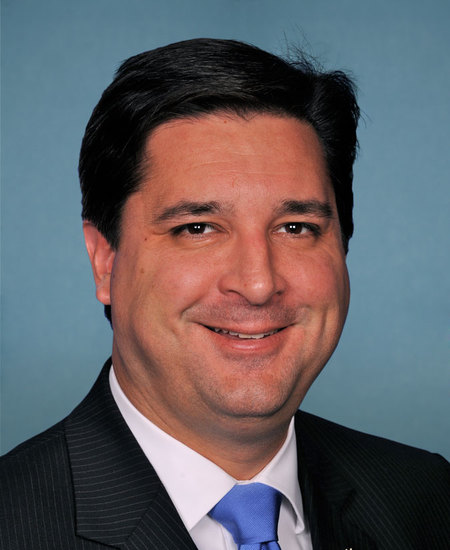
Rep. David Rouzer
Sponsored bills
This bill requires the U.S. Army Corps of Engineers and the Environmental Protection Agency to study compliance costs for applicants and holders of certain permits for the discharge of pollutants or dredged or fill materials into waters.
Benjamin Berell Ferencz Congressional Gold Medal Act This bill provides for the award of a Congressional Gold Medal to Benjamin Berell Ferencz in recognition of his service to the United States and the international community during the post-World War II Nuremberg trials and his lifelong advocacy for international criminal justice and the rule of law.
No Timber From Tyrants Act This bill prohibits the importation of wood and related articles from Russia and Belarus. It also directs the Department of the Interior and the Department of Agriculture (USDA) to replace these prohibited imports with timber production on certain lands. Specifically, the bill directs the President to prohibit the importation of all wood and related articles from Russia and Belarus. The President may terminate this prohibition upon certification to Congress that certain conditions have been met, including that Russia or Belarus (or both, as applicable) reached an agreement to withdraw forces in Ukraine. Additionally, the bill directs Interior and USDA to authorize timber harvest in an amount sufficient to equal the volume, with respect to calendar year 2021, of imports of wood and related articles from Russia and Belarus. Interior may authorize timber harvest only on public lands and USDA may authorize timber harvest only on National Forest System lands. The bill generally prohibits Interior and USDA from approving a plan that reduces the allowable sale quantity of timber.
Maddy summaryThis bill prohibits using federal funds to establish a Disinformation Governance Board under the Department of Homeland Security. It directly affects the DHS by blocking any allocation of taxpayer money for creating this board. The key provision is a funding restriction that prevents the board's formation, requiring Congress to specifically authorize such spending if desired. The bill does not address disinformation policies or content, only the funding mechanism for the proposed board.
Amplifying Processing of Livestock in the United States Act or the A-PLUS Act This bill directs the Department of Agriculture to revise federal regulations related to market agencies owning, financing, or participating in the operation of a meat packing entity. Specifically, this bill allows market agencies to have an ownership interest in, finance, or participate in the management or operation of a packing entity if such packing entity has a cumulative slaughter capacity of less than 2,000 animals per day or 700,000 animals per year.
This resolution recognizes the efforts of linemen in keeping the electrical power on and protecting public safety. This resolution also expresses support for the designation of National Lineman Appreciation Day and recognizes linemen as first responders.
Postal Service Reform Act of 202 2 This bill addresses the finances and operations of the U.S. Postal Service (USPS). The bill requires the Office of Personnel Management (OPM) to establish the Postal Service Health Benefits Program within the Federal Employees Health Benefits Program under which OPM may contract with carriers to offer health benefits plans for USPS employees and retirees. The bill provides for coordinated enrollment of retirees under this program and Medicare. The bill repeals the requirement that the USPS annually prepay future retirement health benefits. Additionally, the USPS may establish a program to enter into agreements with an agency of any state government, local government, or tribal government, and with other government agencies, to provide certain nonpostal products and services that reasonably contribute to the costs of the USPS and meet other specified criteria. The USPS must develop and maintain a publicly available dashboard to track service performance and must report regularly on its operations and financial condition. The Postal Regulatory Commission must annually submit to the USPS a budget of its expenses. It must also conduct a study to identify the causes and effects of postal inefficiencies relating to flats (e.g., large envelopes). The USPS Office of Inspector General shall perform oversight of the Postal Regulatory Commission.
Supply Chain Disruptions Relief Act This bill modifies the treatment of liquidations of new motor vehicle inventory as qualified LIFO (last in first out accounting method) inventory. It allows new motor vehicle dealers to elect to wait until the end of 2025 to replace their inventory for purposes of determining income attributable to the sale of such inventory during 2020 and 2021.
Stop Flood Insurance Rate Hikes Act This bill allows National Flood Insurance Program policyholders to elect to pay premiums at the rate in effect prior to the implementation of Risk Rating 2.0 and to receive refunds for previously paid premiums. Risk Rating 2.0 bases premium rates on an individual property's specific flood risk instead of the flood risk of a general location and property type. Policyholders may elect to pay the previous rate until the Federal Emergency Management Agency performs several actions regarding Risk Rating 2.0, including publishing all data and methods used to calculate premium rates under Risk Rating 2.0, creating an online database where policyholders can see premium rates for their property using specified calculations, and publishing an assessment of the economic, social, and environmental impacts of Risk Rating 2.0.