

Maddy summaryHR 10088, the Helene Recovery Support Act, allocates $12.5 billion to FEMA for disaster relief under the Stafford Act for areas affected by Hurricanes Helene and Milton, and provides $1.5 billion for Small Business Administration economic injury loans to impacted individuals. It also creates a $1 billion new markets tax credit for low-income communities in areas declared disaster zones for these hurricanes, while rescinding $15 billion from the Pension Benefit Guaranty Corporation. The bill terminates the Shelter and Services Program and transfers its unobligated funds to support broader disaster relief efforts under the Stafford Act. This legislation directly affects communities in Florida, North Carolina, and other regions declared disaster areas for Hurricanes Helene and Milton.
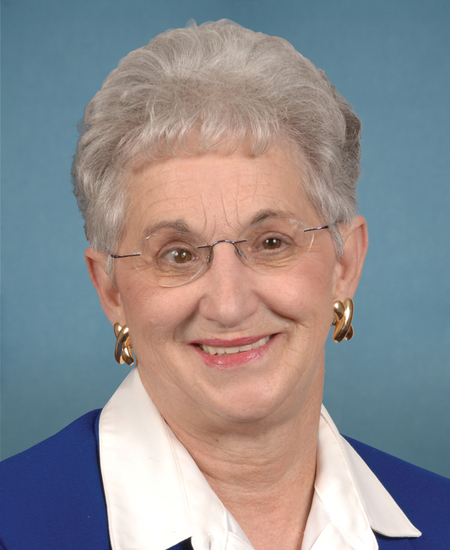
Rep. Virginia Foxx
Sponsored bills
Maddy summaryThis bill streamlines disaster recovery by temporarily waiving certain federal requirements during declared emergencies. It exempts vessels from the Jones Act (which requires U.S.-built ships for domestic transport) and waives Davis-Bacon labor wage rules for disaster-related repair projects. The bill also creates temporary "Emergency Recovery Boards" with federal, state, local, and congressional members to identify immediate and long-term barriers to recovery after major disasters. Additionally, it allows federal agencies to include pre-planned technological upgrades (like energy-efficient systems) during the repair or replacement of damaged facilities. These changes directly affect federal agencies, state/local governments, and contractors managing disaster response and recovery efforts.
Maddy summaryThis bill prohibits states from creating regulatory barriers that prevent child care providers from preparing basic fresh fruits and vegetables (like washing, peeling, or cutting them). It directly affects licensed child care facilities, especially home-based providers who serve about 25% of families, by simplifying rules that currently make serving fresh produce harder than offering pre-packaged snacks. The law amends the Child Care and Development Block Grant Act to ensure providers can legally and easily offer minimally processed foods, aiming to improve children's nutrition access.
Maddy summaryThis bill terminates all federal funding for FEMA's Shelter and Services Program effective upon enactment. It prohibits new appropriations for this program or any similar successor program. Any remaining funds from the program as of the enactment date will be transferred to support disaster relief efforts under the Robert T. Stafford Disaster Relief Act. The change directly affects FEMA's budget operations but redirects existing resources to broader disaster assistance.
Maddy summaryThis bill creates a federal tax credit for individuals who contribute to scholarship granting organizations (SGOs) that provide scholarships for elementary and secondary education. Taxpayers can claim a credit equal to up to 10% of their adjusted gross income or $5,000 (whichever is less) for contributions to SGOs that provide scholarships for students from households earning no more than 300% of the area median income. Scholarships can cover tuition, educational materials, tutoring, testing fees, and educational therapies, with SGOs required to verify income, undergo independent audits, and meet strict distribution rules. The program would operate with a $5 billion annual cap from 2025-2028, prohibit government control over SGOs or private/religious schools, and prevent discrimination based on religious affiliation.
Maddy summaryHJRES 207 is a congressional disapproval resolution targeting an Equal Employment Opportunity Commission (EEOC) rule implementing the Pregnant Workers Fairness Act. It seeks to block the EEOC's specific guidance (published April 19, 2024) that outlines how employers must provide reasonable accommodations for pregnant workers. If passed, the resolution would make this EEOC rule "have no force or effect," preventing its enforcement. The measure directly affects employers subject to the Pregnant Workers Fairness Act by halting the implementation of the EEOC's regulatory guidance.
Maddy summaryThe Federal Lands Amplified Security for the Homeland (FLASH) Act authorizes the construction of navigable roads on Federal lands along the southern border to improve U.S. Customs and Border Protection access, while establishing policies to reduce trash accumulation and address environmental damage from unauthorized border crossings. The bill requires agencies to develop protocols for mitigating wildfire risks through vegetation management, prohibits Federal funds from being used to provide housing for unauthorized immigrants on Federal lands, and includes provisions to address illegal cannabis cultivation and pesticide use. It mandates annual reports on waste collection and environmental impacts, and authorizes $16 million annually for initiatives to address contamination from trespass cannabis cultivation on covered Federal lands. The legislation directly affects land management operations on approximately 50 million acres of Federal lands administered by the National Park Service, Bureau of Land Management, Fish and Wildlife Service, and Forest Service along the southern border.
Maddy summaryThis bill (HJRES 163) is a congressional disapproval resolution targeting an Environmental Protection Agency (EPA) rule finalized on May 9, 2024. The EPA rule established new emissions standards for greenhouse gases from fossil fuel power plants (both new and existing) and repealed a previous rule called the Affordable Clean Energy Rule. The resolution would block this EPA rule from taking effect by invoking the Congressional Review Act (Chapter 8 of Title 5, U.S. Code). If passed, it would prevent the EPA rule from being enforced, directly affecting fossil fuel power plant operators and the EPA’s regulatory authority over emissions.
Maddy summaryHJRES 203 is a congressional resolution seeking to block a National Labor Relations Board (NLRB) rule that would have changed procedures for union representation elections in the construction industry. The rule, published in August 2024, aimed to modify how employers prove majority support for unions and handle election bars during bargaining relationships. This resolution invokes the statutory disapproval process under federal law to prevent the rule from taking effect. If enacted, it would stop the NLRB from implementing these specific election procedures, directly affecting construction employers, unions, and workers involved in representation votes.
Maddy summaryHR 3507, the "Yes In My Backyard Act," requires local governments receiving certain federal Community Development Block Grants (CDBG) to report on their progress toward adopting specific housing-friendly land use policies. It directly affects cities and counties that administer CDBG funds by mandating they submit plans tracking 22+ policy changes, such as allowing duplexes in single-family zones, reducing parking requirements, or streamlining permits. The bill does not require local governments to adopt these policies but requires them to document their current status and plans for implementation. This reporting mechanism aims to identify barriers to affordable housing without binding local governments to specific actions. The requirement applies to CDBG recipients starting one year after the bill's enactment.