

Maddy summaryHR 5764, the "AI for Main Street Act," amends the Small Business Act to require the Small Business Administration (SBA) to provide guidance and training to small business concerns on using artificial intelligence. It directly affects small businesses by adding new SBA responsibilities to help them evaluate AI for operations, including best practices, cybersecurity, data protection, regulatory compliance, and customer trust. Key provisions mandate the SBA to offer information, training, and outreach on incorporating AI into business processes, such as planning for unexpected circumstances. The bill does not authorize new funding for these activities. It defines "artificial intelligence" using the existing term from the National AI Initiative Act.
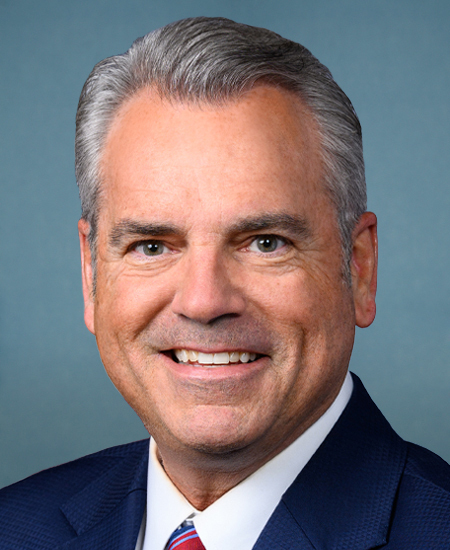
Rep. Mark Alford
Sponsored bills
Maddy summaryThis bill creates a tax credit for businesses selling products made with U.S.-grown cotton. The credit equals 24% of the cotton's market value if processed only in the U.S. or in countries with U.S. trade deals, or 18% for other processing locations. To qualify, cotton must be digitally traced from U.S. farms to finished products and certified by the USDA as meeting origin requirements. It directly affects clothing and textile manufacturers selling qualifying products in the U.S. market.
Maddy summaryThis bill eliminates the $250,000 tax exclusion limit for single homeowners and $500,000 limit for married couples when selling their primary residence. It removes the current dollar cap on capital gains tax exclusion, meaning all profit from such home sales would be tax-free. The change applies to sales occurring after the bill's enactment. This directly affects homeowners who currently owe taxes on gains exceeding the removed limits.
Maddy summaryHR 7156, the SCAM Act, would expand grounds for revoking U.S. citizenship (denaturalization) for naturalized citizens who commit specific offenses within 10 years of becoming citizens. It targets individuals convicted of defrauding federal, state, or local governments (e.g., $10,000+ in public benefit fraud), affiliating with foreign terrorist organizations, or committing aggravated felonies or espionage. If convicted in these categories, the government could automatically revoke citizenship retroactively (as if it never existed) based on evidence that the person lacked good moral character or loyalty to the U.S. at the time of naturalization. This bill directly affects naturalized citizens who commit these offenses within a decade of gaining citizenship, with revocation triggering immediate deportability.
Maddy summaryThis resolution (HRES 998) is a symbolic House of Representatives commendation honoring President Trump, U.S. military/intelligence agencies, and Justice Department personnel for the alleged success of "Operation Absolute Resolve" in apprehending Venezuelan leader Nicolás Maduro. It cites Maduro's charges (including narcoterrorism conspiracy) and the Maduro regime's alleged dismantling of Venezuelan democracy, state-sponsored drug trafficking, and human rights abuses. The resolution expresses support for Venezuela's democratic transition but contains no new policy, funding, or legal changes. As a procedural resolution, it does not directly affect any individuals or alter laws.
Maddy summaryThis symbolic House resolution expresses U.S. congressional support for Iranian protesters demanding democracy and human rights. It condemns the Iranian regime's violent suppression of protests, including killings, mass arrests, and internet restrictions, while urging the regime to release political prisoners and restore communication access. The resolution reaffirms the Iranian people's right to self-determination through free elections and echoes a 2023 resolution (HCR 7) that similarly praised protesters. As a non-binding expression of support, it does not impose new policies or alter U.S. government actions.
Maddy summaryThis bill requires state agencies administering the SNAP (food stamp) program to provide recipient-level data to the USDA Secretary upon request. It directly affects state SNAP agencies, which must submit this data within 30 days (or sooner for urgent cases) in secure electronic formats. Key provisions include mandatory data sharing for program oversight and integrity, strict privacy safeguards under the Privacy Act, and potential withholding of federal funds for non-compliance. The bill also clarifies that this does not limit the USDA's existing authority to access state data for program administration.
Maddy summaryHR 4782, the Local Farmers Feeding our Communities Act, establishes a USDA program to connect local farmers with food distribution networks. It requires eligible entities (like state agriculture agencies) to use funds to purchase unprocessed or minimally processed local foods from covered producers - including at least 25% from small-size, mid-size, beginning, or veteran farmers - while providing technical assistance for food safety and supply chains. The bill allocates $200 million annually (2026-2030) from the Commodity Credit Corporation, mandating 10% for Tribal governments and 1% per state before distributing remaining funds. This directly supports regional food security by boosting economic opportunities for local farmers and improving access to fresh, nutritious food through established distribution channels.
Maddy summaryHR 909, the Crime Victims Fund Stabilization Act of 2025, modifies how funds from the False Claims Act are deposited into the Crime Victims Fund. It specifies that from 2025 through 2029, certain False Claims Act proceeds (specifically those for qui tam plaintiff payments and government damage reimbursements) cannot be deposited into the fund. This change directly affects the composition of the Crime Victims Fund by excluding these specific revenue streams during the specified period. The bill does not create new benefits or alter victim services; it only adjusts fund allocation rules for existing False Claims Act revenues.
Maddy summaryThis bill creates new federal grants to help local law enforcement combat organized crime, cartels, and transnational criminal groups. It allocates $50 million annually (2026-2030) for specialized units to purchase equipment like tactical vehicles and non-weaponized drones, train officers in counter-crime tactics, and hire additional personnel. Jurisdictions with documented high levels of cartel or gang activity must certify how funds will be used. The grants are funded by rescinding previously allocated Labor Department funds, and the Attorney General must report annually on grant usage to Congress.