

This bill prohibits the Small Business Administration from directly making a loan under the 7(a) Program, which authorizes loans and loan guaranties to small businesses that meet certain requirements.
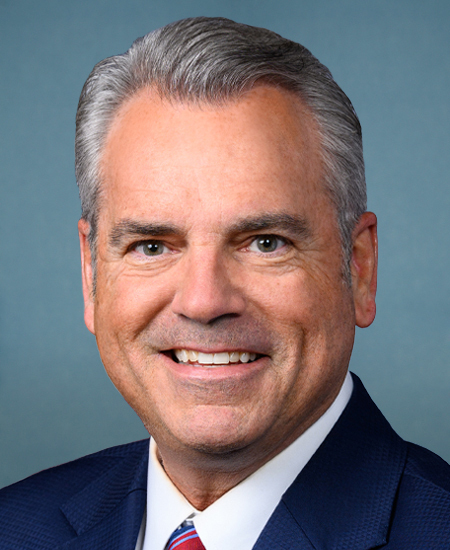
Rep. Mark Alford
Sponsored bills
Maddy summaryHR 5836, the Deterring Attempts at Dirty Deals by Youngsters Act (DADDY Act), prohibits immediate family members of top U.S. government officials from being employed by foreign companies operating in designated "covered foreign countries." The bill directly affects spouses, children, parents, and siblings of officials including the President, Cabinet secretaries, and the Director of National Intelligence. It bans such employment with companies based in countries *not* excluded from the definition (which covers NATO members, Five Eyes allies, Japan, South Korea, and Israel), imposing fines up to $250,000 or 5 years in prison for violations. The law takes effect two weeks after enactment.
Maddy summaryHJRES 11 proposes a constitutional amendment that would limit Members of Congress to serving a maximum of three terms in the House of Representatives and two terms in the Senate. If passed and ratified, it would prevent any member who has already served the maximum terms from running for re-election, including time spent filling vacancies (for more than one year in the House or three years in the Senate). This amendment directly affects current and future members of Congress by changing eligibility rules for re-election. The proposal is currently a joint resolution in the House, requiring ratification by three-fourths of state legislatures to become part of the Constitution.
Maddy summaryHR 5641, the Pay Our Troops Act, ensures military personnel and their support staff continue receiving pay during fiscal year 2024 if Congress fails to pass regular budget appropriations. It appropriates existing Treasury funds to cover pay and allowances for active-duty troops, reserve components, and civilian employees or contractors supporting military operations. The bill automatically terminates on January 1, 2025, or earlier if Congress enacts a regular budget or continuing resolution. This provision directly affects service members, Department of Defense staff, and Coast Guard personnel (when not under the Navy) during budget implementation gaps.
Healthy Poultry Assistance and Indemnification Act This bill expands the Animal and Plant Health Inspection Service (APHIS) producer indemnity and compensation program to include compensation for all poultry growers and layers located in an APHIS-determined control area. Currently, APHIS provides indemnity and compensation to producers to remove animals classified as affected, suspect, or exposed to diseases of concern, including highly pathogenic avian influenza (HPAI). An APHIS-determined control area consists of both an infected zone and a buffer zone. Under the bill, APHIS must compensate all owners of poultry growing or laying facilities for flocks of birds that the facility owner was prohibited from growing or laying due to the location of the facility within a control area. This may include facilities that are located in the buffer zones and have non-infected poultry. Further, the bill establishes a new compensation payment formula that requires payments to be based on the owner’s average income from the five most recent flocks. Under the bill, APHIS's compensation determination is final and not subject to judicial or administrative review (other than by the Secretary of Agriculture or a designee).
Maddy summaryHR 5070, the USDA CROP Act of 2023, requires the USDA's Office of Pest Management Policy to coordinate more closely with the Environmental Protection Agency (EPA) when reviewing pesticide rules. It mandates that USDA provide the EPA with specific data on pesticide use and the economic impact of alternatives before the EPA makes decisions that could restrict pesticide sales or use. The bill also requires the EPA to give USDA 90 days to comment on proposed changes to pesticide labels or registrations, and to delay implementation if no economically viable alternative exists for farmers. This directly affects agricultural producers by ensuring their economic concerns are considered in pesticide regulatory decisions.
Maddy summaryHR 5561, the Protecting the Right to Keep and Bear Arms Act of 2023, prevents federal agencies from using emergency declarations to implement gun control measures. It specifically prohibits the President from declaring a national emergency under the National Emergencies Act or the Robert T. Stafford Act for gun control purposes, and stops the Health and Human Services Secretary from declaring a public health emergency under the Public Health Service Act for the same reason. The bill also amends the Stafford Act to explicitly prohibit any emergency-related restrictions on possessing, manufacturing, selling, or transferring firearms, ammunition, ammunition feeding devices, or firearm accessories. This directly affects how federal agencies can respond during emergencies without violating the Second Amendment. The law aims to limit executive actions during emergencies that could restrict gun rights.
Maddy summaryHRES 684 is a symbolic congressional resolution passed by the U.S. House of Representatives on September 14, 2023, condemning New Mexico Governor Michelle Lujan Grisham's emergency order that temporarily suspended open and concealed carry firearm rights for 30 days. The resolution asserts the order violated the Second Amendment, citing Supreme Court precedents (Heller, McDonald, Bruen) and noting a federal judge had already blocked the order's firearm restrictions. It does not change any laws or impose legal consequences - it is solely a formal expression of disapproval from Congress. The resolution directly addresses the Governor's actions but has no effect on New Mexico's laws or citizens' rights.
Maddy summaryHR 5590, the "No More Hard Stops Act," requires federal officials testifying before congressional committees to remain at the hearing until every committee member present has had the opportunity to ask a question. It prevents officials from leaving early ("hard stops") before all members can question them, ensuring all members receive equal questioning time. This procedural rule applies to officials mandated by law to regularly testify before committees and takes effect after the bill's enactment. The bill focuses solely on the process of committee hearings, not on substantive policy changes.
Maddy summaryThe Biomanufacturing and Jobs Act amends the USDA's BioPreferred Program to increase federal purchasing of biobased products made from agricultural commodities like corn and soybeans. It requires federal agencies to annually update their procurement targets for biobased products, establishes a new USDA task force to coordinate biobased product programs, and creates new labeling and reporting requirements. The bill affects federal procurement agencies, USDA's programs, and manufacturers of biobased products including personal care items, paints, construction materials, and textiles. Key mechanisms include mandatory federal procurement targets, annual updates to procurement requirements, training for procurement staff, and public marketing initiatives to promote biobased products.