

Maddy summaryThis resolution formally acknowledges Michigan's contributions to the United States as the nation celebrates the 250th anniversary of the Declaration of Independence. It recognizes that Michigan became the 26th state in 1837 and highlights the lasting impact its residents have had on the country's success. The measure encourages all citizens to reflect on the ideals of the Founding Fathers and the fight for independence. As a commemorative action, the bill does not create new laws or change existing policies but serves to honor historical events and state achievements.
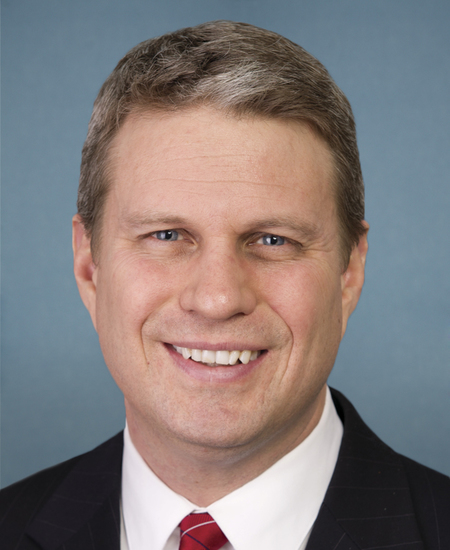
Rep. Bill Huizenga
Sponsored bills
Maddy summaryThe Securing Agriculture's Workforce Act of 2026 modernizes the H-2A visa program by transferring administrative authority to the Department of Homeland Security and introducing a unified online platform to streamline applications for employers and workers. Key provisions include establishing new housing standards with mandatory inspections, creating a system for staggered worker entry and exit, and allowing workers to transfer between employers without losing their status. The bill also defines specific job classifications for wage calculations, expands the scope of covered agricultural activities, and provides legal protections for employers who document the employment of workers seeking visa status. Additionally, it requires agencies to develop a heat illness prevention plan and allows for contract termination due to natural disasters.
Maddy summaryThe Veterans STAND Act requires the Department of Veterans Affairs to provide annual preventative health assessments to veterans with spinal cord injuries or disorders. These assessments cover risks for health complications, chronic pain management, dietary needs, prosthetic equipment, and access to assistive technologies like spinal cord neuromodulation devices. The VA must consult with medical specialists and device manufacturers when creating guidelines and submit yearly reports to Congress on veterans' use of these services and devices. This policy directly affects veterans with spinal cord injuries by ensuring regular, tailored health evaluations to improve long-term management and independence.
Maddy summaryThis bill sets clear limits on class action lawsuits against credit reporting companies for violations of the Fair Credit Reporting Act (FCRA). For intentional failures to follow FCRA rules, it caps individual damages at $100,000 or 40% of total damages, and total class recovery at $500,000 or 1% of the company’s net worth. For negligent failures, it similarly limits total class recovery to $500,000, 1% of net worth, or 40% of actual damages. These changes directly affect credit bureaus (like Equifax or TransUnion) and creditors handling consumer credit data, preventing excessive damages in class actions. The bill harmonizes existing liability rules by adding specific, predictable financial limits to court awards.
Maddy summaryThe UNLOCK AUKUS Act modifies existing export control rules to allow the transfer of specific defense articles and services under the AUKUS partnership. By amending the Arms Export Control Act, the bill removes certain restrictions that previously limited what can be shared between partner nations. This change directly affects the U.S. government's ability to share advanced military technology with allies in the AUKUS alliance. The legislation aims to facilitate collaboration without altering the core legal framework governing defense exports.
Maddy summaryThis bill authorizes Congress to award a Congressional Gold Medal to individuals who fought for or with the United States in the Pacific theater during World War II and subsequently became prisoners of war. The legislation specifically recognizes the service and sacrifice of those who defended locations such as Bataan and Corregidor, including Filipino soldiers and civilians who served alongside U.S. forces. To implement this award, the Speaker of the House and the President pro tempore of the Senate will arrange for the creation of a gold medal by the Secretary of the Treasury, which will be presented to the Smithsonian Institution for display. The act also allows for the production of duplicate bronze medals to cover the costs of the original gold medals, with any proceeds from these sales deposited into the United States Mint Public Enterprise Fund.
Maddy summaryThis bill prevents public colleges receiving federal funding from denying religious student groups access to campus facilities and official recognition - same as other student organizations. It requires equal treatment for religious groups regarding meeting spaces, events, and institutional support, prohibiting discrimination based on religious beliefs or practices. The law directly affects all public universities participating in federal student aid programs (over 400 institutions). It mandates policy changes to ensure religious groups receive the same access and benefits as secular clubs.
Maddy summaryThis bill, the Budgeting for a Better America Act, fundamentally changes how the federal government plans its spending by shifting the congressional budget process from an annual cycle to a biennial one, covering two consecutive fiscal years. It establishes a new National Commission on Fiscal Responsibility and Reform composed of 18 members from both political parties to propose specific policies that would reduce the federal deficit to 3% of the gross domestic product within a decade. The legislation also mandates that any joint resolution implementing the commission's recommendations be given expedited floor consideration in both the House and Senate without the possibility of amendment. Additionally, the bill requires the President to submit supplemental budget estimates annually, mandates a hearing on the nation's fiscal state, and ensures new members of Congress receive budgetary training before taking their seats.
Maddy summaryThis bill redesignates the existing National Parks and Public Land Legacy Restoration Fund as the America's Legacy Restoration Fund to address deferred maintenance on federal lands. It directs revenue from recreation fees and a portion of energy development income into the fund, which must be used primarily for repairing critical infrastructure like roads, trails, and buildings managed by agencies such as the National Park Service and the Forest Service. The legislation establishes strict rules requiring that most funds go toward non-transportation projects, mandates transparency through public dashboards tracking project status, and sets aside a small percentage for matching private donations. Additionally, the bill increases entrance fees for foreign visitors to ensure they contribute to the fund, while prohibiting the use of these specific funds for land acquisition or employee bonuses.
Maddy summaryThis bill amends the existing Northern Border Security Review Act to update deadlines and requirements for border security assessments. It requires the Department of Homeland Security Secretary to submit a northern border threat analysis by September 2, 2026, and every two years after, with strategy updates due 90 days after each analysis. The bill also mandates classified briefings to congressional committees 30 days after each threat analysis and directs the development of performance measures for Air and Marine Operations within six months of enactment. These changes directly affect the DHS Secretary, congressional committees, and U.S. Customs and Border Protection's operations along the northern border.