Maddy summaryHRES 1498 is a non-binding House resolution supporting the designation of September as "National Bourbon Heritage Month." It recognizes bourbon as America’s Native Spirit (as declared in 1964), highlights Kentucky’s role as the birthplace of bourbon (producing 95% of the world’s supply), and emphasizes the industry’s $9 billion annual economic impact. The resolution aims to celebrate bourbon’s cultural significance and Kentucky’s contributions to U.S. heritage, without creating new laws or altering existing policies. It was introduced by Rep. McGarvey and co-sponsors on September 24, 2024.
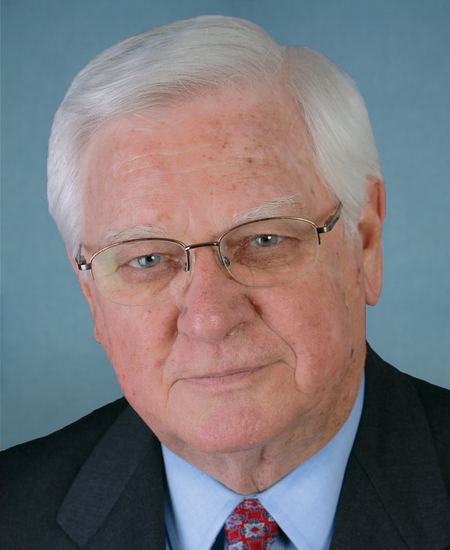
Rep. Harold Rogers
Sponsored bills
Maddy summaryThis bill (HJRES 163) is a congressional disapproval resolution targeting an Environmental Protection Agency (EPA) rule finalized on May 9, 2024. The EPA rule established new emissions standards for greenhouse gases from fossil fuel power plants (both new and existing) and repealed a previous rule called the Affordable Clean Energy Rule. The resolution would block this EPA rule from taking effect by invoking the Congressional Review Act (Chapter 8 of Title 5, U.S. Code). If passed, it would prevent the EPA rule from being enforced, directly affecting fossil fuel power plant operators and the EPA’s regulatory authority over emissions.
Maddy summaryHR 3161, the CDFI Fund Transparency Act, requires the Treasury Secretary (or their designee) to annually testify before the House Financial Services Committee and Senate Banking Committee about the operations of the Community Development Financial Institutions (CDFI) Fund. This testimony would cover the Fund's activities from the previous year and is requested at the discretion of the committee chairs. The bill does not change how the CDFI Fund provides funding but mandates regular reporting to Congress on its operations. It directly affects the Treasury Department's reporting obligations and the congressional committees overseeing the Fund. This is a procedural transparency measure, not a substantive policy change.
Maddy summaryThis is a commemorative resolution (HRES 1369) honoring Corey Comperatore, a volunteer firefighter, U.S. Army Reserves veteran, and community leader from Sarver, Pennsylvania, who died on July 13, 2024. The resolution formally mourns his passing and celebrates his life, noting he left behind his wife, Helen, and two daughters, Allyson and Kaylee. It recognizes his service to the Buffalo Township Volunteer Fire Department, his military service, and his role as a devoted member of Cabot Methodist Church. As a ceremonial resolution, it has no policy impact or direct effect on legislation or constituents beyond this formal acknowledgment.
Maddy summary# Summary of Commerce, Justice, Science, and Related Agencies Appropriations Act, 2025 This comprehensive appropriations bill for fiscal year 2025 contains numerous specific restrictions on how federal funds may be used across multiple agencies, including the Department of Commerce, Department of Justice, National Science Foundation, and National Aeronautics and Space Administration. Key restrictions include: 1. **Prohibitions on specific policies**: - No funding for implementation of Executive Order 14074 on policing reforms - No funding for implementation of Executive Order 14092 on reducing gun violence - No funding for implementation of the CHIPS for America Workforce and Education Fund for certain purposes - No funding for environmental, social, and corporate governance (ESG) investments 2. **Restrictions on diversity initiatives**: - Prohibits funding for any education, training, or professional development that utilizes, promotes, or teaches Critical Race Theory - Bans funding for diversity, equity, inclusion, or implicit bias training - Prohibits funding for "DEIA" (Diversity, Equity, Inclusion, and Accessibility) initiatives 3. **Firearms regulations**: - Prohibits funding for certain ATF regulations, including the "Definition of Frame or Receiver and Identification of Firearms" rule - Prohibits funding for the "Demand 2" reporting program unless modified - Bans funding for the implementation of the "Definition of Engaged in the Business as a Dealer in Firearms" rule 4. **Immigration restrictions**: - Prohibits funding for certain aspects of the State Criminal Alien Assistance Program - Bans funding for the Department of Justice's Reproductive Rights Task Force - Prohibits using funds to sue states over abortion laws or transgender medical procedures 5. **Specific rescissions**: - $30 million permanently cancelled from Department of Commerce's Economic Development Administration - $15 million rescinded from Office on Violence Against Women - $125 million rescinded from Office of Justice Programs - $20 million rescinded from Community Oriented Policing Services - $340 million rescinded from Working Capital Fund - $250 million rescinded from Assets Forfeiture Fund 6. **International restrictions**: - Prohibits NASA, OSTP, or NSC from collaborating with China without specific congressional authorization - Bans funding for certain types of international travel to China This bill represents an unusually detailed set of restrictions on how federal funds may be spent, with numerous specific prohibitions on activities and policies that would typically be funded through appropriations.

Maddy summaryHJRES 170 is a resolution seeking congressional disapproval of a federal rule that would have required new housing projects financed by the Department of Housing and Urban Development (HUD) or the Department of Agriculture (USDA) to meet specific energy efficiency standards. The rule, published in April 2024, aimed to set these standards for new construction in federally subsidized housing. If passed, this resolution would block the rule under the Congressional Review Act, making it legally void. It directly affects developers and builders of HUD- and USDA-financed housing by removing the requirement to comply with these energy standards.
Maddy summaryThis bill requires the U.S. Department of Defense and State Department to immediately deliver all previously approved military equipment and services to Israel within 15 days, reversing any pauses on arms transfers. It prohibits using federal funds to withhold, halt, or cancel defense article deliveries to Israel and mandates that unobligated security assistance funds for Israel must be spent by the end of 30 days. The bill also requires monthly reports to Congress detailing all security assistance provided to Israel since October 7, 2023, including specific items delivered and funding sources. The law directly affects U.S. agencies responsible for military aid and Israel as the recipient of the security assistance.
Maddy summaryThis bill renames a federal courthouse annex in London, Kentucky, to honor Eugene E. Siler, Jr. It designates the building at 310 South Main Street as the "Eugene E. Siler, Jr. United States Courthouse Annex" and updates all federal references (laws, documents, maps) to use this new name. The change affects only official federal records and signage, with no impact on legal procedures or citizen services. The bill is purely procedural, recognizing Siler's service without altering any laws or policies.
Maddy summaryHR 8231, the James Earl Jones Congressional Gold Medal Act, authorizes a Congressional Gold Medal to be awarded to actor James Earl Jones in recognition of his distinguished career in theater and film, and his role in advancing inclusion and equal opportunities for people of all backgrounds in the entertainment industry. The Treasury will strike the medal with an image and inscription of Jones, and may produce and sell bronze duplicates to cover costs, with proceeds deposited into the U.S. Mint's public enterprise fund. This bill serves as a ceremonial honor with no new legal requirements or policy changes.
Maddy summaryHR 8061, the Crime Victims Fund Stabilization Act of 2024, ensures stable funding for the Crime Victims Fund by directing certain False Claims Act collections into it from 2024 through 2029. Specifically, it adds a provision requiring that amounts collected under the False Claims Act (excluding whistleblower rewards and government reimbursement for damages) be deposited into the fund during this period. This directly affects crime victims who rely on the fund for services like counseling and emergency aid, as it prevents potential shortfalls in funding. The bill makes a concrete policy change by redirecting specific federal civil penalties into the fund, rather than altering the fund's existing purposes or eligibility rules.