

Maddy summaryHR 335, titled "Repeal the NFA Act," seeks to eliminate the National Firearms Act (NFA) of 1934, a federal law regulating certain firearms like machine guns, short-barreled rifles, and suppressors. If enacted, the bill would remove the NFA from the Internal Revenue Code by repealing Chapter 53, which currently governs the taxation and registration of these firearms. This repeal would directly affect firearm owners and manufacturers subject to NFA regulations, removing federal requirements for registration and tax payments on specified weapons. The bill focuses solely on repealing existing law without introducing new provisions or exceptions.
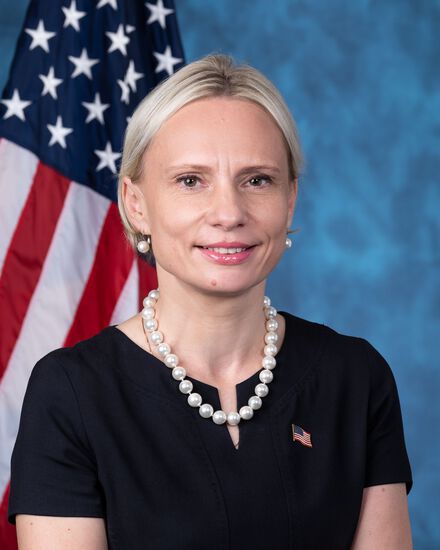
Rep. Victoria Spartz
Sponsored bills
Maddy summaryThis bill, HR 221 (Abolish the ATF Act), would eliminate the Bureau of Alcohol, Tobacco, Firearms and Explosives (ATF) as a federal agency. It directly affects the ATF itself, removing its existence within the U.S. Department of Justice. The bill contains no policy provisions or new mechanisms - it solely directs the abolition of the agency through a single legislative action. As a procedural measure, it does not alter gun laws, enforcement responsibilities, or affect the public.
Maddy summaryThis proposed constitutional amendment would limit Members of Congress to serving a maximum of three terms in the House of Representatives or two terms in the Senate. It directly affects current and future members by preventing those who have already served the maximum terms from seeking re-election. Key provisions include counting vacancies filled for more than a year (House) or three years (Senate) as a full term toward the limit, while excluding terms served before ratification from the count. As a constitutional amendment proposal, it requires approval by three-fourths of state legislatures to become law.
Maddy summaryThis bill designates the U.S. Postal Service facility at 119 North Anderson Street in Elwood, Indiana, as the "Officer Noah Jacob Shahnavaz Post Office Building" to honor Officer Noah Jacob Shahnavaz. It updates all federal references - such as laws, maps, and documents - to use this new name for the building. The bill has no substantive policy changes beyond renaming the facility and does not affect any specific group or program.
Maddy summaryHR 24, the Federal Reserve Transparency Act of 2025, mandates a comprehensive audit of the Federal Reserve Board and Federal Reserve banks by the Government Accountability Office (GAO) within 12 months of enactment. The bill requires the GAO to submit a detailed report to Congress within 90 days of completing the audit, including findings, conclusions, and recommendations for legislative or administrative action. This audit replaces current limitations on reviewing Federal Reserve operations, particularly regarding entities like special purpose vehicles not previously subject to standard audits. The bill directly affects the Federal Reserve System by increasing congressional oversight of its financial activities and reporting mechanisms.
Maddy summaryThis bill extends Medicare payment adjustments for physicians and other practitioners through 2025 instead of ending in 2024. It specifically adds a 4.73% payment increase for services provided between January 1, 2025, and January 1, 2026. The legislation modifies existing Medicare payment rules to stabilize practice revenues during transition periods. It directly affects doctors and healthcare providers who bill Medicare for patient services. The key change is the extended timeframe and the defined 4.73% rate for the 2025-2026 period.
Maddy summary# Summary of Proposed Legislation This document outlines a comprehensive U.S. legislative proposal with several key components: 1. **Research Restrictions**: - Requires certification from Federal research grant recipients that they are not Chinese citizens or participants in Chinese talent programs - Prohibits employment of Chinese nationals in federally funded research - Requires institutions receiving Federal assistance to agree not to knowingly employ individuals participating in Chinese talent programs 2. **Foreign Gifts and Contracts Disclosure**: - Mandates disclosure of foreign gifts/contracts over $50,000 to universities - Requires public reporting of restricted/conditional gifts/contracts - Creates a searchable public database of foreign gifts to universities - Requires institutions to maintain policies regarding foreign gifts to faculty and staff 3. **Investment Restrictions**: - Restricts tax-exempt organizations from holding investments in "disqualified Chinese companies" (defined as corporations incorporated in China or with significant Chinese government ownership) - Requires annual reporting on such investments - Allows limited waivers with public disclosure 4. **Taiwan Policy**: - Prohibits U.S. government from recognizing PRC claims to sovereignty over Taiwan without Taiwan's consent - Requires U.S. government to treat Taiwan's democratically elected government as the legitimate representative of the people of Taiwan - Requires a strategy to protect U.S. businesses from Chinese coercion efforts 5. **Additional Provisions**: - Requires participants in Chinese talent programs to register as agents of the Chinese government - Amends economic espionage laws to include education and research - Mandates disclosure of certain funds received by visa holders The legislation represents a significant effort to limit Chinese influence in U.S. academic institutions, research, and business sectors while establishing a more robust policy framework regarding Taiwan.
Maddy summaryHR 6417 amends the existing "Ending Importation of Russian Oil Act" to ban imports of energy products (classified under Harmonized Tariff Schedule chapter 27) produced at any refinery using crude oil originating in Russia. This directly affects U.S. importers and companies bringing in such refined petroleum products. The key provision prohibits these imports regardless of where the refinery is located, targeting oil that has been "laundered" through foreign processing. The bill updates the existing law by adding this origin-based import ban as a new section.
Maddy summaryThis bill expands Health Savings Account (HSA) eligibility to cover more health plans and health care sharing ministries, allowing individuals with these plans to contribute to HSAs. It significantly increases annual HSA contribution limits to $10,800 for individuals and $29,500 for families (up from $3,850/$7,750), effective 2024. The bill also permits HSA funds to pay for periodic provider fees and health care sharing ministry costs (including administrative fees), and reduces penalties for non-qualified distributions to 10%. These changes directly affect HSA account holders who use non-traditional health coverage or share medical expenses through ministries.
Maddy summaryThis bill grants the President new authority to negotiate a comprehensive trade agreement with the United Kingdom to reduce tariffs and other trade barriers. It requires negotiations to begin within 180 days of enactment and sets a March 1, 2025 deadline for finalizing an agreement. The bill includes specific limits on tariff reductions, preventing cuts below 50% of current rates for most goods or below Uruguay Round levels for agricultural products. This would directly affect U.S. businesses, farmers, and consumers by potentially lowering import costs and expanding market access for U.S. exports.