

Maddy summaryThis bill appropriates $14.3 billion in supplemental security funding to Israel following the October 7, 2023 attacks. The funding includes $4 billion for Iron Dome and David's Sling defense systems, $1.35 billion for the Iron Beam defense system development, and $3.5 billion for foreign military financing. The bill requires regular reporting to Congress on security assistance provided to Israel and designates all funds as "emergency requirements" under federal budget law. It also modifies existing laws to facilitate the transfer of defense articles and services to Israel, aiming to strengthen Israel's defense capabilities against rocket threats.
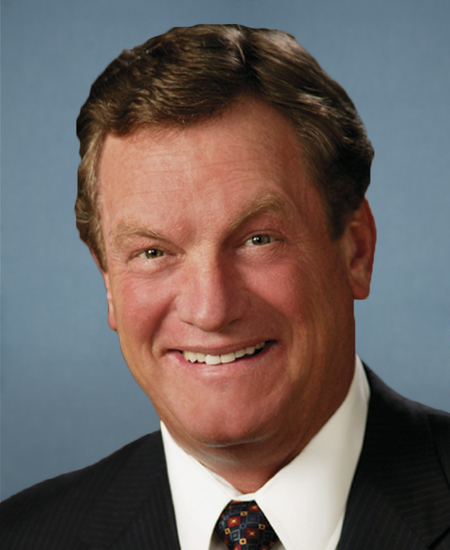
Rep. Michael K. Simpson
Sponsored bills
Maddy summary# Summary of the Department of the Interior, Environment, and Related Agencies Appropriations Act, 2024 This is a comprehensive appropriations bill that allocates funding for the Department of the Interior, Environmental Protection Agency, and related agencies for fiscal year 2024. The bill contains numerous funding allocations alongside significant restrictions on how those funds may be used. ## Key Elements 1. **Funding Allocation**: The bill allocates funds for various programs including water infrastructure, environmental protection, land management, and cultural preservation. 2. **Major Restrictions**: The bill contains numerous prohibitions on using funds for specific activities, including: - Prohibiting implementation of specific environmental regulations (e.g., rules related to greenhouse gas emissions, ozone standards, and air pollution) - Restricting the use of funds for certain wildlife protections (e.g., Northern Long-Eared Bat, Lesser Prairie-Chicken) - Limiting funding for specific projects (e.g., National Museum of the American Latino) - Prohibiting implementation of certain policies (e.g., "Critical Race Theory" related activities) 3. **Specific Policy Provisions**: - Requires reissuance of certain wildlife protection rules (e.g., Gray Wolf, Greater Yellowstone Ecosystem Grizzly Bear) - Prohibits implementation of specific environmental regulations (e.g., "Steam Rule," "Ozone" rule) - Restricts use of funds for certain research (e.g., "Social Cost of Carbon" analysis) - Limits use of funds for specific management activities (e.g., "Wuhan Institute" support) 4. **Rescissions**: The bill permanently rescinds unobligated balances for specific programs including: - $7.765 billion from the Greenhouse Gas Reduction Fund - $1.353 billion from Environmental and Climate Justice Grants 5. **Management Requirements**: Includes provisions requiring transparency, reporting requirements, and specific allocation processes for certain funds. ## Overall Tone The bill is characterized by significant restrictions on regulatory activities and environmental protections, with a focus on limiting federal agency actions that would implement certain environmental regulations or policies. It reflects a legislative approach that prioritizes restricting federal regulatory authority while providing funding for specific agency functions within those constraints. This bill would be cited as the "Department of the Interior, Environment, and Related Agencies Appropriations Act, 2024."
Maddy summaryHR 6201, the Iranian Sanctions Enforcement Act of 2023, creates the Iran Sanctions Enforcement Fund to cover costs related to seizing and forfeiting property from Iran or its designated proxies (like Hezbollah or the Revolutionary Guard Corps) that violate U.S. sanctions. The fund, initially $150 million, pays for investigative costs, property management, informant rewards, and equipment for federal, state, and local agencies involved in enforcement. It also establishes an Export Enforcement Coordination Center within Homeland Security to improve interagency cooperation on enforcing export controls targeting Iran. The bill requires annual reports on fund usage and mandates repayment of the initial $150 million by 2034, unless waived for national security reasons.
This resolution urges the President to demand the release of all hostages in Gaza. The resolution also urges the President to maintain all applicable sanctions on Iran and to use all other coercive and diplomatic resources to secure the release of Americans wrongfully detained in Gaza.
Maddy summaryHRES 771 is a non-binding resolution expressing the U.S. House of Representatives' support for Israel following Hamas' October 7, 2023, attack. It condemns Hamas' actions, affirms Israel's right to self-defense, and calls for the immediate release of hostages. The resolution also urges enforcement of existing laws restricting aid to terrorists and sanctions against Iran for supporting Hamas. It does not create new policies or allocate funds, as it is a symbolic statement of congressional support.
Maddy summaryHRES 768 is a symbolic House Resolution expressing congressional support for Israel following Hamas' October 7, 2023 attacks. It condemns Hamas' actions, reaffirms Israel's right to self-defense, and calls for the immediate release of hostages. The resolution references the U.S. commitment to Israel's security through existing military aid programs, including the 2016 U.S.-Israel Memorandum of Understanding, and emphasizes enforcement of laws like the Taylor Force Act to prevent U.S. aid from reaching terrorist groups. As a symbolic resolution, it does not create new policy but serves as a statement of congressional support for Israel.
Maddy summaryHR 5837, the Protecting America's Property Rights Act, requires Fannie Mae and Freddie Mac to only purchase conventional mortgages for one- to four-family homes if the mortgage is secured by real property with title insurance from a licensed company in the property's state. It also mandates that both entities must get prior approval from the Federal Housing Finance Agency Director and Treasury Secretary before launching new programs, with semi-annual congressional reports on these programs. The bill updates the definition of "conforming mortgage" to include this title insurance requirement. These changes directly affect Fannie Mae and Freddie Mac's mortgage operations and indirectly impact homeowners, lenders, and title insurance companies operating in the states where properties are located.
Maddy summaryThis bill extends existing programs that provide payments to counties and states with federal land, primarily to support local schools and communities. It updates key deadlines, extending secure payments through 2026, special project authorities through 2029, and county fund expenditure authority through 2028. A new pilot program allows regional foresters to appoint resource advisory committee members directly, with this authority ending October 1, 2028. These changes directly affect rural counties and states managing federal lands, maintaining current funding mechanisms without altering eligibility or payment amounts.
Maddy summaryHR 1435, the Preserving Choice in Vehicle Purchases Act, amends the Clean Air Act to restrict states from implementing vehicle emissions rules that limit the sale or use of new gasoline-powered cars. It directly affects states with stricter emissions standards (like California) by adding a new definition that blocks state rules "directly or indirectly" limiting internal combustion engine vehicles as defined in federal regulations as of January 1, 2023. The bill requires the EPA to revoke existing state emissions waivers granted between January 2022 and the bill’s enactment if they don’t comply with this new definition. This creates a concrete federal standard preventing states from advancing policies that could reduce demand for conventional vehicles.
Maddy summaryHR 3152, the "Fight CRIME Act," aims to maintain international restrictions on Iran's missile-related activities by requiring diplomatic efforts to extend these restrictions before they expire in October 2023. The bill mandates annual reports detailing U.S. diplomatic strategies, potential impacts of expiration, and measures to deter missile technology transfers to Iran. It establishes sanctions against foreign individuals or entities that knowingly support Iran's missile or drone programs, including asset freezes and visa restrictions. These sanctions apply regardless of whether UN restrictions remain in effect after their expiration, directly affecting foreign entities involved in these activities.