

Maddy summaryThe Closing the HPV Testing Gap Act directs the National Institutes of Health to conduct a comprehensive study on developing a standardized, noninvasive test for human papillomavirus in men. This research must be completed within 24 months and will involve coordination with federal agencies like the CDC and the FDA, as well as scientific experts and community stakeholders. The study aims to evaluate various testing methods, assess feasibility across diverse populations, and provide recommendations for future implementation and regulatory approval. Additionally, the bill requires an interagency working group to oversee the process and mandates a final report to Congress within 30 months outlining findings and strategies for improving cancer prevention and health equity.
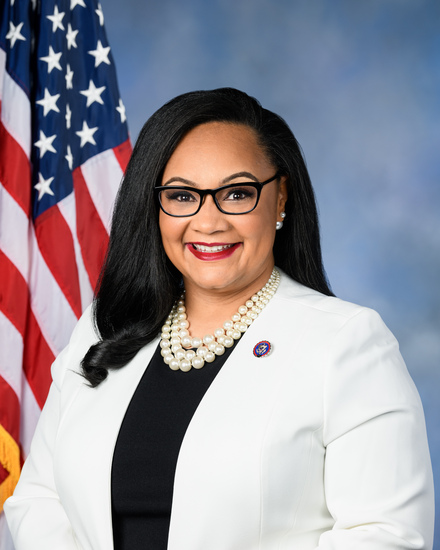
Rep. Nikema Williams
Sponsored bills
Maddy summaryThis bill protects funding and staffing at the Department of Veterans Affairs (VA). It prevents the government from holding back or redirecting VA funds without new law, and requires the VA to notify Congress if funding shortfalls approach. The bill exempts the VA from hiring freezes through 2029, mandates reinstating veterans fired between 2025 and the bill’s enactment, and requires special legal authorization for layoffs (including probationary employees). The VA must also submit annual compliance reports to Congress.
Maddy summaryThis bill creates a new federal tax on money received by former U.S. presidents, their immediate family members, or their controlled businesses from civil lawsuits against the government. Under the law, any settlement or verdict awarded to these individuals would be subject to a 100 percent tax, and the payments would not be counted as taxable income for other purposes. To enforce this, the bill requires trustees and administrators to file public reports detailing these payments and imposes a $10,000 penalty for failing to do so. These rules would apply to any funds received on or after May 20, 2026.
Maddy summaryThe IMPACT to Save Moms Act directs the Centers for Medicare & Medicaid Services to run a five-year demonstration project from 2027 to 2031, allowing states to test new payment models for maternity care under Medicaid and state child health plans. This initiative aims to improve health outcomes for pregnant and postpartum individuals, with a specific focus on reducing disparities among groups that experience higher rates of maternal mortality and severe complications. To achieve these goals, the project requires states to consider alternative payment structures that account for pregnancy risk levels, include diverse care teams with training on bias, and address social factors affecting health. The bill also mandates that the federal government evaluate the project's impact on health outcomes and spending, and submit a final report to Congress with recommendations on whether to expand the program nationwide.
Maddy summaryThe Maternal Health Pandemic Response Act allocates $200 million to the Centers for Disease Control and Prevention to improve data collection, surveillance, and research on how public health emergencies affect pregnant and postpartum individuals. This funding supports efforts to gather detailed demographic information on maternal health outcomes, establish regional centers of excellence, and expand surveys to better reach underrepresented communities. The legislation also requires the CDC to make this data publicly available in a disaggregated format while protecting patient privacy, and mandates public education campaigns to ensure accurate information reaches families and healthcare providers. Additionally, the bill creates a diverse task force to develop federal recommendations for respectful maternity care during emergencies, addressing issues such as telehealth access, doula coverage, and the treatment of mental health and substance use disorders. These measures aim to reduce health disparities and improve care quality for pregnant people from racial and ethnic minority groups during public health crises.
Maddy summaryThe IGNITE HBCU Excellence Act authorizes federal grants to Historically Black Colleges and Universities (HBCUs) to fund long-term improvements to their campus facilities and infrastructure. These grants are awarded competitively to eligible HBCUs based on criteria such as the age of their facilities, deferred maintenance needs, financial capacity, and student enrollment levels. Recipients may use the funds to construct or renovate buildings, upgrade technology and broadband systems, improve safety measures, and develop workforce training hubs, while being prohibited from using the money for routine maintenance or athletic facilities. The legislation also includes provisions for reporting on project outcomes and requires institutions to create comprehensive master plans that involve consultation with diverse campus and community stakeholders.
This resolution calls on elected officials, faith leaders, and civil society leaders to condemn and counter acts of anti-Semitism. The resolution also honors the contributions of Jewish-American servicemembers and commits to ensuring all Americans, including Jewish Americans, can worship without fear of violence or persecution.
Maddy summaryThe YALI Act of 2025 establishes the Young African Leaders Initiative (YALI) to support emerging leaders in sub-Saharan Africa aged 18-35, focusing on business, civic engagement, and public administration. It creates at least four regional leadership centers in Africa for training, expands the Mandela Washington Fellowship (for 25-35-year-olds with demonstrated leadership), and requires annual reports on program outcomes. The bill mandates partnerships with private sector entities to fund networking, entrepreneurship, and leadership development, while requiring the State Department to submit implementation plans within 180 days of enactment. The program expires five years after enactment, with reports assessing its impact on U.S.-Africa relations, including trade, governance, and youth empowerment.
Maddy summaryThe TREE Act prohibits the import and sale in the U.S. of goods linked to deforestation, starting in 2029, and directly affects companies that trade or sell commodities like cattle, soy, palm oil, and wood. To enforce this ban, the bill requires importers to submit detailed due diligence statements proving their products are deforestation-free, while also mandating increased customs inspections for goods from countries categorized as high or moderate risk. The U.S. Trade Representative will annually assess and rank countries based on their deforestation rates and environmental laws, with higher-risk nations facing stricter scrutiny and potential trade restrictions. Additionally, the law establishes civil penalties for violations and directs half of the collected fines toward providing financial assistance to developing countries for forest management.
Maddy summaryThis bill expresses the sense of Congress that medication abortion is a safe medical treatment approved by federal regulators. It asserts that this federal approval overrides any state laws requiring the procedure to be dispensed in person by a healthcare provider. Additionally, the bill states that federal approval preempts state restrictions on prescribing or dispensing medication abortion through telehealth. Essentially, the legislation argues that states cannot enforce rules limiting how medication abortion is delivered if those rules conflict with the federal approval process.