

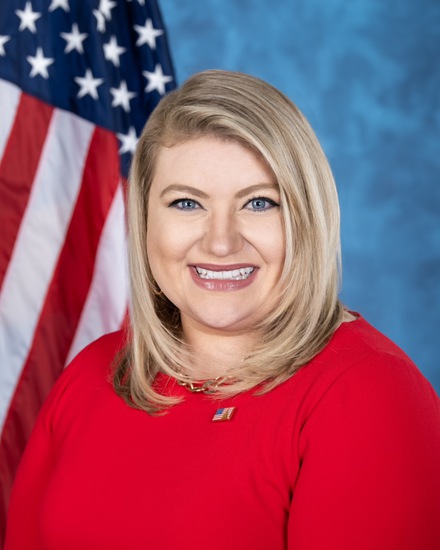
Photo of Kat Cammack
R United States House · District 3 · Florida On the 2026 ballot

Rep. Kat Cammack

Compare
Total votes
2,818
all sessions
Attendance
98%
69 missed
Near the chamber average
With party
91%
of cast votes
Lower than 87% of chamber peers
Bipartisan score
5%
crosses aisle rarely
Higher than 86% of chamber peers
Sponsored
769
bills & resolutions
Lower than 84% of chamber peers
Committees
6
assignments
769 bills and resolutions

Sponsored bills

Total
769
Primary
62
Co-sponsor
707
This page
769
matching current filters
Co-sponsor HRES 636
In committee · Utah House · Co-sponsor
Condemning the tragic act of violence that took place in New York City, honoring the lives of the victims of the attack, commending the bravery of the New York City Police Department, and condemning acts of violence against law enforcement officials.

Maddy summaryHRES 636 is a symbolic House resolution condemning a July 28, 2025, shooting in New York City that killed three civilians and NYPD Officer Didarul Islam, alongside security officer Aland Etienne. It honors the victims, commends the NYPD's response, and condemns violence against law enforcement. The resolution does not create new laws or policies but formally expresses the House's stance against such violence and supports law enforcement. It was introduced by Representatives Stefanik, Tenney, and others and referred to the Oversight Committee.

In committee Aug 5, 2025 1 co-sponsor
Co-sponsor HR 4898
In committee · Utah House · Co-sponsor
Supporting Equity for Aquaculture and Seafood Act

Supporting Equity for Aquaculture and Seafood Act or the SEAS Act This bill directs the Department of Agriculture (USDA) to increase support for aquaculture grants and assistance. Aquaculture is the controlled breeding, rearing, and harvesting of fish, shellfish, and sea vegetables. Specifically, the bill directs USDA to give aquaculture producers the same consideration as animal agriculture producers in awarding grants or other assistance. Further, USDA must ensure adequate and fair funding levels are provided to aquaculture producers under USDA programs. USDA must also provide its staff with specific education and trainings on aquaculture. USDA must make competitive grants (e.g., to regional aquaculture centers or nonprofit organizations) to develop next generation technology to reduce pollution and fuel usage in the seafood and aquaculture industries. Further, Agriculture and Food Research Initiative program grants must address methods of increasing the survival rate and adaptability of shellfish, including resistance to heat, disease, salinity, and acidification. In addition, the federal crop insurance program (FCIP) must research and develop a policy to insure aquaculture products. Further, the Federal Crop Insurance Corporation (the agency that finances FCIP operations) must establish a policy to insure aquaculture products. USDA must submit to Congress (1) an annual report that includes information on USDA seafood and aquaculture purchases and grants, and (2) a report on USDA's role in supporting aquaculture and the seafood industry.

In committee Aug 5, 2025 1 co-sponsor
Primary HR 4783
In committee · Utah House · Lead sponsor
COP Act of 2025

Maddy summaryHR 4783, the COP Act of 2025, prohibits federal funding for any law enforcement agency that employs a non-citizen as a law enforcement officer. This directly affects state and local police departments or agencies that receive federal grants, requiring them to ensure all sworn officers are U.S. citizens to maintain funding eligibility. The key mechanism is a strict funding cutoff: agencies violating this rule would lose access to federal financial support. The bill focuses solely on altering federal funding eligibility based on officer citizenship status, with no additional provisions or exceptions described.

In committee Jul 29, 2025 0 co-sponsors
Primary HRES 611
In committee · Utah House · Lead sponsor
Expressing the importance of accurate information for medical professionals treating pregnant women and their unborn children in the emergency department, and for informing the general public, and for other purposes.

Maddy summaryThis resolution (HRES 611) clarifies that treating life-threatening conditions like ectopic pregnancy is medically and legally distinct from elective abortion. It aims to prevent confusion among medical professionals by emphasizing that emergency care for ectopic pregnancy (which requires specific treatments like methotrexate or surgery) does not constitute abortion. The resolution calls on medical organizations and healthcare educators to accurately inform providers and the public about this distinction, ensuring timely treatment without unnecessary delays. As a non-binding resolution, it does not change laws but seeks to address post-*Dobbs* confusion in emergency care.

In committee Jul 25, 2025 0 co-sponsors
Co-sponsor HJRES 111
In committee · Utah House · Co-sponsor
Providing for congressional disapproval under chapter 8 of title 5, United States Code, of the rule submitted by the United States Fish and Wildlife Service relating to "Barred Owl Management Strategy".

Maddy summaryHJRES 111 is a joint resolution seeking congressional disapproval of a U.S. Fish and Wildlife Service rule on barred owl management. The rule, published in September 2024, outlined strategies to reduce barred owl populations to protect the endangered spotted owl. Under the Congressional Review Act, this resolution would nullify the rule, preventing its implementation. If enacted, the rule would have no legal effect, and the agency could not enforce the barred owl management strategy.

In committee Jul 23, 2025 1 co-sponsor
Co-sponsor HR 740
In committee · Utah House · Co-sponsor
Veterans’ ACCESS Act of 2025

Veterans' Assuring Critical Care Expansions to Support Servicemembers Act of 2025 or the Veterans' ACCESS Act of 2025 This bill addresses the administration of the Veterans Community Care Program (VCCP) and other Department of Veterans Affairs (VA) health care matters. Among other provisions regarding the VCCP, the bill establishes in statute access standards that determine when a veteran is eligible to receive non-VA care through the VCCP, requires the VA to notify veterans regarding their eligibility for care within two business days after the VA is aware the veteran is seeking care, and extends the deadline for the submittal of claims under the VCCP by health care entities and providers. The VA must address its mental health treatment programs by establishing a standardized screening process to determine whether a veteran satisfies criteria for priority or routine admission to a mental health residential rehabilitation treatment program or a program for residential care for mental health and substance abuse disorders, tracking the performance of medical facilities and Veterans Integrated Service Networks in meeting the requirements for mental health treatment screenings and timely admission to treatment programs under such screenings, and establishing an appeal process for when a veteran is denied admission to a covered treatment program or is accepted into a program but not offered bed placement in a timely manner. Additionally, the VA must establish an online self-service module for veterans to request and manage appointments, track referrals, and appeal and track decisions related to requests for care.

In committee Jul 23, 2025 1 co-sponsor
Co-sponsor HR 4033
In committee · Utah House · Co-sponsor
Sturgeon Conservation and Sustainability Act of 2025

Maddy summaryHR 4033 exempts farmed sturgeon and their offspring from certain protections under the Endangered Species Act until they are intentionally returned to the wild. This directly affects sturgeon farmers and aquaculture facilities operating in controlled environments, allowing them to continue their activities without ESA compliance for captive sturgeon. The bill requires these operators to maintain records proving their sturgeon qualify under the exemption and to provide documentation to the Secretary upon request. It does not create new conservation measures but clarifies existing ESA rules for commercial sturgeon farming.

In committee Jul 22, 2025 1 co-sponsor
Co-sponsor HRES 589
In committee · Utah House · Co-sponsor
Providing for the public release of certain documents, records, and communications related to the investigation of Jeffrey Epstein.

Maddy summaryHRES 589 requires the U.S. Attorney General to publicly release, within 30 days of enactment, searchable and downloadable documents related to the Jeffrey Epstein investigation - including DOJ communications, case files (like *United States v. Maxwell*), and materials about Epstein’s detention or death. It mandates the release of all such records unless specific, limited exceptions apply (e.g., to protect victims’ privacy, prevent child exploitation, or safeguard ongoing investigations). The resolution prohibits withholding documents solely due to embarrassment, reputational harm, or political sensitivity to officials or public figures. It also requires a detailed report to Congress within 15 days, listing all released materials, redactions, and unclassified summaries for any withheld classified information.

In committee Jul 21, 2025 1 co-sponsor
Co-sponsor HR 4483
In committee · Utah House · Co-sponsor
State Accountability for Federal Deployment Costs Act of 2025

Maddy summaryThis bill requires states and local governments to reimburse the federal government for costs when they obstruct lawful federal immigration enforcement, leading to military deployments. Specifically, if a state fails to cooperate with immigration operations (like refusing detainer requests), the Secretary of Defense must send the state a bill for expenses like military personnel travel, lodging, and equipment transport. States have 180 days to pay the invoice, or the President may withhold federal grants to offset the unpaid amount. The bill targets reimbursement for deployments triggered by state noncooperation, not for routine enforcement. It does not change immigration law but shifts costs to jurisdictions that impede federal operations.

In committee Jul 17, 2025 1 co-sponsor
Co-sponsor HR 1919
Passed · Utah House · Co-sponsor
Anti-CBDC Surveillance State Act

Maddy summaryHR 1919, the "Anti-CBDC Surveillance State Act," prohibits the Federal Reserve from developing, testing, or issuing any central bank digital currency (CBDC) or similar digital assets. It specifically bans the Fed from offering direct financial products to individuals, maintaining individual accounts, or issuing CBDCs directly or indirectly through intermediaries like banks. The bill also blocks the Fed from using any digital asset for monetary policy and clarifies that physical currency's privacy protections remain intact. This policy directly affects the Federal Reserve System's ability to create or manage digital monetary tools.

Passed Jul 17, 2025 1 co-sponsor
Showing 71 to 80 of 769 bills
Previous 1 7 8 9 77 Next