Maddy summaryHR 7299 designates the U.S. Postal Service facility at 2600 Michigan Avenue in Kissimmee, Florida, as the "Robert Guevara Post Office Building." This bill directly affects the postal facility by changing its official name in all federal references. The key provision updates all federal documents, maps, and records to reflect the new name. It is a procedural bill with no policy changes or funding impacts.
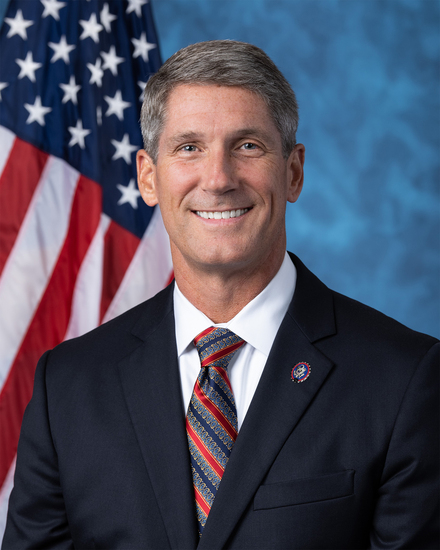
Rep. Scott Franklin
Sponsored bills
Safeguard American Voter Eligibility Act or the SAVE America Act This bill requires individuals to provide documentary proof of U.S. citizenship when registering to vote, and requires photo identification to vote, in federal elections. Specifically, the bill prohibits states from accepting and processing an application to register to vote in a federal election unless the applicant presents documentary proof of U.S. citizenship. The bill specifies what documents are considered acceptable proof of U.S. citizenship, such as identification that complies with the REAL ID Act of 2005 that indicates U.S. citizenship. Further, the bill (1) prohibits states from registering an individual to vote in a federal election unless, at the time the individual applies to register to vote, the individual provides documentary proof of U.S. citizenship; and (2) requires states to establish an alternative process to demonstrate U.S. citizenship. Each state must take affirmative steps on an ongoing basis to ensure that only U.S. citizens are registered to vote, which shall include establishing a program to identify individuals who are not U.S. citizens using information supplied by certain sources. Additionally, states must remove noncitizens from their official lists of eligible voters. The bill (1) provides for a private right of action for certain violations, and (2) establishes criminal penalties for certain offenses. Individuals voting in federal elections must present an eligible photo identification document. An individual who votes by absentee ballot must submit a copy of their identification document with both the request for, and the submission of, the absentee ballot.

Maddy summaryThis symbolic House resolution expresses U.S. congressional support for Iranian protesters demanding democracy and human rights. It condemns the Iranian regime's violent suppression of protests, including killings, mass arrests, and internet restrictions, while urging the regime to release political prisoners and restore communication access. The resolution reaffirms the Iranian people's right to self-determination through free elections and echoes a 2023 resolution (HCR 7) that similarly praised protesters. As a non-binding expression of support, it does not impose new policies or alter U.S. government actions.
Maddy summaryHR 909, the Crime Victims Fund Stabilization Act of 2025, modifies how funds from the False Claims Act are deposited into the Crime Victims Fund. It specifies that from 2025 through 2029, certain False Claims Act proceeds (specifically those for qui tam plaintiff payments and government damage reimbursements) cannot be deposited into the fund. This change directly affects the composition of the Crime Victims Fund by excluding these specific revenue streams during the specified period. The bill does not create new benefits or alter victim services; it only adjusts fund allocation rules for existing False Claims Act revenues.
Maddy summaryHRES 984 is a symbolic resolution designating January 9, 2026, as "National Law Enforcement Appreciation Day." It directly honors all federal, state, local, and tribal law enforcement officers across the United States for their service and sacrifices. The resolution expresses the House's support and gratitude, encourages public observance through ceremonies, and recognizes officers who have made the ultimate sacrifice. As a non-binding resolution, it does not create new laws or policies but serves as a formal expression of appreciation.
Maddy summaryHR 6709 establishes a dedicated Office of Fusion within the Department of Energy to accelerate the development and commercial deployment of fusion energy technology. The bill consolidates existing fusion programs under this new office, requires a detailed commercial deployment roadmap for Congress within one year, and mandates coordination with private industry, national labs, and other agencies to overcome barriers. It directly affects the Department of Energy, the U.S. fusion industry, and regulators by streamlining efforts to meet a goal of starting construction on multiple private fusion power plants by 2028. Key mechanisms include centralizing fusion research, managing public-private partnerships, and ensuring supply chain development to advance fusion energy as a clean power source.
Miracle on Ice Congressional Gold Medal Act This act provides for the award of Congressional Gold Medals to the members of the 1980 U.S. Olympic men's ice hockey team in recognition of the team's achievement at the 1980 Winter Olympic Games.
Maddy summaryHR 1676, the "Make SWAPs Efficient Act of 2025," requires the federal government to approve or deny state wildlife conservation plans within 180 days of receiving them. This directly affects states that submit comprehensive wildlife conservation plans under the Pittman-Robertson Wildlife Restoration Act. If the Secretary fails to act within that timeframe, the state's plan is automatically approved as of the 180th day. The bill streamlines the approval process to prevent federal delays from blocking state conservation funding.
Maddy summaryHRES 932 is a symbolic resolution passed by the House of Representatives that condemns six specific members of Congress (including Senators Kelly and Slotkin and Representatives Crow, Deluzio, Goodlander, and Houlahan) for allegedly making statements that encouraged military and intelligence personnel to disobey orders from the President. The resolution claims these lawmakers falsely suggested the administration issued "illegal orders" and undermined the military chain of command, violating the Uniform Code of Military Justice (UCMJ). It does not create new laws or policies but formally denounces the lawmakers' statements as "dangerous and seditious rhetoric." As a procedural resolution, it has no binding effect on military conduct or policy.
Maddy summaryThis bill (HR 6469) requires the U.S. State Department, in coordination with the FCC and Treasury, to submit a report within 120 days of enactment assessing internet access options in Iran. The report must evaluate the feasibility of using direct-to-cell wireless technology to expand internet access there, including technical, security, and regulatory considerations. It also analyzes how drone-based systems and signal jamming could affect such technology, surveys Iranian telecom providers (including state ownership and foreign investment), and examines broader implications for communications freedom. The bill does not enact new policy but mandates a government review of potential technological solutions.