

Processing Revival and Intrastate Meat Exemption Act or the PRIME Act This bill expands the exemption of custom slaughtering of animals from federal inspection requirements. Under current law, the exemption applies if the meat is slaughtered for personal, household, guest, and employee uses. The bill expands the exemption to include meat that is slaughtered and prepared at a custom slaughter facility in accordance with the laws of the state where the facility is located; and prepared exclusively for distribution to household consumers in the state or restaurants, hotels, boarding houses, grocery stores, or other establishments in the state that either prepare meals served directly to consumers or offer meat and food products for sale directly to consumers in the state. The bill does not preempt any state law concerning (1) the slaughter of animals or the preparation of carcasses, parts thereof, meat and meat food products at a custom slaughter facility; or (2) the sale of meat or meat food products.
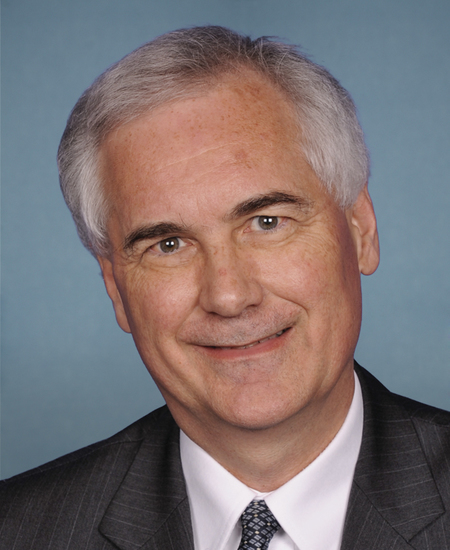
Rep. Tom McClintock
Sponsored bills
This resolution expresses the sense of the House of Representatives that the Department of Homeland Security (DHS) provides essential protection for our country from foreign and domestic threats and that defunding DHS would be detrimental to our national security.
This resolution recognizes and expresses support for the efforts of democracy and human rights activists in Cuba.
Law Enforcement Officer Recreation Pass Act This bill directs the Department of Agriculture and the Department of the Interior to make the National Parks and Federal Recreational Lands Pass available, without charge and for the lifetime of the passholder, to law enforcement officers.
30 x 30 Termination Act This bill limits federal acquisition of land or declaration of a national monument in certain areas and nullifies a provision of an executive order related to conservation. In a state or county where 15% or more of the land is managed by a federal agency (1) federal funds may not be used to acquire nonfederal land unless the agency proposing the acquisition disposes of an equal amount of federal land within the state or county, and (2) a declaration of a national monument shall not apply. The bill prohibits from having the force and effect of law a provision of Executive Order 14008 (86 Fed. Reg. 7619), titled Tackling the Climate Crisis at Home and Abroad , that requires the Department of the Interior to recommend steps to achieve the goal of conserving at least 30% of U.S. lands and waters by 2030. No federal funds may be used to implement, administer, enforce, or carry out any report or program substantially similar to such provision. No federal funds may be used to implement, administer, enforce, or carry out any action on federal land that results in a net-loss of multiple use or any principal or major use, unless such action has been authorized by federal statute.
Pandemic Unemployment Assistance Fraud Protection Act This bill creates several requirements for states to address fraudulent claims for Pandemic Unemployment Assistance (PUA), temporarily increases penalties for fraud related to PUA, and requires each state to establish a hotline for victims of unemployment fraud. Specifically, the bill requires states to cross reference PUA claims with federal and state prison records and E-Verify to ensure that claimants are eligible for PUA, submit to the Department of Labor plans to recover fraudulently obtained PUA, develop an anti-fraud task force to investigate and recover fraudulently obtained PUA, make restitution to Labor for the amount of any overpayment of PUA made by the state, and establish a hotline designed to encourage individuals who are victims of unemployment fraud and have received an incorrect statement of unemployment compensation to report that fraud. The bill also temporarily enhances the maximum penalty for fraud related to PUA through December 31, 2021, so that the offense is classified as fraud in relation to a presidentially declared major disaster or emergency and punishable by up to 30 years imprisonment, a fine of up to $1,000,000, or both.
This resolution requires an analytical statement to be included in committee reports on whether, and the extent to which, the increased budget authority, outlays, or revenue produced by the enactment of a bill or joint resolution may have an inflationary impact on prices and costs in the operation of the national economy and the purchasing power of low- and middle-income families.
Cell-Site Simulator Warrant Act of 2021 This bill establishes a federal statutory framework to regulate the use of cell-site simulators. Cell-site simulators (commonly known as Stingrays) are devices that function as or simulate a cell-phone tower to identify, locate, or intercept transmissions from a cell phone for purposes other than providing ordinary commercial mobile services or private mobile services. The framework generally prohibits the knowing use of a cell-site simulator domestically by an individual or entity or the use of a cell-site simulator by an element of the intelligence community outside the United States to conduct surveillance of a U.S. person. It imposes a civil fine on an individual or entity that violates the prohibition and restricts the use of unlawfully acquired information as evidence in a legal proceeding or official proceeding. The framework contains exceptions to permit the use of a cell-site simulator in certain circumstances, such as by a law enforcement agency pursuant to a warrant or by an element of the intelligence community to conduct surveillance under the Foreign Intelligence Surveillance Act of 1978. Finally, an individual who is the subject of unlawful use of a cell-site simulator may bring a private right of action.
Keeping Our Promises Act This bill expands the list of diseases that are provided a presumption of service-connection for veterans who served in the Republic of Vietnam between January 9, 1962, and May 7, 1975. The bill extends through September 30, 2030, the requirement for the Department of Veterans Affairs (VA) to make determinations and submissions related to the connection between herbicide exposure and occurrence of disease. Additionally, the VA is prohibited from taking the costs of compensation into account when determining the association between exposure to an herbicide agent and occurrence of a disease. The bill requires the VA to determine within 120 days (currently 60) whether a presumption of service-connection is warranted for diseases covered by a National Academy of Sciences report.
This bill requires the Department of Veterans Affairs to ensure that, if it creates a presumption of service-connection between the occurrence of a disease and exposure to an herbicide agent while serving in the Armed Forces between January 9, 1962, and June 30, 1976, at a military base in Thailand, such presumption must also apply to exposure at any military base in Thailand, regardless of where on the base the veteran was located or what military job specialty the veteran performed.