

Maddy summaryThe Right to Learn Act of 2026 creates a grant program to help schools and community organizations support students and staff affected by immigration enforcement actions. Funds awarded by the Department of Education can be used to hire trauma-informed counselors, provide emergency assistance like food and legal referrals, and train educators on culturally responsive care. The bill strictly prohibits schools from collecting or sharing personal data about a student's immigration status and forbids denying services based on that status. Eligible recipients include public schools, early childhood programs, universities, and legal service providers, with a total funding authorization of $250 million over five years.
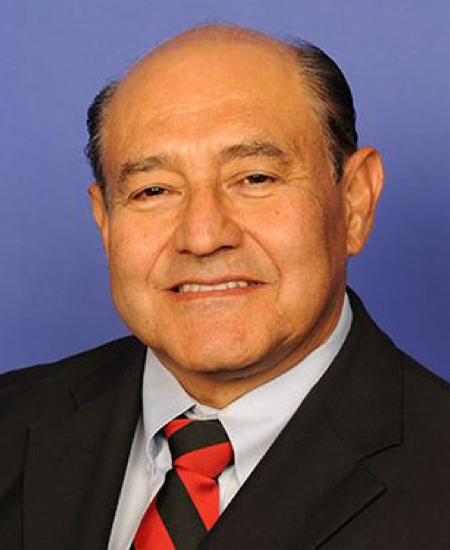
Rep. J. Luis Correa
Sponsored bills
Maddy summaryThe Public Safety Officers' Benefits Enhancement Act of 2026 modifies how public safety officers can claim federal benefits related to line-of-duty injuries. It simplifies the claims process by removing a requirement that injuries must be caused by factors other than pre-existing cardiovascular risks and extends the time limit for reporting certain incidents from 24 to 72 hours. These changes apply to any benefit claims that are pending or filed after the law is enacted. The bill directly affects public safety officers seeking compensation for work-related injuries.
Maddy summaryHR 1266, the Combating Illicit Xylazine Act, adds xylazine - a veterinary sedative increasingly found in illicit drug mixtures - to Schedule III of the Controlled Substances Act, regulating its use and trafficking. It directly affects veterinarians, animal owners, and manufacturers by allowing xylazine to be legally dispensed for animal use under specific veterinary prescriptions, while prohibiting non-veterinary human use. The bill includes transition periods (60 days for practitioners, 1 year for labeling) to ease compliance for manufacturers and practitioners, and requires the DEA and FDA to expedite necessary applications. It also mandates two congressional reports on xylazine's illicit use and trafficking patterns, and directs the Sentencing Commission to review penalties for offenses involving xylazine.
Maddy summaryThe IBOGAINE Act aims to accelerate the development and approval of ibogaine and similar compounds for treating addiction, trauma, and serious mental illnesses by modifying federal drug laws. It creates a new voucher system that grants sponsors of breakthrough mental health drugs priority review by the FDA, while also establishing special registration rules to allow physicians to legally administer Schedule I substances to eligible patients under the "right to try" law. The legislation further directs the Department of Veterans Affairs to create a dedicated senior official and workforce plan for emerging therapies, mandates timely rescheduling of ibogaine from Schedule I to Schedule II, and requires federal agencies to share clinical trial data to speed up the approval process.
Maddy summaryThis bill establishes a legal framework allowing banks and credit unions to provide financial services to businesses operating marijuana or hemp industries under state laws without fear of losing federal protections. It specifically shields these institutions from penalties, insurance termination, or liability if they accept deposits or make loans to state-sanctioned marijuana or hemp companies. The legislation also clarifies that income from these businesses can be used to qualify for federally backed mortgages and requires regulators to update guidance on how to handle suspicious activity reports related to these sectors. Additionally, the bill mandates annual reports and studies to assess access to banking services for minority-owned and small businesses within the industry.
Maddy summaryOrlin's Law requires immigration officials to identify detained parents and prioritize family unity by limiting detention when possible. The bill mandates that parents be allowed to make free calls and visits with their children, participate in family court proceedings, and access necessary documents to care for their dependents. It also establishes a new office within U.S. Immigration and Customs Enforcement to coordinate these protections and provides for community-based alternatives to detention. Additionally, the law creates a presumption that parental rights remain intact even if a child is separated from a detained parent and outlines specific steps to facilitate reunification upon removal.
Maddy summaryHR 4288 would rename the Department of Veterans Affairs community-based outpatient clinic in San Jose, California, as the "Corporal Patrick D. Tillman VA Clinic." The bill directly affects this specific VA facility, updating all official references to it. The key provision requires the clinic to be designated by this new name in all federal records, documents, and maps following the bill's enactment. This is a procedural naming bill honoring Corporal Tillman, a former NFL player and Army Ranger killed in action in Afghanistan in 2004.
Maddy summaryThe Patients First Act of 2026 modifies how Medicare reimburses physicians and primary care providers to improve access and stabilize payments. It establishes a new hybrid payment model for primary care services from 2027 to 2031, which pays a monthly fee per patient to eligible independent practices while covering specific services like care management and telehealth without cost-sharing for patients. The bill also updates the formula for calculating reimbursement rates to account for high inflation years and requires more frequent updates to the costs used in calculating payments. Additionally, the legislation reforms the performance-based payment system by adding care efficiency measures, creating a task force to recommend new quality metrics, and adjusting penalties for providers who fail to report on certain data.
Maddy summaryThis bill requires Medicare Advantage plans to implement electronic pre-approval systems for medical services by 2028 and meet transparency reporting standards starting in 2027. Plans must publicly report data on approval/denial rates, appeal outcomes, response times, and technology use for pre-approval requests, including details on how denials relate to clinical criteria. It establishes a 24-hour response timeframe for certain requests and mandates annual reviews of pre-approval requirements based on data and input from seniors and providers. The law directly affects Medicare Advantage plans, seniors enrolled in these plans, and healthcare providers who submit pre-approval requests. These changes aim to make the pre-approval process faster, more transparent, and more accountable for seniors seeking covered medical services.
Maddy summaryThe High Court Gift Ban Act prohibits federal judicial officers from accepting gifts from sources likely to appear before them, unless the gift is under $50, the total annual value from that source remains $100 or less, or it falls under specific exceptions like gifts from relatives or public events. The law defines a "gift" broadly to include items, services, and reimbursements, while allowing exceptions for personal hospitality within IRS limits and certain professional benefits available to the general public. Enforcement mechanisms include referrals to the Attorney General for violations, which can result in civil or criminal penalties similar to those for other federal ethics breaches. The bill requires the Supreme Court and the Judicial Conference to create implementing regulations within 180 days of enactment to ensure compliance.