Maddy summaryHRES 995 is a symbolic resolution supporting Korean American Day, commemorating January 13 as the anniversary of the 1903 arrival of the first large wave of Korean immigrants to the U.S. It urges all Americans to recognize Korean Americans' contributions to U.S. society, economy, and U.S.-South Korea relations, honoring their historical journey and ongoing impact. The resolution has no legal effect or policy changes - it serves solely as a formal acknowledgment of cultural heritage.
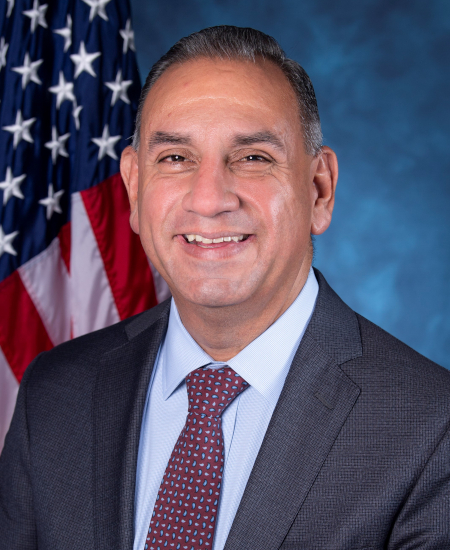
Rep. Gilbert Ray Cisneros, Jr.
Sponsored bills
Maddy summaryThis symbolic House resolution expresses U.S. congressional support for Iranian protesters demanding democracy and human rights. It condemns the Iranian regime's violent suppression of protests, including killings, mass arrests, and internet restrictions, while urging the regime to release political prisoners and restore communication access. The resolution reaffirms the Iranian people's right to self-determination through free elections and echoes a 2023 resolution (HCR 7) that similarly praised protesters. As a non-binding expression of support, it does not impose new policies or alter U.S. government actions.
Maddy summaryThis bill prohibits U.S. federal funds from being used to support Venezuela's oil and petroleum sector, including financing infrastructure projects, purchasing property, providing insurance, making payments to companies, or government advocacy. It directly affects all federal agencies and programs that manage taxpayer money, preventing them from funding any aspect of Venezuela's oil industry. The bill requires the Secretary of State to submit annual reports to specific congressional committees detailing any related activities and confirming compliance. These provisions aim to restrict U.S. financial involvement in Venezuela's oil sector using clear, non-ambiguous language.
Maddy summaryHR 6088, the *Restoring Food Security for American Families and Farmers Act of 2025*, repeals specific sections (10101-10108) from a prior reconciliation law. This action revives previous provisions related to food security programs that were modified by those repealed sections. The bill directly affects federal food assistance and agricultural support programs by restoring their prior legal framework. It does not create new policies but reverses recent changes to existing food security measures.
Maddy summaryThis bill establishes new standards for transporting livestock across state lines. It prohibits moving livestock deemed "unfit to travel" under specific criteria defined by international animal welfare standards, including animals that are sick, unable to stand, blind, recently giving birth, or in poor health due to weather. The bill requires the Transportation and Agriculture Secretaries to create an inspection system within 180 days to enforce these rules, including checking vehicles and records. It directly affects livestock transport companies, farmers, and ranchers moving animals interstate, with an exception allowing transport for veterinary care. The law aims to prevent suffering during transport by defining clear welfare standards.
Maddy summaryThis bill updates federal nutrition law to include Puerto Rico in the Supplemental Nutrition Assistance Program (SNAP), allowing it to transition from its current funding method to the same SNAP benefits available to U.S. states. Puerto Rico must submit a 180-day plan to the USDA detailing its transition to SNAP, with approval required within another 180 days. The transition period lasts up to 5 years from the bill's effective date, during which Puerto Rico would continue receiving block grants while preparing for full SNAP participation. This change directly affects Puerto Rico's 1.4 million residents who currently receive nutrition assistance under a separate funding structure.
Maddy summaryHR 909, the Crime Victims Fund Stabilization Act of 2025, modifies how funds from the False Claims Act are deposited into the Crime Victims Fund. It specifies that from 2025 through 2029, certain False Claims Act proceeds (specifically those for qui tam plaintiff payments and government damage reimbursements) cannot be deposited into the fund. This change directly affects the composition of the Crime Victims Fund by excluding these specific revenue streams during the specified period. The bill does not create new benefits or alter victim services; it only adjusts fund allocation rules for existing False Claims Act revenues.
Maddy summaryHR 7016, the "No Funds for NATO Invasion Act," blocks federal funding for any U.S. military invasion of a North Atlantic Treaty Organization (NATO) member country or territory covered by NATO's Article 5 mutual defense clause. The bill prohibits using any federal funds for such invasions and bans U.S. officials from executing these actions. It directly affects U.S. military operations and funding decisions involving NATO members. The law applies to all federal spending, preventing the use of existing budgets for this specific purpose.
Maddy summaryHR 7014 designates Burma for temporary protected status (TPS) under U.S. immigration law, providing eligible Burmese nationals temporary legal status in the U.S. The bill establishes an 18-month TPS period beginning November 25, 2025, for Burmese nationals who have continuously resided in the U.S. since the bill's enactment, are admissible as immigrants (with limited exceptions), and register with Homeland Security. It also requires the Secretary of Homeland Security to grant prior consent for travel abroad for those with emergency circumstances and ensures returning travelers retain their TPS status. This policy change directly affects Burmese nationals meeting these specific criteria, offering temporary protection from deportation.
Maddy summary# Summary of Reserve Component Duty Consolidation Legislation This legislation is a comprehensive revision of military reserve component terminology and definitions throughout the U.S. Code. The primary purpose is to replace the outdated term "inactive duty training" with the more accurate and consistent term "reserve component duty" across all relevant sections of federal law. ## Key Provisions: 1. **Terminology Change**: - Replaces "inactive duty training" with "reserve component duty" in over 50 sections of the U.S. Code (primarily Titles 10, 32, and 37) - Also replaces related terms like "inactive duty" and "inactive duty for training" with "reserve component duty" 2. **Repeals**: - Repeals Chapter 13 of Title 10 - Repeals Sections 10147, 10148, 12406, 12503, 12552 of Title 10 - Repeals Sections 114, 115, and 328 of Title 32 3. **Definition Updates**: - Creates new definitions for "reserve component duty" and "remote assignment" in Title 10 - Defines "Active Guard and Reserve functions" more precisely - Clarifies that reserve component duty includes: * Training as described in sections 552(a) and 553(a) of Title 32 * Support activities authorized for members of the reserve components * Duty prescribed under sections 543 of Title 32 4. **Transition Provisions**: - Establishes a 10-year transition period from the date of enactment - Allows for earlier implementation if all relevant departments (Defense, Homeland Security, Veterans Affairs) certify readiness - Provides for early TRICARE eligibility for members ordered to active duty or full-time National Guard duty 5. **Conforming Amendments**: - Makes numerous technical changes to ensure consistent terminology throughout the U.S. Code - Updates references to training requirements, pay, and benefits to reflect the new terminology This legislation represents a significant effort to modernize military reserve component terminology, eliminate confusing and outdated references, and create a more consistent framework for understanding and managing reserve component service obligations and benefits.