

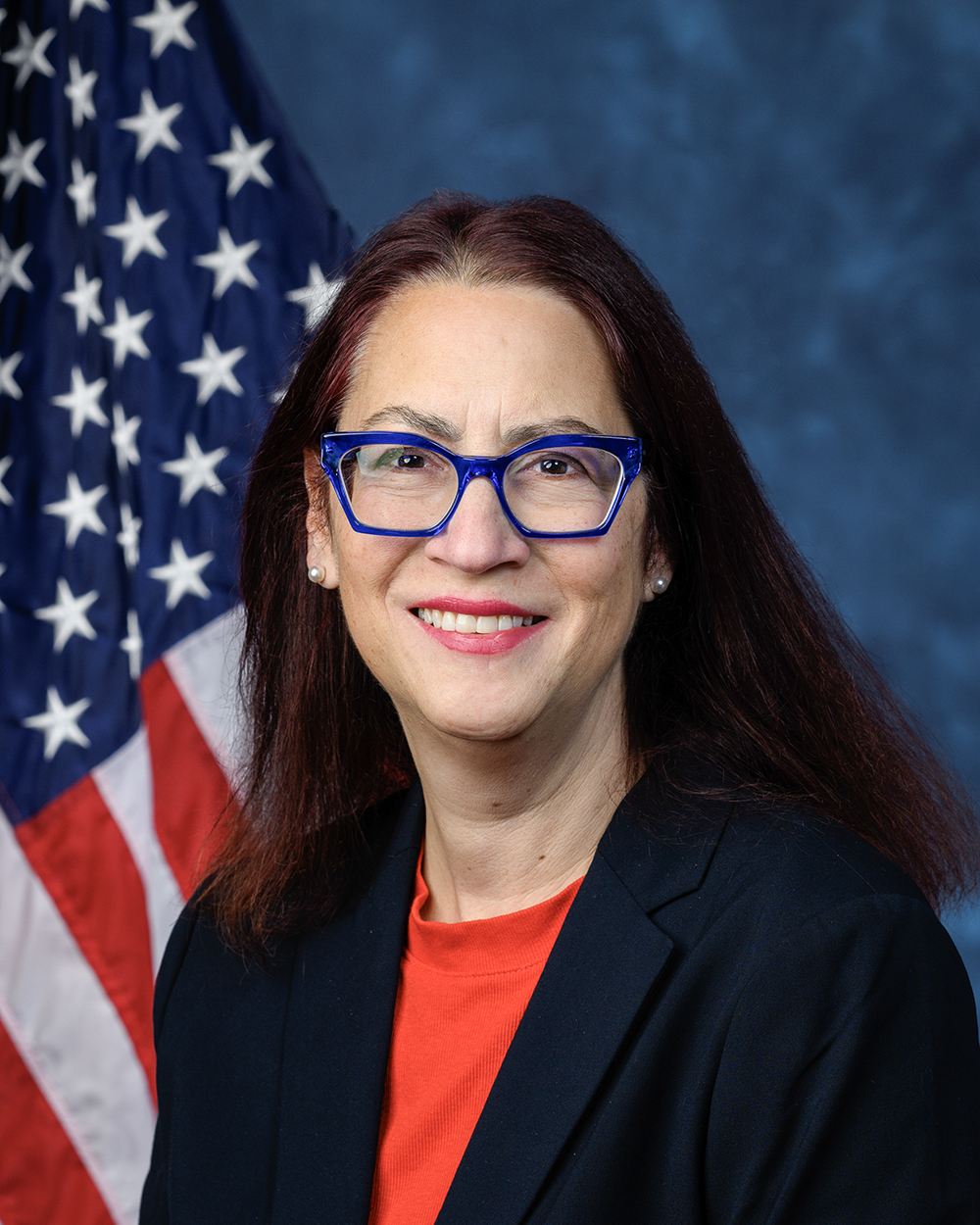
Photo of Laura Friedman
D United States House · District 30 · California On the 2026 ballot

Rep. Laura Friedman

Compare
Total votes
650
all sessions
Attendance
99%
4 missed
Higher than 83% of chamber peers
With party
97%
of cast votes
Near the chamber average
Bipartisan score
1%
crosses aisle rarely
Near the chamber average
Sponsored
338
bills & resolutions
Near the chamber average
Committees
7
assignments
338 bills and resolutions

Sponsored bills

Total
338
Primary
11
Co-sponsor
327
This page
338
matching current filters
Co-sponsor HRES 920
In committee · Utah House · Co-sponsor
Celebrating the 50th anniversary of the Individuals with Disabilities Education Act on November 29, 2025, and recognizing its transformative impact on the education of children with disabilities.

Maddy summaryHRES 920 is a ceremonial resolution celebrating the 50th anniversary of the Individuals with Disabilities Education Act (IDEA) on November 29, 2025. It recognizes IDEA’s historical impact - establishing the right to free, appropriate public education in the least restrictive environment for children with disabilities - and notes how it transformed access to education after over 1 million children were previously excluded from schools. The resolution does not create new policy or funding; it solely commemorates IDEA’s legacy, honors the students and families it has served, and acknowledges educators and advocates who advanced its implementation. This is a symbolic gesture with no direct effect on current law or services.

In committee Dec 2, 2025 1 co-sponsor
Co-sponsor HRES 856
In committee · Utah House · Co-sponsor
Expressing the sense of the House of Representatives that the United States Department of Agriculture should use its contingency funds and interchange authority to finance the supplemental nutrition assistance program.

Maddy summaryHRES 856 is a non-binding resolution expressing the House of Representatives' view that the U.S. Department of Agriculture (USDA) should use its existing contingency funds and interchange authority to fund the Supplemental Nutrition Assistance Program (SNAP) for November 2025. The resolution cites that the USDA holds over $5 billion in contingency funds set aside for emergencies and has legal authority under the Department of Agriculture Organic Act to transfer funds between nutrition programs to maintain SNAP benefits. This would directly support approximately 42 million people relying on SNAP, including 16 million children, 8 million seniors, 4 million people with disabilities, and 1.2 million veterans, preventing disruption during a potential funding gap. The resolution does not create new law but urges the administration to use existing resources to ensure continued food assistance.

In committee Dec 2, 2025 1 co-sponsor
Co-sponsor HR 6348
In committee · Utah House · Co-sponsor
Transportation Assistance for Olympic and World Cup Cities Act of 2025

Maddy summaryThis bill establishes a $50 million annual federal fund to support transportation infrastructure for U.S. cities hosting major international sporting events like the Olympics, Paralympics, or FIFA World Cup. It provides grants to eligible entities - including host cities, nearby jurisdictions within 100 miles, and transportation agencies - to fund permanent transportation projects (e.g., road improvements, transit upgrades) that aid event logistics or mitigate traffic impacts, but excludes temporary event infrastructure or bid preparation costs. Assistance is limited to the 5-year period before an event begins through 30 days after it ends. The bill directly affects communities selected to host these events and their surrounding regions, ensuring federal support for sustainable transportation planning tied to the events.

In committee Dec 2, 2025 1 co-sponsor
Co-sponsor HR 1262
Passed · Utah House · Co-sponsor
Mikaela Naylon Give Kids a Chance Act

Give Kids a Chance Act of 2025 This bill expands the Food and Drug Administration’s (FDA’s) authority with respect to research on rare pediatric diseases, including by permitting the FDA to take enforcement action against drug sponsors that fail to satisfy pediatric study requirements and by reauthorizing programs that support pediatric research.  Specifically, the bill modifies requirements relating to molecularly targeted pediatric cancer investigations to permit research on new drugs in combination with active ingredients that have already been approved, provided certain conditions are met; permits the FDA to take enforcement action against drug sponsors that fail to comply with pediatric study requirements, if such sponsors demonstrated a lack of due diligence in satisfying the requirement; renews the FDA’s authority to award priority review vouchers to sponsors of new products intended to treat rare pediatric diseases through September 30, 2029; and reauthorizes through FY2027 certain funding for the National Institutes of Health to support priority pediatric research.  The bill also provides statutory authority for the FDA’s interpretation of the orphan drug exclusivity period. The bill specifies, consistent with FDA regulations, that the seven-year market exclusivity period for drugs for rare diseases or conditions (i.e., orphan drugs) prohibits the approval of the same drug for the same approved use or indication with respect to the disease or condition. (In Catalyst Pharmaceuticals, Inc. v. Becerra , a court rejected the FDA’s interpretation and held that orphan drug exclusivity extends to all uses or indications for the disease or condition.)

Passed Dec 2, 2025 1 co-sponsor
Primary HR 6298
In committee · Utah House · Lead sponsor
Safe and Affordable Transit Act

Maddy summaryThis bill provides $50 million annually from 2026 through 2030 to fund security measures for public transit systems in urbanized areas, removing previous population requirements that limited access. It allows transit agencies to use these funds for hiring additional officers, contracting with local police, and making physical safety upgrades like monitoring devices and operator shields. Additionally, it mandates a study by the National Academies (with input from transit workers) to evaluate crime prevention tactics, including successful and unsuccessful approaches used by transit agencies. The bill directly affects transit agencies and passengers by prioritizing safety infrastructure and data-driven crime reduction strategies.

In committee Nov 26, 2025 0 co-sponsors
Co-sponsor HR 6222
In committee · Utah House · Co-sponsor
ROTOR Act

Maddy summaryThe ROTOR Act narrows the definition of "sensitive government mission" for aircraft operations, excluding training flights and flights by officials below Cabinet rank. It requires regular reporting to Congress about exceptions to ADS-B Out requirements, establishes deadlines for requiring ADS-B In equipment on most aircraft, and mandates safety reviews for airports with military operations. The bill also improves coordination between the FAA and Department of Defense on airspace management and safety information sharing. These changes increase transparency around aircraft operations that don't broadcast their location while enhancing safety oversight. The bill directly affects Federal agencies operating aircraft, the FAA, and aircraft operators required to equip with ADS-B technology.

In committee Nov 21, 2025 1 co-sponsor
Co-sponsor HR 6166
In committee · Utah House · Co-sponsor
Lowering Drug Costs for American Families Act

Maddy summaryThis bill expands Medicare's drug price negotiation program to cover 50 drugs (up from 20) and requires health insurers to apply negotiated prices to cost-sharing for beneficiaries. It establishes annual out-of-pocket cost-sharing limits for prescription drugs under group health plans and insurance coverage, with specific limits of $2,000 for self-only coverage in 2027 that will increase annually. The bill also sets specific cost-sharing limits for insulin products, requiring coverage with no deductible and cost-sharing of no more than $35 per 30-day supply or 25% of the negotiated price. These provisions affect Medicare beneficiaries, people with group health plans, and health insurers across the country. The bill applies to plan years beginning on or after January 1, 2027.

In committee Nov 20, 2025 1 co-sponsor
Co-sponsor HR 6181
In committee · Utah House · Co-sponsor
John Lewis Every Child Deserves a Family Act

Maddy summaryHR 6181, the John Lewis Every Child Deserves a Family Act, prohibits child welfare agencies receiving federal funds from discriminating against children, youth, or prospective foster/adoptive parents based on religion, sex (including sexual orientation and gender identity), or marital status. It directly affects LGBTQ youth in foster care - overrepresented at 30% of the system - who face higher risks of trauma, group home placements, and suicide attempts compared to non-LGBTQ peers. Key provisions require agencies to collect data on sexual orientation and gender identity, establish a National Resource Center for LGBTQ youth support, provide cultural competency training, and eliminate discriminatory practices. The law aims to improve safety, permanency, and placement stability by expanding access to family-based care and ensuring equitable services for all children in the system.

In committee Nov 20, 2025 1 co-sponsor
Co-sponsor HRES 581
In committee · Utah House · Co-sponsor
Providing for consideration of the bill (H.R. 185) to advance responsible policies.

Maddy summaryHRES 581 is a procedural resolution that establishes rules for the House to consider H.R. 185, the Epstein Files Transparency Act. It waives all points of order against the bill, adopts a specific amendment (the full text of the Epstein Files Transparency Act), and limits debate to one hour equally divided between the Judiciary Committee's chair and ranking minority member. The resolution also requires the Attorney General to release unclassified DOJ records related to Jeffrey Epstein within 30 days, with limited exceptions for privacy or national security.

In committee Nov 19, 2025 1 co-sponsor
Co-sponsor HR 6130
In committee · Utah House · Co-sponsor
ASAP Act

Maddy summaryThis bill would require Medicare to cover early detection screening tests for Alzheimer's disease and related dementias starting January 1, 2028. It defines eligible tests as FDA-cleared genomic blood tests, blood product analyses, or equivalent medical imaging methods (like protein expression or whole genome sequencing) that detect pre-symptomatic or early-stage conditions. Medicare beneficiaries would receive this coverage without cost-sharing for these specific screenings. The bill amends Medicare coverage rules to explicitly include these tests under Section 1861(nnn) of the Social Security Act.

In committee Nov 19, 2025 1 co-sponsor
Showing 101 to 110 of 338 bills
Previous 1 10 11 12 34 Next