This resolution honors the essential staff of the U.S. Capitol complex, recognizes and thanks them for their invaluable contributions, and commits to better protecting them.
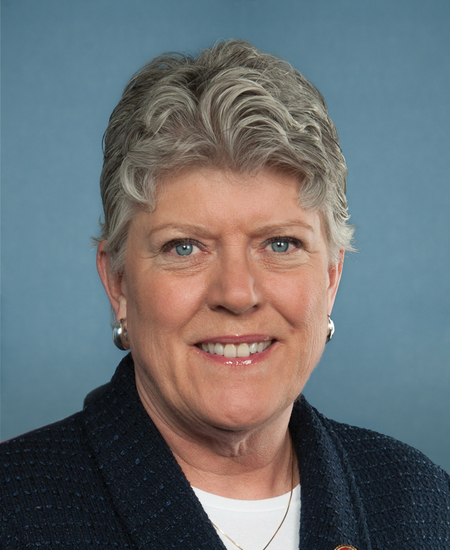
Rep. Julia Brownley
Sponsored bills
Abortion is Health Care Everywhere Act of 2021 This bill authorizes the use of certain foreign assistance funds to provide comprehensive reproductive health care services in developing countries, including abortion services, training, and equipment.
Universal Giving Pandemic Response and Recovery Act This bill allows individual taxpayers who do not otherwise itemize their tax deductions a deduction in taxable years beginning in 2021 or 2022 for charitable contributions. The deduction is limited to one-third of the standard deduction allowed to such taxpayers.
Energy Storage Tax Incentive and Deployment Act of 2021 This bill allows tax credits for (1) energy storage technologies, and (2) battery storage technology. The bill expands the tax credit for investments in energy property to include equipment that (1) receives, stores, and delivers energy using batteries, compressed air, pumped hydropower, hydrogen storage (including electrolysis), thermal energy storage, regenerative fuel cells, flywheels, capacitors, superconducting magnets, or other technologies identified by the Internal Revenue Service; and (2) has a capacity of at least five kilowatt hours. The bill also expands the tax credit for residential energy efficient property to include expenditures for battery storage technology that (1) is installed on or in connection with a dwelling unit located in the United States and used as a residence by the taxpayer, and (2) has a capacity of at least three kilowatt hours.
Promoting Infrastructure by Protecting Our Subcontractors and Taxpayers Act This bill revises the transportation infrastructure finance and innovation program to require the Department of Transportation (DOT) to ensure that the design and construction of a project carried out under the program must have appropriate payment and performance security, regardless of whether the obligor is a state, local government, agency or instrumentality of a state or local government, public authority, or private party. DOT may accept such payment and performance security requirements if it makes a written determination that the federal interest is adequately protected.
George Floyd Justice in Policing Act of 2021 This bill addresses a wide range of policies and issues regarding policing practices and law enforcement accountability. It increases accountability for law enforcement misconduct, restricts the use of certain policing practices, enhances transparency and data collection, and establishes best practices and training requirements. The bill enhances existing enforcement mechanisms to remedy violations by law enforcement. Among other things, it does the following: lowers the criminal intent standard—from willful to knowing or reckless—to convict a law enforcement officer for misconduct in a federal prosecution, limits qualified immunity as a defense to liability in a private civil action against a law enforcement officer, and grants administrative subpoena power to the Department of Justice (DOJ) in pattern-or-practice investigations. It establishes a framework to prevent and remedy racial profiling by law enforcement at the federal, state, and local levels. It also limits the unnecessary use of force and restricts the use of no-knock warrants, chokeholds, and carotid holds. The bill creates a national registry—the National Police Misconduct Registry—to compile data on complaints and records of police misconduct. It also establishes new reporting requirements, including on the use of force, officer misconduct, and routine policing practices (e.g., stops and searches). Finally, it directs DOJ to create uniform accreditation standards for law enforcement agencies and requires law enforcement officers to complete training on racial profiling, implicit bias, and the duty to intervene when another officer uses excessive force.

This resolution supports the goals of a feminist foreign policy (i.e., a foreign policy that requires analysis of and challenges to power structures and inequalities that are based on systems of discrimination), and it supports the adoption of policies that promote gender equity and women's participation in public life.
Girls' Leadership, Engagement, Agency, and Development Act of 2021 or the Girls LEAD Act This bill directs the Department of State and the U.S. Agency for International Development (USAID) to jointly report to Congress a strategy to strengthen the participation of adolescents, particularly girls, in democracy, human rights, and governance. The State Department and the USAID shall (1) implement activities to achieve this goal, including activities to increase adolescent girls' civic and political knowledge and skills and address barriers to political participation; and (2) prioritize foreign assistance funding for democracy, human rights, and governance programs toward achieving the goals in this bill.
National Women's Hall of Fame Commemorative Coin Act of 2021 This bill directs the Department of the Treasury to mint and issue $5 gold coins, $1 silver coins, half-dollar clad coins, and proof silver $1 coins in recognition and celebration of the National Women's Hall of Fame in Seneca Falls, New York. All minted coins shall include a specified surcharge, which shall be paid to the National Women's Hall of Fame Foundation to establish an endowment fund to provide for the long-term financing of the hall's operations.
Central Coast Heritage Protection Act This bill designates specified land within the Bakersfield Field Office of the Bureau of Land Management and in the Los Padres National Forest in California as components of the National Wilderness Preservation System. The bill designates certain land in the Los Padres National Forest as the Machesna Mountain Potential Wilderness Area, to be incorporated into the Machesna Mountain Wilderness Area; the Fox Mountain Potential Wilderness Area, to be incorporated into the San Rafael Wilderness; the Condor Ridge Scenic Area; the Black Mountain Scenic Area; and the Condor National Scenic Trail. The bill also designates specified segments of the Indian, Mono, Matilija, Sespe, and Piru Creeks and Sisquoc River in California as components of the National Wild and Scenic Rivers System and requires studies of new trails for recreation opportunities in California. Indian tribes shall be assured access to the wilderness areas, scenic areas, and potential wilderness areas designated by this bill for traditional cultural and religious purposes.